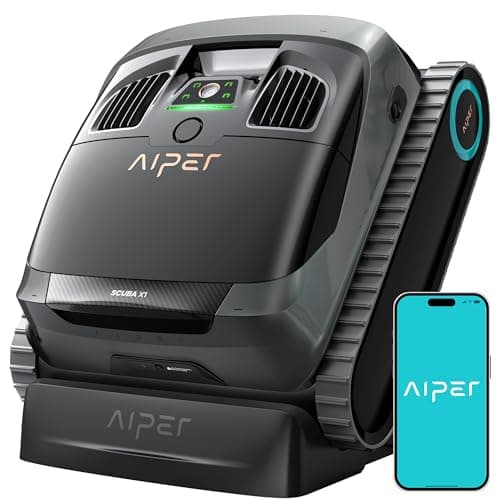
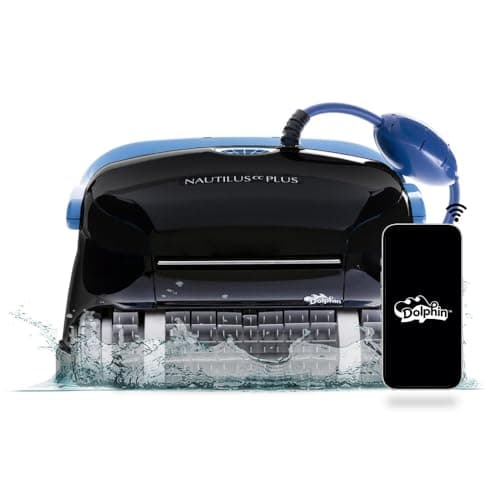
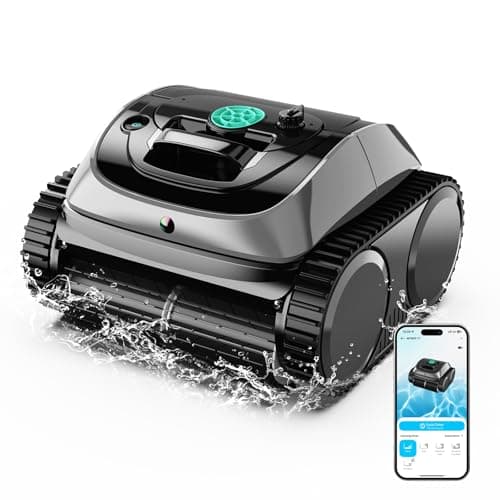
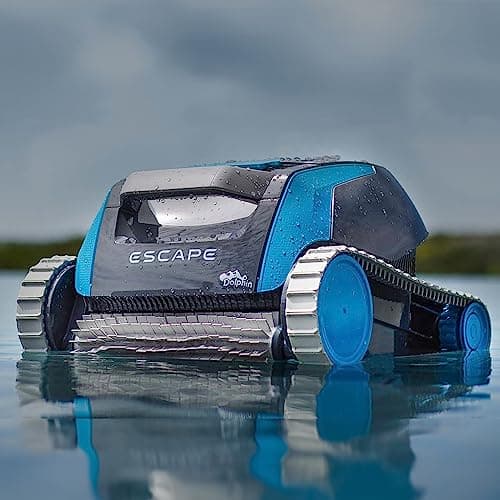
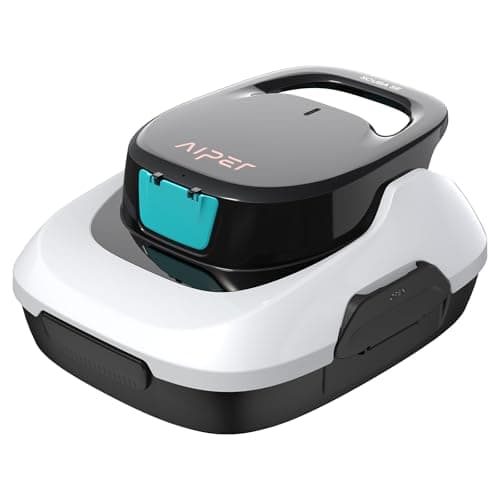
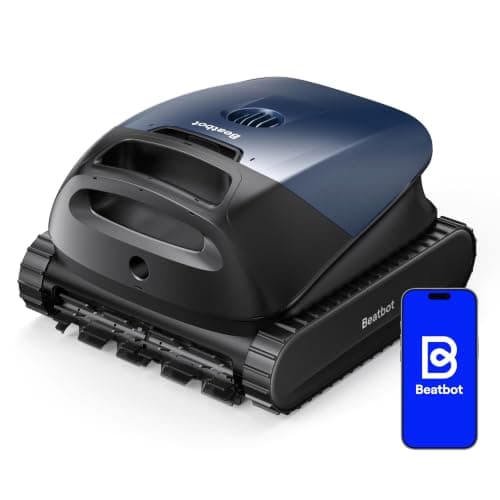
Almost every “best pool robot” list ranks machines on peak specification. That is the wrong instrument for a first purchase. The failure mode for a first-time buyer is almost never the robot was not powerful enough — it is the robot was wrong for this pool, or it turned out to be a chore, and both of those are decided before the machine ever runs.
So this page ranks on how little the machine asks of you: how little you have to plumb, learn, store, charge and troubleshoot. Specifications still decide the order within that, but they do not set it.
The one number to check before anything else
Rated pool area. Every robot publishes one, and it is the only specification that can make a machine simply wrong rather than merely compromised.
A machine rated for 860 sq ft in a 1,600 sq ft pool does not clean the pool slowly. It covers roughly half, parks, and the half it misses is the same half every single cycle, because the coverage pattern starts from the same place. No setting fixes this, and it cannot be returned as faulty, because it is not faulty — it is doing exactly what its listing said.
Measure your pool first. Length times width is close enough for a rectangle; for a freeform pool, take the longest and widest points and accept that you are overestimating slightly, which is the safe direction to err. Then buy a machine rated at or above that figure.
The three specs beginners overweight
Suction, in GPH
It is the number every listing leads with and it is nearly useless on its own. Suction moves water through a filter; if the filter is coarse, high suction simply pushes fine debris through it faster. The filtration guide explains how the two interact, and it is the single most useful thing to read before a first purchase.
App control
Pleasant, and almost never the reason a robot succeeds or fails. The machines on this page that have apps use them for scheduling and cycle selection, both of which a button on the unit also does. Do not pay a tier up for it on a first robot.
Mapping and camera navigation
Genuinely valuable on a freeform, multi-level or beach-entry pool, and close to wasted on a rectangle. If your pool is a simple shape, pattern-based navigation covers it, and the money is better spent on basket volume or filtration.
The four that actually decide it
- Rated area, against your measured pool. Covered above, and it comes first for a reason.
- Basket or canister volume. The best single predictor of whether a cycle finishes usefully. A full basket collapses flow, and the rest of the cycle collects almost nothing — which is why filter cleaning is the one chore that matters.
- Published filter rating, in microns. Coarse (150-180) is right for leaves. Fine (3-10) is right for sand, silt, pollen and dead algae after a treatment. Buying the wrong end of this is the most common first-robot regret.
- Surfaces covered. Floor only, floor and walls, or floor, walls and waterline. Decide which of those you are actually complaining about before you pay for all three.
Cordless or corded for a first robot
This is architecture, not a feature, and it is the decision most likely to still matter in year four.
Cordless means nothing to plumb, nothing to site and no cable to stow, which is why most first-time buyers should start here. The trade is a lithium pack that ages: owner reports across this category cluster around three to four seasons of regular use before capacity is noticeably down.
Corded means a floating cable in the pool and a power supply that needs a dry, shaded, GFCI-protected spot near the water. In exchange there is no battery to degrade, which is why corded Dolphins routinely outlast cordless units. The full cordless-versus-corded comparison works through the ownership math.
What a first robot does not replace
A robot cleans surfaces. It does not balance water, it does not replace your filter, and it does not stop leaves landing on the pool in the first place. Two honest expectations to set:
A realistic first-season budget
Qualitative, because live prices are shown above each buy button and they move. The entry tier — a floor-only cordless robot for a small above-ground pool — starts around the low hundreds. The tier most inground owners should actually shop sits in the mid-hundreds and buys real basket volume and runtime. Past roughly a thousand you are buying waterline passes, fine filtration, docks and mapping.
Budget separately for one set of replacement filter cartridges in year one. They are cheap, they are model-specific, and running a clogged filter is the fastest way to decide a perfectly good robot is disappointing. Filters by brand, with live prices.
Mistakes that cost first-time buyers the most
- Buying on peak suction. See above. Match the filter to the debris instead.
- Buying an unbranded listing with no published specs. If a listing does not state rated area, runtime and filter rating, you cannot size it to your pool and you cannot buy parts for it later. Every machine on this page publishes at least two of the three.
- Buying a machine with no replacement battery available. On a cordless unit the pack is a large fraction of the machine’s value, and a robot you cannot re-pack is a three-season purchase. Check the battery page first.
- Expecting a floor robot to fix a surface problem. The most common mismatch in the category, and the easiest to avoid.
- Not storing it out of the sun. UV ages a robot’s shell, cable and seals faster than chlorine does. A caddy with a cover is the cheapest life extension available — caddies and covers.
If you are still deciding
Work the decision rather than the product list. Our pool cleaner picker walks through pool type, size, surface and debris in four questions and sends you to the roundup for your case, which is a faster route to the right machine than reading six reviews.