Leaf-heavy pools defeat most robots for a reason that has nothing to do with suction. A suction figure tells you how much water a machine moves. It tells you nothing about how much debris it can hold before the basket is full and the machine is just driving around with a plug of wet leaves in it. Once that happens, flow collapses, the robot stops picking anything up, and the symptom reported is “it is not strong enough”.
The two specs that actually decide leaf performance
Basket volume, in liters
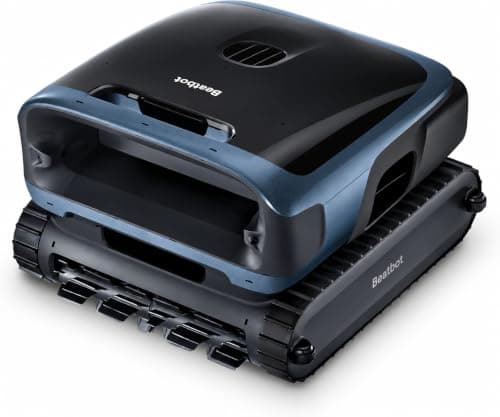
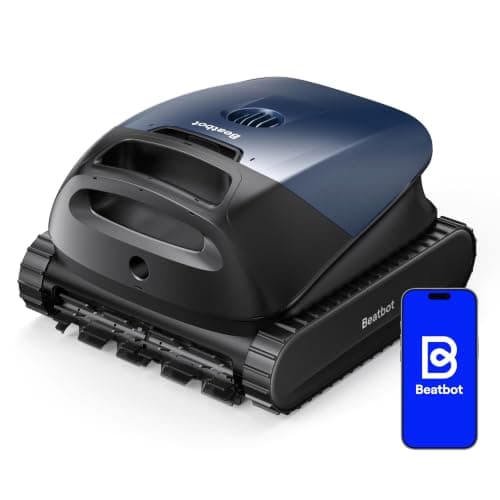
This is the gate. The Beatbot Sora 10 and Sora 30 publish 5 liters. The Beatbot iSkim skimmer publishes 9. Most robots in the $300-600 band carry something in the 1-2 liter range and do not publish it at all, which is itself informative. Under a single mature oak in October, a 2-liter basket is full in one cycle and a 5-liter basket gets through two.
Intake width and clearance
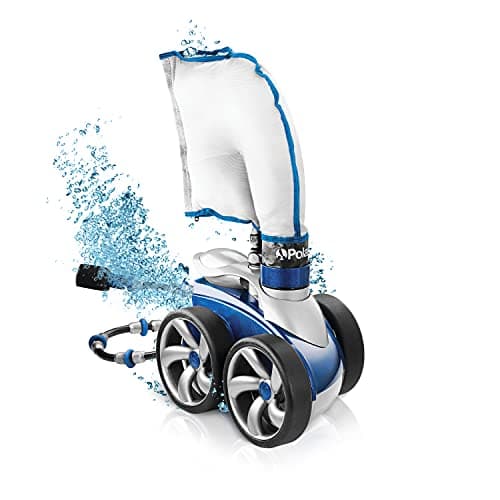
A whole wet oak leaf is roughly 4 inches across and does not fold. If the intake is narrow, the leaf bridges across it and blocks the mouth — the machine is not full, it is jammed. This is the failure mode behind most “my robot keeps stopping” reports in autumn, and it is why pressure-side cleaners like the Polaris 3900 Sport, which have a large intake throat and bag debris rather than filtering it, remain competitive for coarse debris despite being older technology.
Why filter micron rating barely matters here
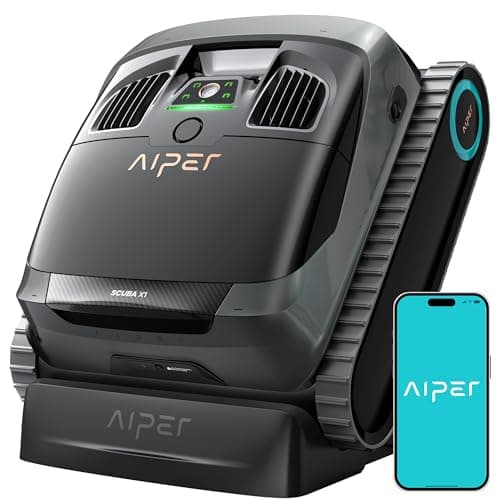
A 3-micron filter is a liability in a leaf pool. It will blind within minutes of contacting wet leaf litter, at which point your expensive fine-filtration machine has the suction of a cheap one. If your pool is under trees, a 150-180 micron basket is thecorrect specification, not a compromise — which is why the Sora 10’s coarse 150-micron rating costs it nothing on this page and why the Aiper Scuba X1 Pro Max does not top this list despite being the most capable machine on the site.
The highest-leverage move: intercept at the surface
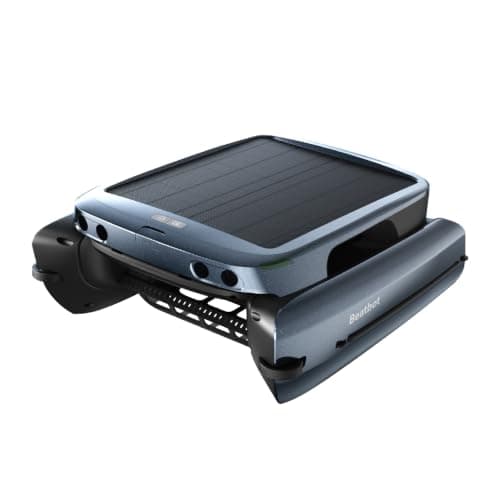
A leaf floats for roughly a few hours before it waterlogs and sinks. In that window it is weightless, has not stained anything, and can be removed by a solar skimmer running for free all day. Once it sinks it becomes a job for your robot, a tannin stain on your plaster, and a load on your filter. For a pool genuinely under tree cover, a dedicated skimmer alongside a floor robot removes more total debris than any single machine at any price. The skimmer roundup covers the three worth buying, or the Beatbot Sora 70 does both jobs in one unit.
Technique that makes any of these work better
- Run it more often, not longer. Two short cycles with an empty basket remove far more than one long cycle with a basket that filled in the first twenty minutes.
- Empty the basket wet, immediately. Dried leaf litter cements into the mesh and permanently reduces flow. The filter-cleaning guide covers how to do it without damaging the mesh.
- Skim before you run. Thirty seconds with a leaf rake removes the floating load that would otherwise fill the robot’s basket in the first lap.
- Keep the water level up. A low level stops the skimmer working and pushes everything to the floor. The full leaf-removal method is here.
The pick most sites recommend that you should avoid
A fine-filtration flagship. Search results for this query are full of $1,500-2,300 machines recommended on the strength of their 3-micron filters, which is exactly the wrong specification for leaf litter. If your pool is under trees, the Sora 10 at under $500 will remove more leaf volume per week than a machine costing four times as much — and you can spend the difference on a skimmer and still be ahead.