Floating debris and sunken debris are two different problems, and almost every pool cleaner solves exactly one of them. A floor robot cannot reach a leaf that has not sunk yet; a surface skimmer cannot touch the silt on your floor. If your pool sits under trees you have both problems, and you have two ways to solve them.
This page covers both honestly: the three machines on this site that genuinely do both jobs, and the two-device pairing that frequently beats them on cost and coverage.
What “skims and vacuums” actually has to mean
The phrase is used loosely in listings, so here is the line this page draws. A machine qualifies as 2-in-1 only if the manufacturer publishes a surface pass — the unit floats and collects floating debris — in addition to submerged cleaning.
Two things are commonly mistaken for it and are not:
- Wall climbing is not skimming. A climber reaches the waterline from below. It is working the wall, not the water surface.
- A waterline pass is not skimming either. It scrubs the tile band where scum collects. Useful, and a different job from lifting a floating leaf out of open water.
The wall-climbing guide draws the same distinction in more detail. By that definition, three machines on this site qualify.
The real trade: one machine or two
This is the decision, and it is not obvious in either direction.
The case for one machine
One thing to charge, one thing to store, one thing to learn, one filter to empty. On a pool where storage is tight or the owner simply does not want a second device floating around, that is a real argument, and it is the whole reason this category exists.
The case for two
Three arguments, and they are strong:
- The two jobs run simultaneously. A solar skimmer works all day, every day, at no running cost. A 2-in-1 splits one battery charge between surface and floor — time spent skimming is time not spent vacuuming.
- Debris caught floating never sinks. A leaf removed from the surface never stains your floor, never loads your filter and never has to be vacuumed at all. A skimmer running continuously reduces the floor work rather than competing with it.
- Cost. A capable floor robot plus a solar skimmer frequently lands under the price of a single 2-in-1 flagship, and you keep working if one fails.
The counter-argument to the counter-argument: a solar skimmer needs sun, and heavy tree cover is both the reason you have a leaf problem and the reason the panel underperforms. If your pool is in genuine shade, the pairing weakens and a 2-in-1 gets better.
Which of the three 2-in-1 machines
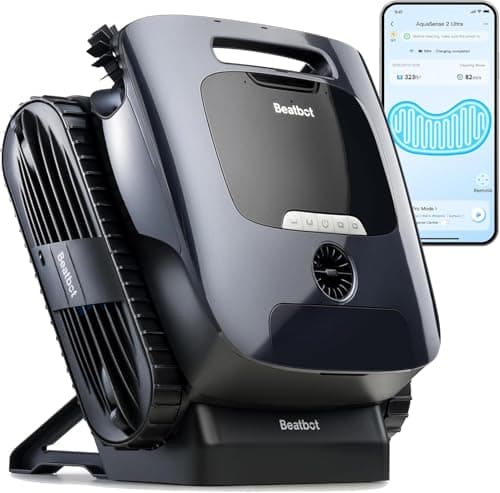
If your pool is complex, the AquaSense 2 Ultra
Five cleaning functions, camera mapping and debris detection. Everything that makes it expensive is about navigating a shape that defeats pattern-based machines — freeform, multi-level, beach entry. On a simple rectangle almost none of what you pay for gets used, and that is the honest reason to buy something else.
If your debris is fine, the Scuba X1 Pro Max
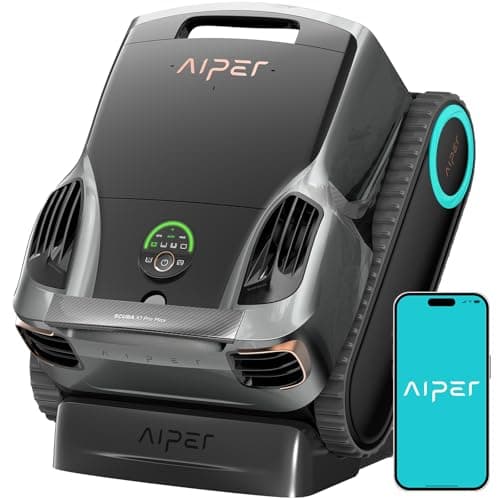
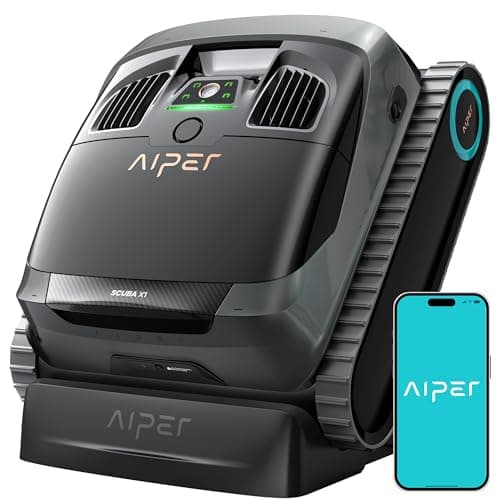
8,500 GPH and 3-micron filtration alongside the surface pass. It is the only Aiper that handles floating debris, and the filtration is the reason to pick it over the Sora 70: 3 micron catches sand, silt, pollen and post-treatment dead algae that a coarse filter pushes straight back out. The sand and silt roundup explains why micron rating decides this.
If leaves are the whole problem, the Sora 70
It skims and cleans the floor in the same cycle without flagship pricing, and under heavy tree cover that is exactly the job. It publishes no micron rating, which matters not at all if what you are removing is oak leaves and matters a great deal if it is silt.
If you pair instead: what to buy
A floor robot sized to your pool, plus a skimmer sized to your leaf load.
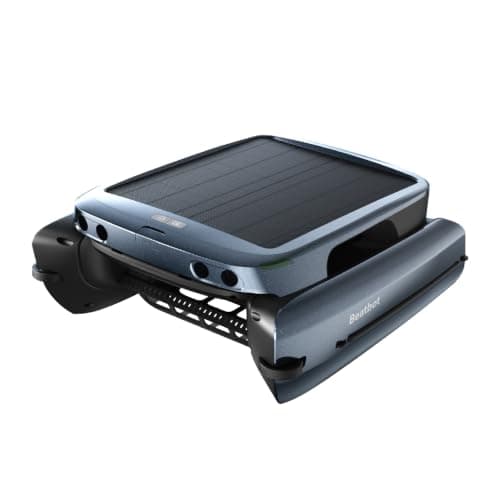
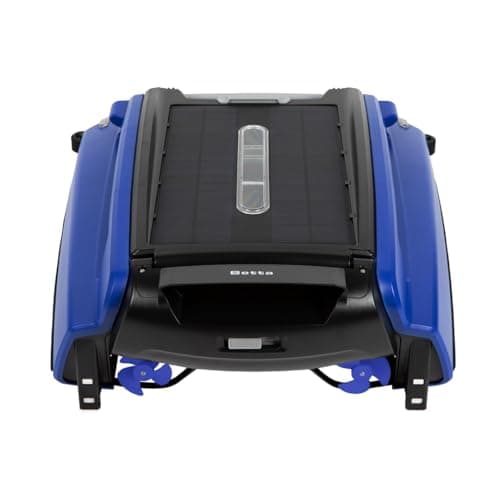
On the floor side the Aiper Obsidian is the value pick on this site — 6,600 GPH, 3-micron filtration, a charging dock and 180 minutes. On the surface side the choice is basket volume: the Beatbot iSkim publishes 9 liters, which is more than twice any other solar skimmer here and the difference between emptying once a day and twice. The Betta SE is the budget-sane alternative and works in both pool types. The full skimmer roundup compares them properly, and the skimmer head-to-head goes deeper on basket volume.
What neither approach fixes
- The waterline band. Skimming lifts floating debris; it does not scrub the tile line. That is a separate capability — see the waterline roundup.
- Your filter and water chemistry. Removing more debris mechanically reduces the load on both, which is a genuine benefit, but neither device balances water.
- Pine needles. They defeat coarse baskets and wrap impellers, and they deserve their own answer — the pine needle roundup has it.
A note on single points of failure
Every 2-in-1 on this page concentrates two jobs in one chassis, and the machines themselves make the point: five functions in one body is five things that can fail, and a single all-in-one unit is a single point of failure for both jobs. That is not a reason to avoid them — it is a reason to weigh warranty and parts availability more heavily than you would on a single-purpose machine. The warranty comparison is the place to do that.