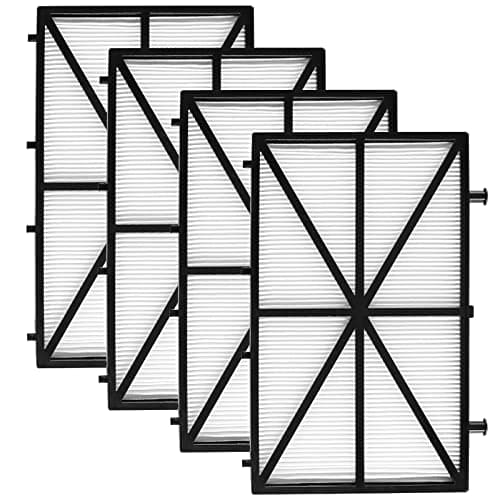
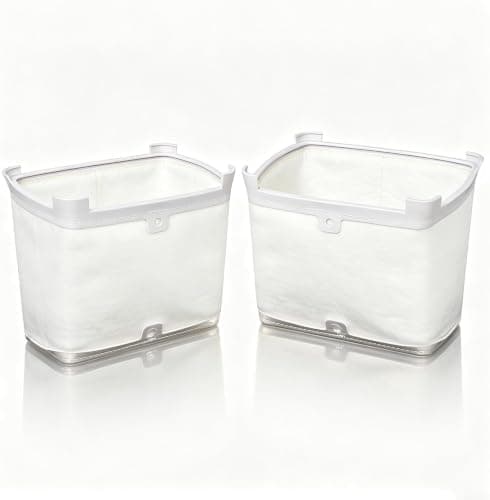
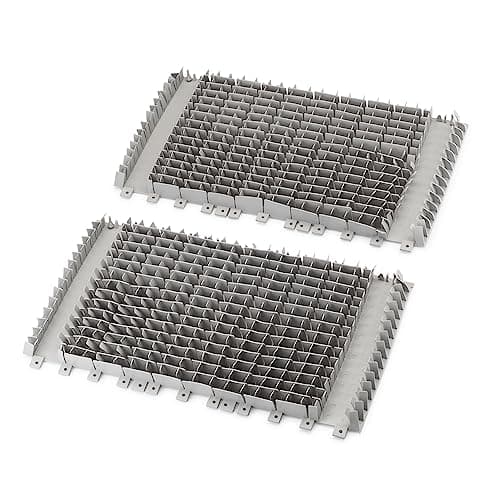
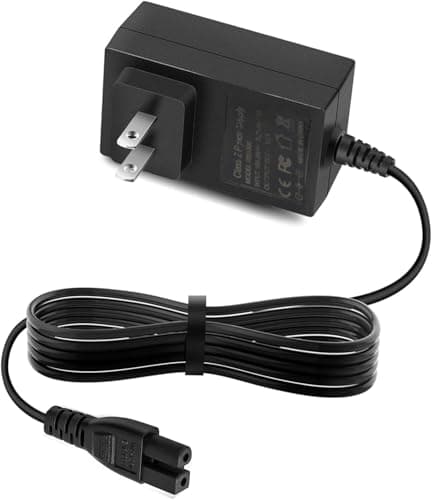
The purchase price of a pool robot is the number everyone compares. The consumables are where the money actually is, and they vary by a factor of four between brands for functionally the same job.
The three faults that look terminal and are not
1. “It stopped climbing the walls” — usually a $23 brush
A robot climbs by directing its exhaust flow to press itself against the wall while brushes and track tread provide grip. All three have to be working. A brush worn flat cannot grip, and on a slick vinyl or gelcoat surface it will not hold at all.
Look at the brush: a healthy one has defined tread or fins, a worn one is smooth. It is a thirty-second check and a $23-30 fix. The full diagnostic runs cheapest-first.
2. “It stopped picking anything up” — usually a free rinse
A blinded filter does not just collect less. It collapses the flow the machine depends on, and that flow does two jobs at once: carrying debris in, and creating the downforce that holds the robot to the wall. So one loaded filter produces four unrelated-looking symptoms — poor pickup, failed climbing, short effective cycles, and motor-overload errors.
Rinse it after every cycle, while the debris is wet, from the clean side outward. Dried debris cements into the mesh permanently. The method matters.
3. “It won’t charge” — usually a $10 charger
Pool robot chargers are small external adapters that live outdoors, get splashed, get stepped on and get coiled tightly. They fail, and the symptom is identical to a dead battery: plug it in, nothing happens.
Owners overwhelmingly assume the $80 pack. The charger costs a twentieth as much, so it is the correct first test — and the diagnostic has two free checks before either purchase. Match the voltage exactly: a wrong-voltage adapter on a lithium pack is a fire risk.
What each brand charges to keep its machine running
| Brand | Filters | Battery available? | Brushes |
|---|
| Dolphin | ~$26 / 4 | No battery at all | $23-30, numbered |
| Hayward | ~$21 / 4 | No battery at all | Via dealer |
| WYBOT | $13-23 each | C1 yes, ~$69 | Limited |
| Aiper | $19-59 | Scuba S1 yes, ~$80 | Rollers available |
| Beatbot | $60-100 each | Not established | Not established |
Read that table before you buy a machine, not after. A Dolphin four-pack costs less than a single genuine Beatbot basket, and the four-pack is the right quantity — because the only practical way to run fine filtration is two in the machine and two drying. Filters by brand has every price and fitment.
The battery question, which decides a cordless machine’s life
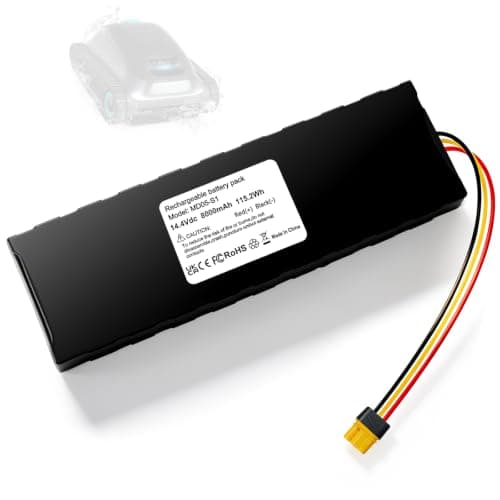
On a cordless robot, the pack is the lifespan. Owner reports across brands cluster around noticeable runtime decline by the third or fourth season — normal lithium behavior in warm chlorinated water, not a defect.
What differs is what happens next. With a replacement available at $69-80 on a $400-600 machine, that is a routine consumable and the robot is a six-to-eight-year purchase. With nothing available, it is finished.
Packs exist today for the Aiper Scuba S1 and the WYBOT C1. They do not exist for Beatbot, or for the newest Aiper and WYBOT models. The battery section lists what exists, and it is the central argument for corded machines.
The two habits that prevent most of this
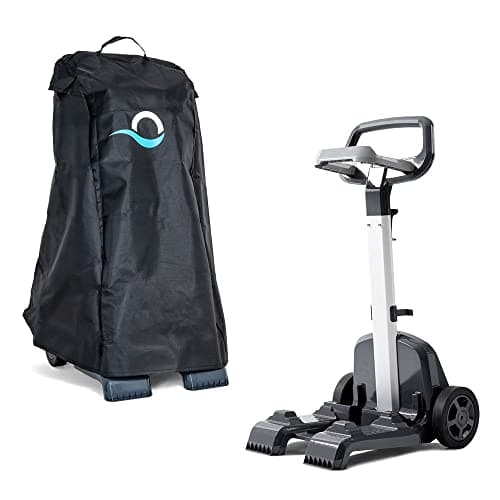
Keep it out of the sun. UV embrittles the shell, the cable jacket and — most importantly — the seals. Seal failure leading to water ingress is the one fault that kills a pool robot outright rather than degrading it, and it is not economically repairable. A caddy cover is about $19 for a $500-2,300 machine, which makes it the highest-return twenty dollars available to you. The caddy page.
Store a cordless pack at half charge, indoors, above freezing. A pack left flat in an unheated garage over a northern winter can fall below its safe floor voltage, at which point the battery management system refuses to accept a charge — permanently, by design. There is no home fix. This single habit prevents the most expensive avoidable failure in cordless pool robotics.
When a repair is genuinely worth it
On a corded machine, almost always. A $110 motor-plus-impeller assembly, a $35 track pair and a $30 brush set against a $899 replacement is an easy call, and the parts are stocked nationwide.
On a cordless machine it depends entirely on the pack. If one exists at $70-80 for a machine that cost $400-600, yes. If it does not, the machine has reached the end of its life — and that should inform the next purchase. The lifespan guide sets out what fails and in what order.
Three things mean stop, not repair: water inside the housing, any burning smell, or a swollen battery pack. None of those is a home job.