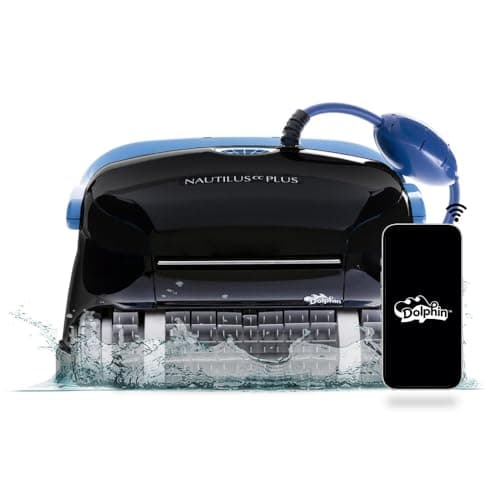
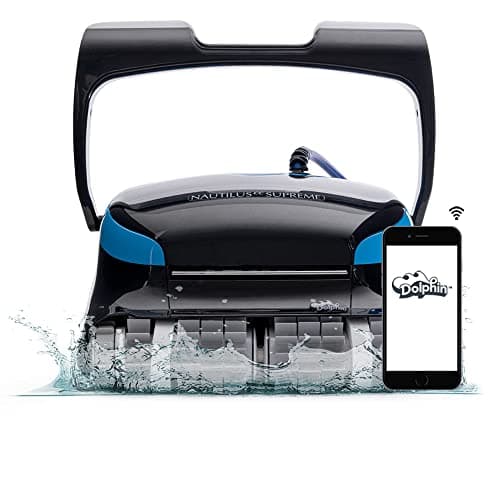
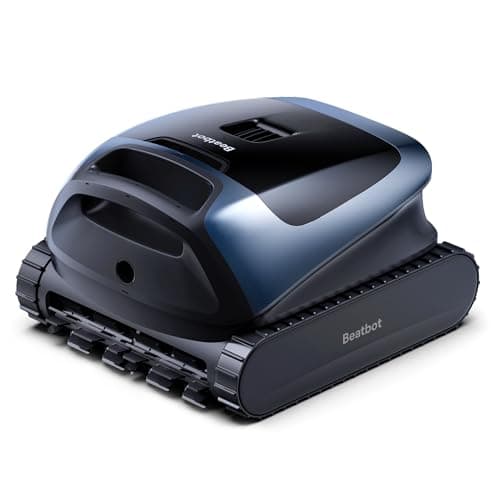
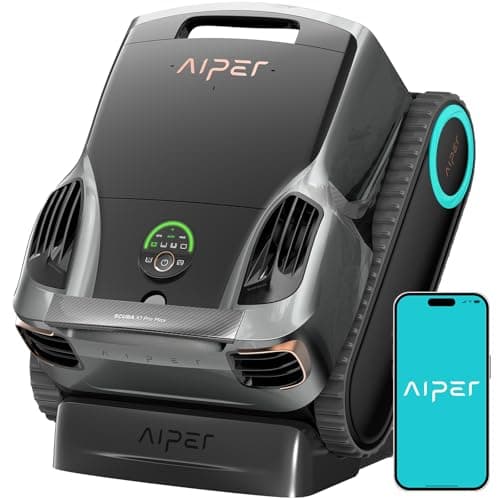
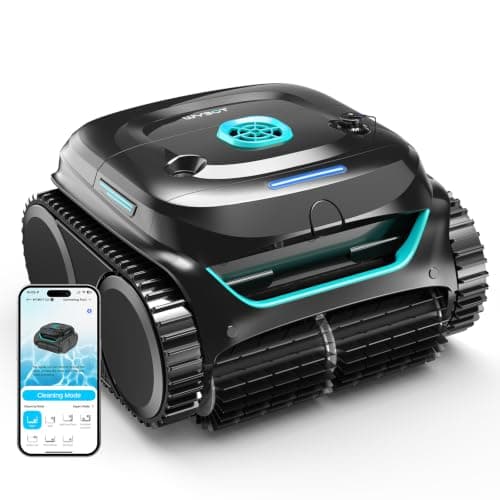
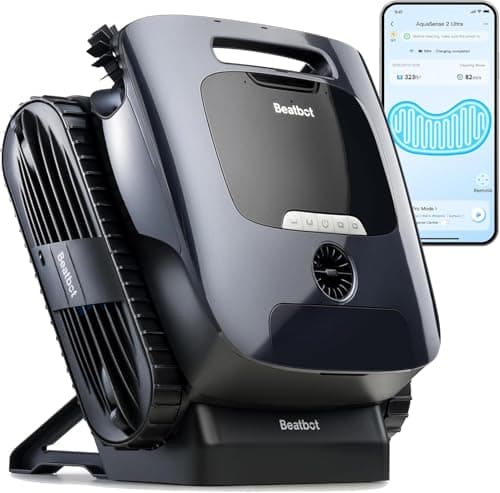
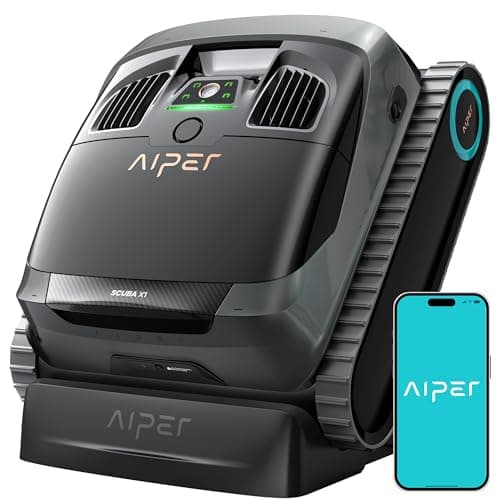
Almost every robot sold is sold for an inground pool, which means this is the category with the most noise in it. The way through the noise is to apply the gates in order, because each one eliminates a large fraction of the market before you look at a single feature.
Gate 1: your pool’s size, against the published rating
Measure the longest dimension and the floor area. Then read the rating the manufacturer actually publishes — and note that the two major approaches are not interchangeable.
- Maytronics (Dolphin) rates by length: 33 ft (Escape, Cayman), 40 ft (Nautilus CC Plus), 50 ft (CC Supreme, Wave 60).
- Aiper, Beatbot and WYBOT rate by area: 860 sq ft (Scuba SE), 1,600 sq ft (Scuba S1, Seagull Pro), 2,150 sq ft (Scuba S1 Pro), 2,152 sq ft per cycle (WYBOT C2).
A 16 × 32 ft pool is 512 sq ft of floor and roughly 900 sq ft of total wetted surface once you include the walls. If a machine is rated 860 sq ft and you want it to climb, you are already over. This is the most common sizing error in the category and it presents as poor navigation.
Gate 2: your pool’s shape
A rectangle is kind to pattern navigation: a robot that drives parallel lines will cover it. Freeform, kidney, L-shaped, multi-level and beach-entry pools are not. On those shapes, pattern navigation leaves the same regions uncleaned every cycle, and the premium you pay for camera mapping and debris detection — the Beatbot AquaSense 2 Ultra, the WYBOT S2 Vision, the Aiper Scuba V3 — is genuinely earned. On a rectangle, it is not. This is the single clearest “spend more or spend less” signal in the whole category.
Gate 3: your surface
Plaster, pebble, fiberglass, tile and vinyl all behave differently under a brush and under tracks. Rough pebble and exposed-aggregate finishes grind brushes down faster and are harder to climb; slick fiberglass and vinyl are the opposite problem — tracks slip and climbing fails. We have separate pages for each because the answer genuinely changes: pebble and gunite, fiberglass and vinyl liner.
Gate 4: power architecture
Over about 2,200 sq ft, cordless becomes awkward: even the longest-running battery machine here has to charge mid-job, and the half it does second is always the same half. Corded has no runtime limit. Under 2,200 sq ft, the choice is about how long you want the machine to last rather than whether it can finish — the full comparison is here.
What inground owners consistently underestimate
- Weight. Lifting a 25-30 lb machine out of a deep pool over coping, twice a week, is the thing that quietly ends the habit. A caddy is a real purchase, not an accessory.
- Main drains and step returns. These strand robots. Machines that publish “high obstacle crossing” (the WYBOT B1) or active avoidance are responding to a real problem — and the CPSC has separate and more important guidance about drain covers that is worth reading regardless.
- Consumables. An inground pool runs its robot harder than an above-ground pool does. Brushes, tracks and filters are the annual cost — see the parts section for what each brand charges.