Why these parts matter more than their price suggests
A pool robot climbs by using its own exhaust flow to press itself against the wall while brushes and track tread provide the grip to drive upward. All three have to be working: the flow, the brush and the tread.
So “it stopped climbing the walls” — the most common complaint in pool robotics — is in the large majority of cases a worn brush or a worn track, not a failing motor. The diagnostic runs in cheapest-first order, and the first two checks are these parts.
How to tell your brushes are worn
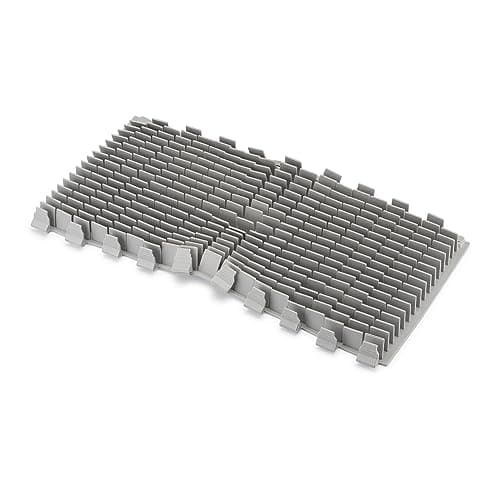
Look at them. A healthy brush has defined tread, fins or ribs. A worn one is smooth and flat. It is immediately obvious once you know what to look for, and it is a thirty-second check.
A flat brush cannot grip, and on a slick surface — vinyl liner or fiberglass gelcoat especially — it will not hold at all. On gelcoat this is the failure that shows up first.
Replace them as a pair
A new front brush against a worn rear one makes the machine track crooked, so it drives in an arc and covers the pool badly. The two-pack (Maytronics 6101641-R2, about $30) costs barely more than a single brush and solves that.
Part numbers worth knowing:
- 9983122-R1 — genuine active front brush, about $23
- 6101641-R2 — genuine front and rear pair, about $30
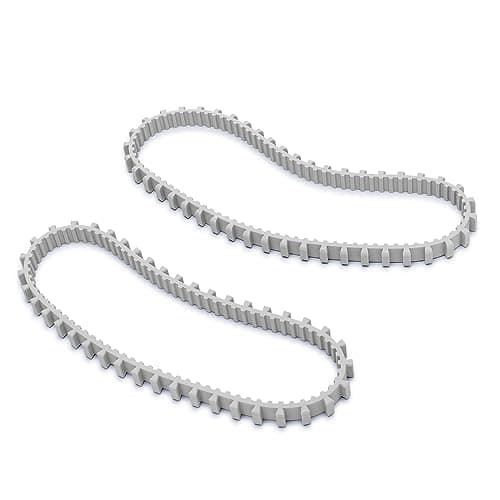
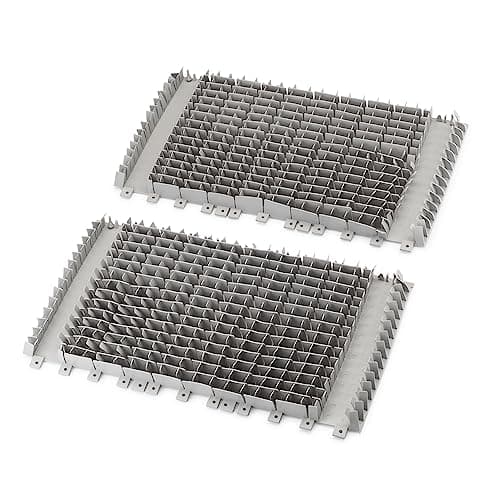
- Gray track pack — about $35 for two, covering Nautilus CC Plus, older Nautilus, Oasis Z5i, DX-series and C-series
Brush compounds differ by color and model — Maytronics publishes which model takes which, and that transparency is a large part of why the Dolphin ownership case holds up. Check your part number before ordering.
Tracks, and why they fail fastest on slick surfaces
Tracks lose their tread pattern the way tires do. The counterintuitive part: a smooth track fails first on smooth surfaces, because there is nothing for it to bite. On textured pebble the tread wears faster but the texture itself provides grip.
So on a fiberglass or vinyl pool, “it used to climb and now it does not” with good brushes is almost always the tracks. While they are off, clear grit from the axles and bearings — aggregate grit in the drivetrain is what wears tracks in the first place.
Surface wear rates, which nobody tells you
| Surface | Brush life | Why |
|---|
| Rough pebble, exposed aggregate | About one season | Effectively sandpaper |
| Plaster, gunite | 1-2 seasons | Mildly abrasive |
| Tile | 2-3 seasons | Smooth, grout lines aside |
| Vinyl liner | 2-3 seasons | Smooth and soft |
| Fiberglass gelcoat | 2-3 seasons | Smoothest surface in pool construction |
If you have a pebble pool, treat brushes as an annual consumable and buy a machine whose brushes are cheap and actually available — which is exactly why the pebble roundup leans Maytronics and Hayward.
The liner warning
On a vinyl liner, worn brushes are not only a performance problem: a flat brush brings the hard plastic housing closer to the liner, and a liner is a $4,000-6,000 consumable. Replace brushes before they go flat, and never fit a brush marketed on aggression — nothing stainless or wire-adjacent belongs on vinyl or gelcoat. The liner page covers the risk properly.
When it is the motor instead
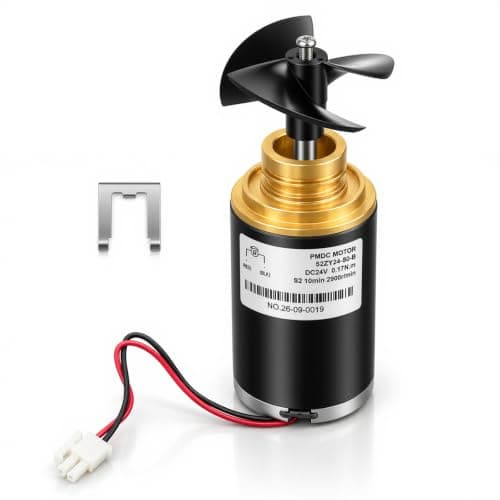
If brushes and tracks are good, the filter is clean and the machine still will not climb or pick up, the pump motor and impeller assembly is the next step. On a Dolphin that is part 5500029 at about $110 as a motor-plus-impeller unit, against about $900 for a new machine.
It is a genuine teardown rather than a filter swap, and fitment varies by model — verify against your own unit. If the robot is still in warranty, claim it instead. The troubleshooting index covers what is realistically repairable at home.
The annual service order
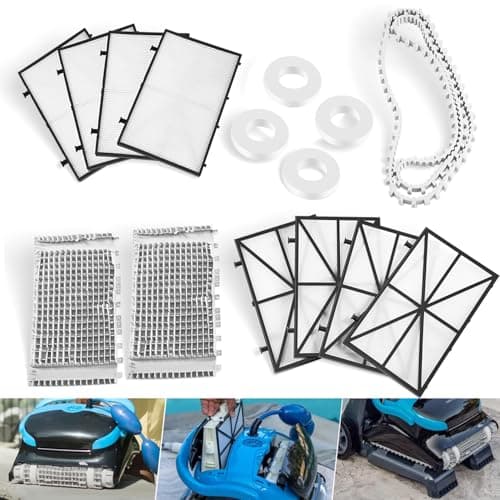
For a Nautilus CC Plus, a tune-up kit at about $54 bundles filters and brushes in one order. Cheaper than buying separately and it removes the guesswork about which filter number you need — though note it ships standard filters, not the ultra-fine cartridges, so order those separately if you want fine filtration.