What you are actually buying
Not better cleaning — a careful manual vacuum session cleans a pool floor as well as any robot. You are buying three things.
1. Time, which is the big one
Manually vacuuming a standard residential pool is 45-75 minutes including setup, hose priming and takedown. Weekly through a six-month season that is roughly 20-30 hours; twice weekly, 40-60 hours. A robot replaces that with pressing a button and emptying a filter — call it five minutes.
Put any value at all on your time and the purchase price is recovered in the first season. That is the entire argument, and everything else is secondary.
2. Reduced pump run-time
This is the part most comparisons miss. A manual vacuum or a suction cleaner requires your pool pump to run for the whole session, and pool pumps are among the largest electrical loads in a home — the Department of Energy treats them as a primary efficiency target. A robot has its own motor, draws on the order of 150-200 W, and cleans with the pump off. That lets you run the pump only for circulation and chemistry. The cost guide has the arithmetic.
3. Lower filter load
A robot captures debris in its own basket. A suction cleaner or manual vac sends it all into your pump basket and filter, which means more frequent backwashing — and on a sand filter, backwashing dumps treated water. Over a leaf-heavy season this is hours of work and a meaningful volume of water.
The honest cost over five years
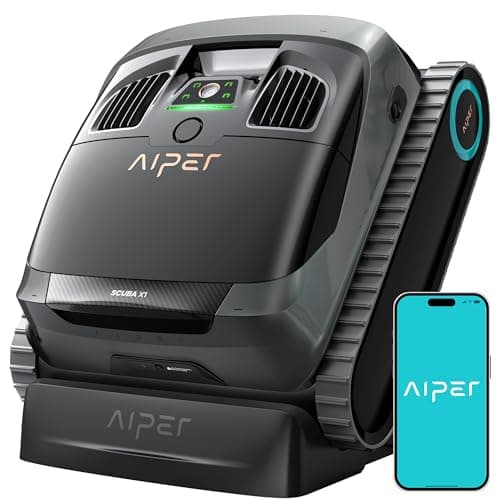
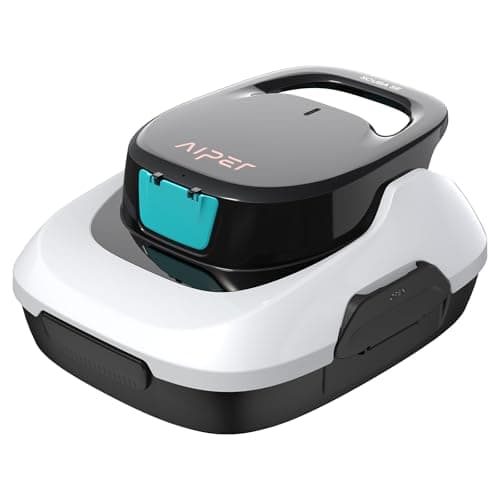
Take a mid-range cordless robot at around $500. Add a filter or basket a season ($20-60), a set of brushes once ($25), and possibly a battery in year four ($80 where available). That is roughly $700-800 over five years, or $140-160 a year.
Against: 40-60 hours a season of your time, reduced pump hours, less backwashing, and a cleaner pool between sessions because the robot runs three times a week where you would have vacuumed once.
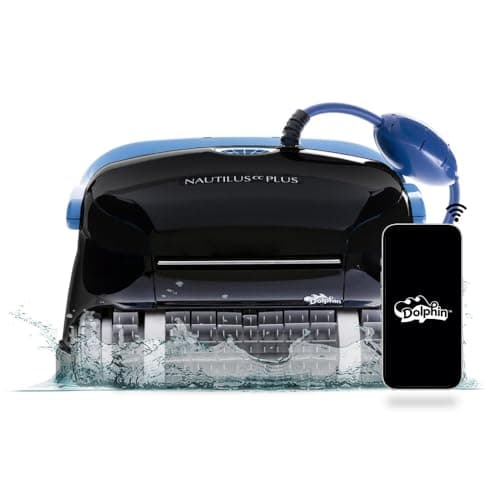
A corded Dolphin at $899 with $26 filters, $30 brushes and $35 tracks over a seven-to-ten-year life works out lower per year, which is the long-horizon case.
When the answer is genuinely no
- Spas, hot tubs and plunge pools under about 150 sq ft. A cordless handheld is a three-minute job at a third of the price — see the handheld roundup.
- A pool you rarely use and keep covered. Very little debris enters, and a monthly manual vacuum is proportionate.
- A pool whose debris is mostly acorns, cones and rigid twigs. Robot intakes jam on those. A pressure-side cleaner is the right machine — compared here.
- Buying a machine rated well below your pool size. It will never finish, and the money is wasted in a way no setting can recover. Check the rated area first.
- Buying a cordless machine with no replacement battery available, if you were pricing it as a ten-year purchase. It is not one.
What a robot does not do
It does not kill algae — chlorine does; the algae page is explicit about this. It does not replace your filter or your circulation system. It does not clean steps, benches, behind ladders or the skimmer throat properly. And it does not balance your water. A robot handles the floor, usually the walls, sometimes the waterline, and nothing else.
The honest summary
If your pool is over about 300 sq ft and you swim in it, a robot is one of the few pool purchases that pays back in time within a single season. If your pool is tiny, covered, or full of acorns, there is a cheaper right answer and we would rather you bought that.