This page exists to stop you overspending. A small pool — a plunge pool, a 12 × 24 ft rectangle, a courtyard pool, a spool — is the easiest cleaning job in the category, and almost every feature the market charges a premium for is aimed at a problem a small pool does not have.
The features a small pool will never use
- Long runtime. A 160-minute robot in a 400 sq ft pool finishes in well under an hour. The extra battery is dead weight and dead money.
- Camera mapping and debris detection. These earn their price on freeform, multi-level, beach-entry pools. On a small rectangle, pattern navigation covers everything in a single pass set.
- 5-liter baskets. Useful under a mature oak. In a small screened-in pool, you are emptying a mostly-empty basket.
- Rated areas above 1,600 sq ft. You are paying for coverage capacity you cannot use.
The features that still matter
Wall and waterline coverage — more, not less
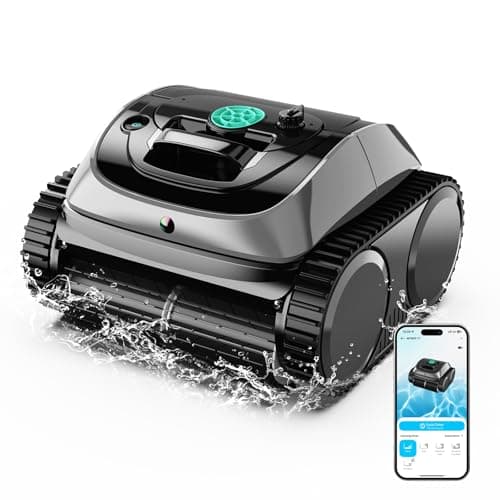
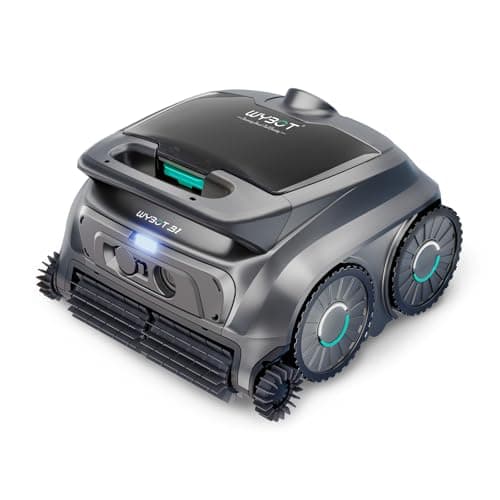
This is the counterintuitive part. A small pool has a high wall-to-floor ratio: in a 400 sq ft pool, the walls can be as much surface as the floor. So a floor-only machine leaves proportionally more of your pool uncleaned than it would in a big pool. Wall climbing is worth more here than in a 40-footer, not less, which is why the WYBOT B1 — a climber at around $335 — tops this page over cheaper floor-only machines.
Weight and ease of handling
Small pools are often in tight spaces: courtyards, decks, screened enclosures. Lifting a light machine out and stowing it somewhere sensible is a bigger factor than it is for a suburban backyard pool with a storage shed.
Obstacle crossing
Small pools are dense with features relative to their area — a main drain, step returns, a bench, often a spa spillover. A machine that strands on a drain in a 400 sq ft pool has lost a quarter of its coverage. “High obstacle crossing” is a real spec here.
Where a handheld is genuinely the right answer
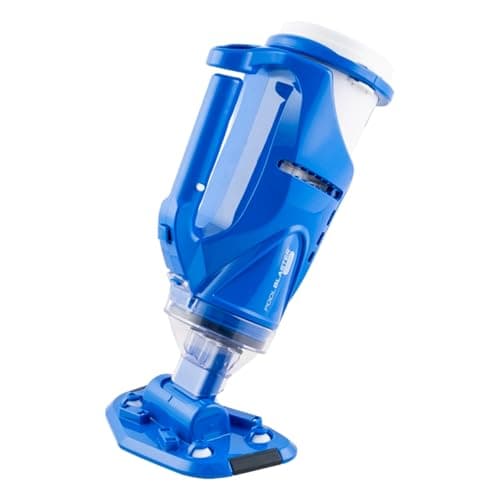
For a plunge pool, a spool or a cold-plunge tub under roughly 150 sq ft, a cordless handheld is a legitimate primary tool. It is a three-minute job, there is nothing to charge or store between uses, and the Pool Blaster Catfish Gen 2 costs about a third of the cheapest robot. The handheld roundup covers the choice, and robotic versus manual compares them fairly.
The no-electronics option
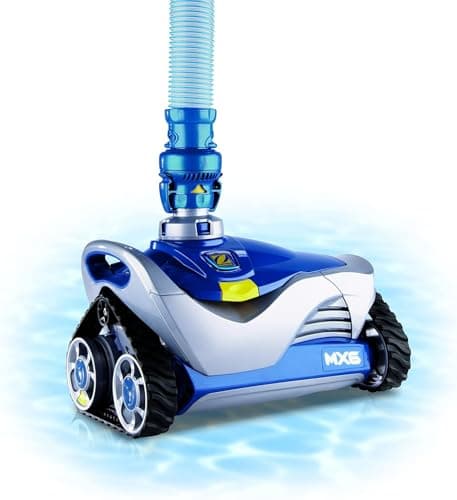
Small pools are also where the Zodiac MX6 makes most sense. It is a suction cleaner — so debris goes to your filter and you need pump flow — but it is remarkably maneuverable in tight spaces, there is nothing to charge, and it will still be working in fifteen years. Under $400 with no battery to replace is a different kind of value proposition.