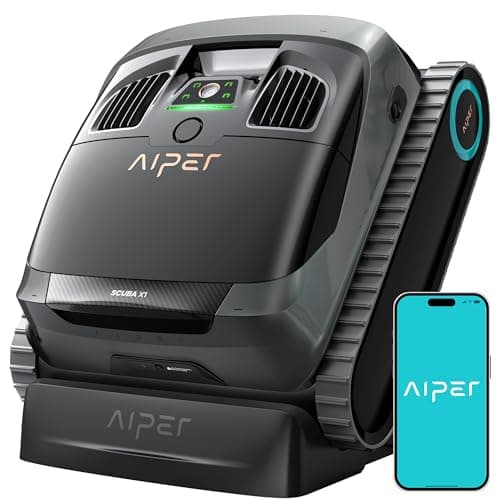
Best for Inground
The Best Robotic Pool Cleaners for Inground Pools
Seven inground picks, gated on rated pool size first.
Top pick: Aiper Obsidian
$799.98$1,399.99· View on Amazon
43% off. Price checked November 6, 2026. #ad How we earn
A rated pool size and a surface type eliminate most of the market before you ever look at a feature list.
By Mike M. · Published November 6, 2026 · Last updated November 6, 2026
How this page is funded: we earn an Amazon commission on qualifying purchases made through links here, at no extra cost to you. It does not change which products we pick or the order we rank them in — here is the method and the full disclosure. Prices are live from Amazon, checked November 6, 2026.
Your pool type, size and surface rule machines in and out before any feature matters. Inground and above-ground need different weights and different wall behavior; pebble and gelcoat need opposite brush and track properties; and a machine rated below your pool area never finishes a cycle.
Pool type decides weight, wall behavior and whether a cable can reach the water at all. Prices are live from Amazon, checked November 6, 2026.
Best for Inground
Seven inground picks, gated on rated pool size first.
Top pick: Aiper Obsidian
43% off. Price checked November 6, 2026. #ad How we earn
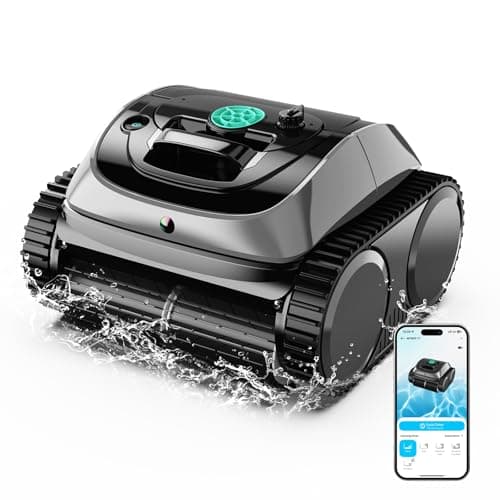
Best for Above-Ground
Six above-ground picks, chosen on cove geometry and liftable weight.
Top pick: WYBOT C1
44% off. Price checked November 6, 2026. #ad How we earn
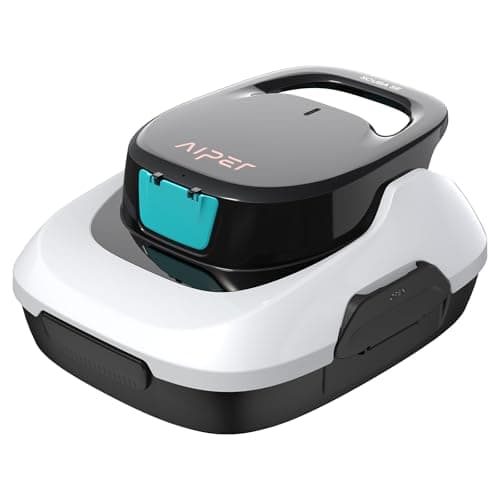
Best for Intex
Four honest picks for soft-sided pools — and what to avoid.
Top pick: Aiper Scuba SE
19% off. Price checked November 6, 2026. #ad How we earn
Surface decides brush compound and track grip, and the right answer genuinely inverts between pebble and gelcoat. Prices are live from Amazon, checked November 6, 2026.
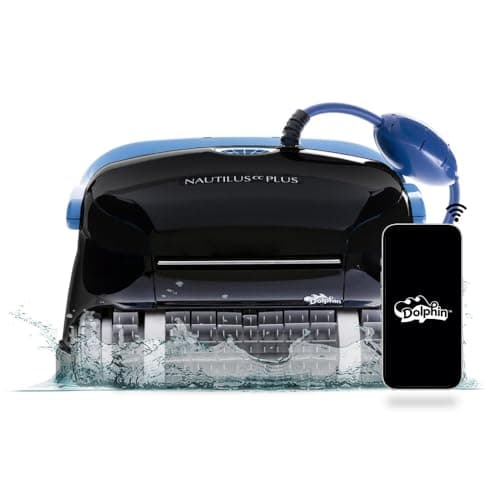
Best for Vinyl Liner
Five liner-safe picks, on brush compound and track grip.
Top pick: Dolphin Nautilus CC Plus
Price checked November 6, 2026. #ad How we earn
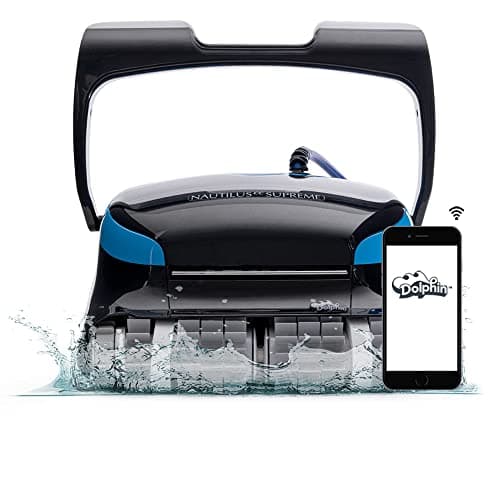
Best for Pebble & Gunite
Five picks for abrasive surfaces, with brush-wear expectations stated.
Top pick: Dolphin Nautilus CC Supreme
Price checked November 6, 2026. #ad How we earn
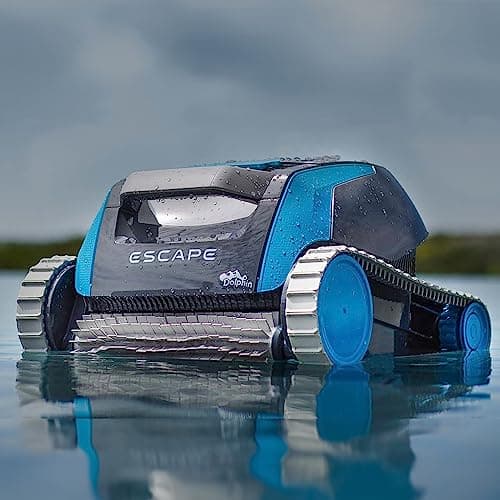
Best for Fiberglass
Five picks for slick gelcoat, chosen on track grip.
Top pick: Dolphin Escape
Price checked November 6, 2026. #ad How we earn
The hard gate. Below about 1,500 sq ft everything finishes and you choose on features; above about 2,000 sq ft most machines do not finish at all. Prices are live from Amazon, checked November 6, 2026.
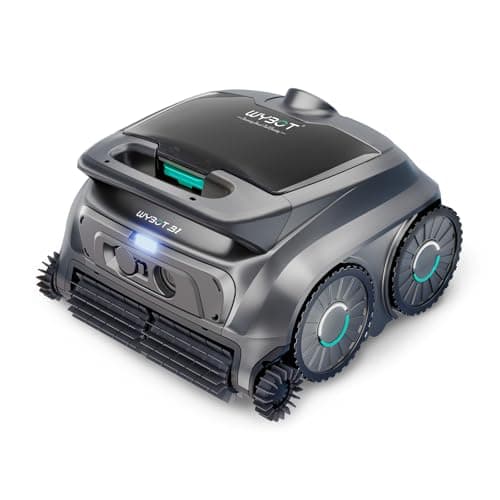
Best for Small Pools
Five small-pool picks, with the overspend line marked.
Top pick: WYBOT B1
12% off. Price checked November 6, 2026. #ad How we earn
Best for Large Pools
Six picks for pools over 2,000 sq ft — ranked on finishing, not features.
Top pick: Dolphin Nautilus CC Supreme
Price checked November 6, 2026. #ad How we earn
Three properties of your pool eliminate most of this market before you look at a single feature list. Apply them in order and the shortlist writes itself.
This is the one that cannot be recovered from. Measure your pool’s longest dimension and its floor area, then read what the manufacturer actually publishes — and note that the two conventions in this market are not interchangeable.
A 16 × 32 ft pool is 512 sq ft of floor and roughly 900 sq ft of total wetted surface once you include the walls. So a machine rated 860 sq ft that you also want to climb is already over its rating.
Exceeding the rating does not produce a dramatic failure. The machine simply never finishes — it covers perhaps 70% and parks, and the part it misses is the same part every single cycle. That reads as poor navigation and is actually arithmetic. It is the most common and least recoverable mistake in the category.
A rectangle is kind to pattern navigation: a machine driving parallel lines will cover it. Freeform, kidney, L-shaped, multi-level and beach-entry pools are not, and on those shapes pattern navigation leaves the same regions uncleaned every cycle.
That is where camera mapping earns its price — the Beatbot AquaSense 2 Ultra, the Aiper Scuba V3, the WYBOT S2 Vision. On a plain rectangle it earns nothing, and a $400 pattern-navigating robot covers the floor just as well. This is the single clearest “spend more or spend less” signal in the whole market.
Surfaces split into two opposite problems, and advice written for one is wrong for the other.
Rough and abrasive — pebble, exposed aggregate, textured gunite. Grip is excellent, so climbing is easy. But the surface is effectively sandpaper: brushes wear in about a season rather than two or three, and grit works into the drivetrain. Here brush price and availability matter more than any headline spec, which is why the pebble roundup leans Maytronics and Hayward — and why a suction cleaner with no brushes to destroy stays genuinely competitive.
Smooth and slick — fiberglass gelcoat above all, and newer vinyl liner. Brushes last two or three seasons, but climbing fails because there is nothing to bite. Tracked drives with defined tread hold where wheels spin, which is why the fiberglass roundup ranks on track grip. Gelcoat also shows fine sediment that would be invisible on pebble, so fine filtration matters more here.
Vinyl liner carries its own constraint: a liner is a $4,000-6,000 consumable, and brush compound is a real risk rather than a theoretical one. The liner page covers it, and it is why Maytronics’ above-ground machine deliberately does not climb.
Over about 2,200 sq ft, cordless becomes awkward — even the longest-running battery machine has to charge mid-job, and the half it does second is always the same half. Corded has no runtime limit at all.
Under 2,200 sq ft the choice stops being about whether the machine can finish and becomes about how long you want it to last: cordless gives you the better current specification, corded gives you no battery to age.
Worth separating, because most reviews just rank inground machines and note which ones “also work” above ground. An above-ground pool has a flat floor, a tight radius cove where debris collects, a thin liner wall you should not scrub hard, and a four-foot wall you lift the machine over. A soft-sided pool adds a floor that flexes under the machine’s weight and a wall that deflects so climbing physically cannot work.
Those are genuinely different requirements, and the above-ground page and the Intex page are written to them rather than adapted from an inground list.