Before you buy a battery, buy a charger
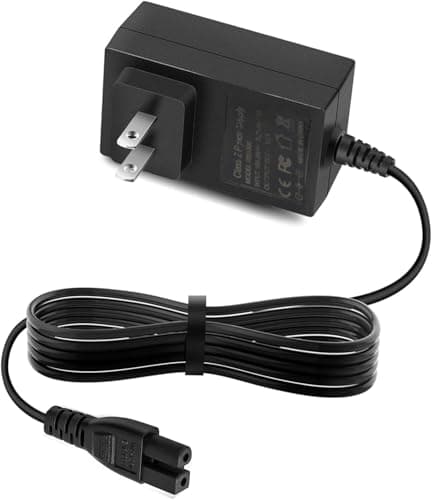
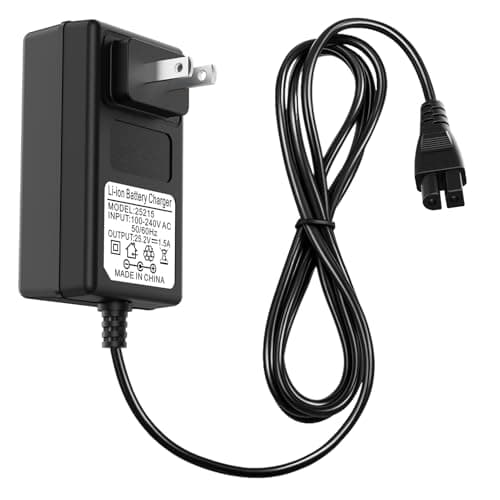
This is the most useful thing on the page. A cordless pool robot that will not charge is far more often a failed charger than a failed pack — chargers are small external adapters that live outdoors, get splashed, get stepped on and get coiled tightly, and they fail.
The symptom is identical to a dead battery: plug it in, nothing happens. A replacement adapter is $10-17 against $69-80 for a pack. The charging diagnostic runs through it in cheapest-first order, including the two free checks (corroded contacts, water bridging the port) that come before either purchase.
Match the voltage exactly. It is printed on your original adapter and on the robot — 12.6 V on the Aiper SE and Seagull lines, 25.2 V on the WYBOT C-series. A wrong-voltage adapter on a lithium pack is a fire risk, not a performance compromise.
What packs actually exist
| Model | Pack | Cost |
|---|
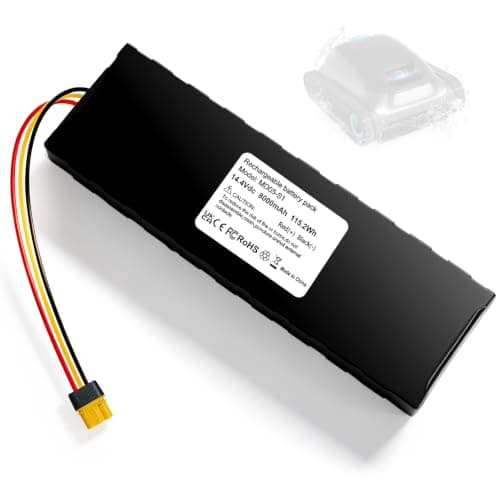
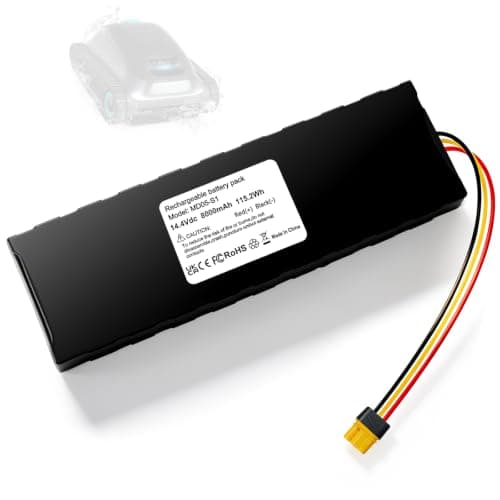
| Aiper Scuba S1 | 8 Ah / 8000 mAh, two sources | ~$79-80 |
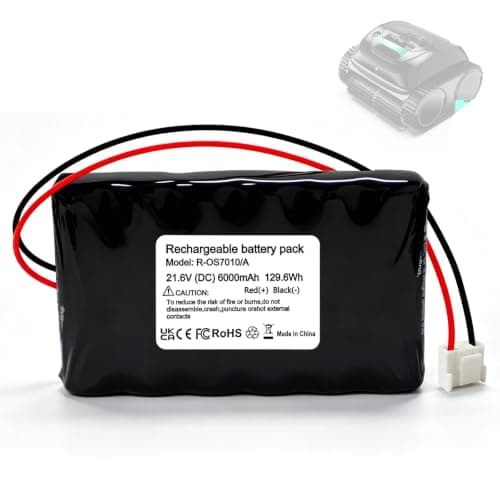
| WYBOT C1 | 6 Ah, 21.6 V | ~$69 |
| Beatbot (any model) | No established third-party pack | — |
| Aiper Obsidian, Scuba V3, X1 line | Too new for an aftermarket pack | — |
| WYBOT S2, B1 | Verify before assuming | — |
| Dolphin, Polaris pressure-side, Zodiac, Hayward | No battery at all | — |
Note the Aiper S1 packs are explicitly not compatible with other Aiper models — the listings say so. Check your exact model.
Why this is the question that decides a cordless purchase
The dominant failure mode of a cordless pool robot is a lithium pack that has spent three or four summers cycling in warm chlorinated water. Owner reports across brands cluster around noticeable runtime decline by the third or fourth season. That is normal lithium behavior, not a defect.
What differs is what happens next. With a pack available at $69-80 on a $400-600 machine, that is a routine consumable and the robot is a six-to-eight-year purchase. With nothing available, the machine is finished — and a $2,299 flagship with a sealed pack and no aftermarket is a serious exposure.
It is the core reason corded machines win over a ten-year horizon: a Dolphin has no pack at all, and every other wear part is a cheap numbered component.
Two warnings before you open the robot
Warranty. On most machines, opening the unit voids remaining coverage. If it is still in warranty, claim it — the warranty guide covers what to check.
Cell quality is unproven. Aftermarket packs do not publish cycle-life figures, and we are not going to invent one. Buy from a seller with a real return policy.
Making the pack you have last longer
- Winter storage is the big one. Store at roughly half charge, indoors, above freezing, and top it up once mid-winter. A pack left flat in an unheated garage can fall below its safe floor voltage, at which point the battery management system refuses to accept a charge — permanently, by design. There is no home fix for this and it is the most expensive avoidable failure in cordless pool robotics.
- Do not leave it in the pool unless it has a charging dock. A warm pack held at high charge is in the worst condition for lithium longevity — covered here.
- Keep it out of direct sun. UV ages the shell, the cable jacket and the seals faster than pool chemistry does.
- Rinse the filter every cycle. A blinded filter makes the pump work against a closed system, drawing excess current continuously — which loads the pack as well as the motor.
Gradual decline versus a dead pack
Distinguish the two. “Charges but only runs forty minutes where it used to run two hours” is normal degradation and nothing is broken — it is the end of a battery’s useful life, usually in year three or four. “Will not charge at all” is a fault, and the charger is the first suspect. The lifespan guide covers what fails and when.