Universal means universal
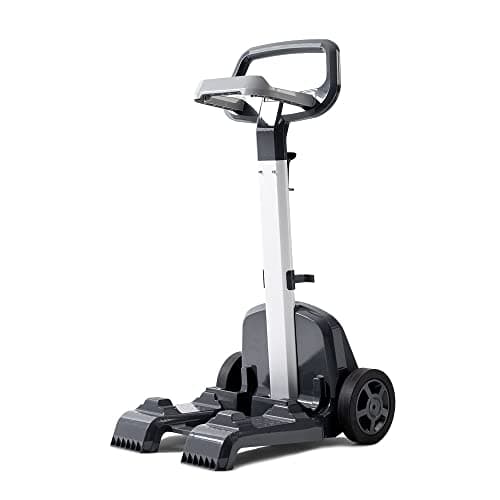
The most useful fact on this page: Maytronics’ universal caddy is sold as fitting any robotic pool vacuum cleaner, not only Dolphins. It will carry an Aiper, a Beatbot or a WYBOT perfectly happily.
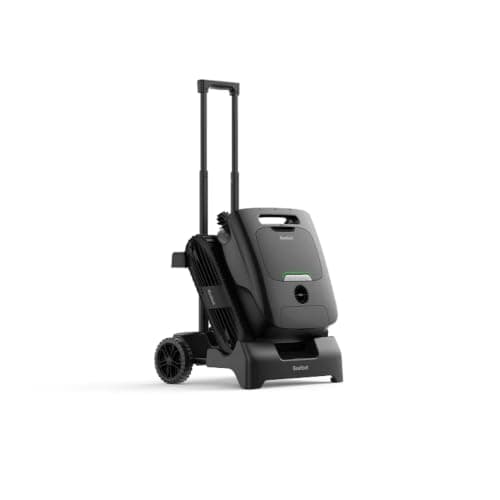
That matters because it is also the cheapest of the genuine options at about $99, against Beatbot’s equivalent at about $129 for the same job. Unless you specifically want a matching finish beside a Beatbot, buy the cheaper one.
Why a cart is not a luxury
Consider what actually happens with an unused robot. You lift a wet machine out of the water — 20 to 30 pounds, often reaching across coping, sometimes from a ladder on an above-ground deck — carry it somewhere, and then have to carry it back next time.
That is the chore that stops people running their robot. Not the cost, not the complexity: the lifting and carrying. And a robot that runs once a month instead of three times a week removes a small fraction of the debris, because frequency is what removes debris, not cycle length.
A caddy turns it into wheeling something. On a corded machine it also gives 40-70 feet of cable somewhere to live coiled rather than folded in a corner, which materially reduces cable twist — the main day-to-day annoyance of a corded robot.
UV is what actually destroys pool robots
Not the chlorine. Not the water. The sun.
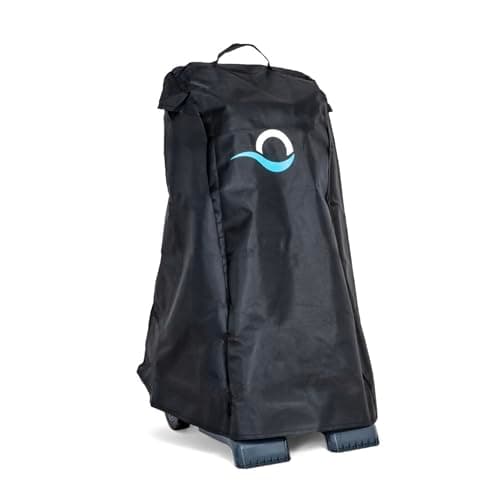
A robot left on hot coping in direct sunlight between cycles is being UV-aged continuously, and UV embrittles the shell, the cable jacket and — most importantly — the seals. Seal failure leading to water ingress is the one fault that kills a pool robot outright rather than degrading it, and it is not economically repairable.
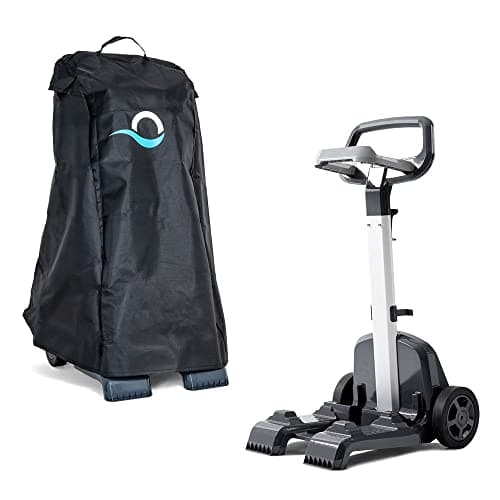
A cover costs about $19 on its own, or roughly $20 more as part of the caddy bundle. For a $500-2,300 machine, that is the highest-return $20 available to you — the lifespan guide puts UV at the top of the list of avoidable damage.
A caddy cover is not weatherproof storage. If you can keep the robot indoors or in a shed, do that instead — the cover is for the machine that has to live outside.
Which to buy
| Situation | Buy |
|---|
| Machine over ~20 lb, lives outside | Caddy + cover bundle, ~$119 |
| Machine over ~20 lb, stored indoors | Caddy only, ~$99 |
| Already have a caddy, no cover | Cover only, ~$19 |
| Light machine (under ~15 lb) stored indoors | Neither — you genuinely do not need one |
| Beatbot AquaSense 2 Ultra owner | Nothing — a caddy is already in the box |
That last row is worth noting as a total-cost point: the AquaSense 2 Ultra includes a caddy, which is $99-129 of value that does not show up in a sticker-price comparison.
Which machines genuinely need one
The corded Dolphins (cable plus weight), the Beatbot flagships, the Aiper X1 line, and anything described as commercial-duty — the Dolphin Wave 60 is heavy enough that handling it without the caddy is a two-person job, which is why Maytronics includes one.
Which machines do not: the Aiper Scuba SE and the lighter WYBOT models. A light floor robot in a small above-ground pool is a one-handed lift, and that lightness is a real part of why those machines get used.