Polaris is two product lines, and only one is distinctive
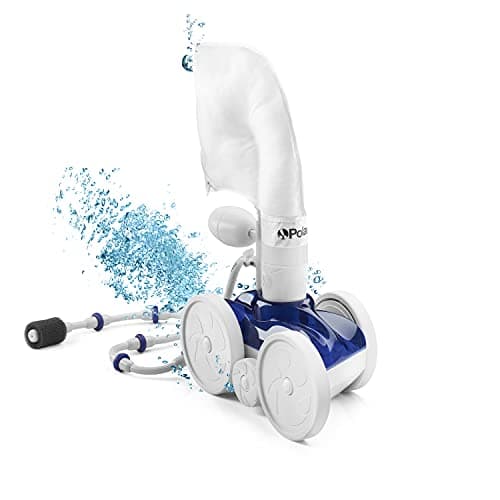
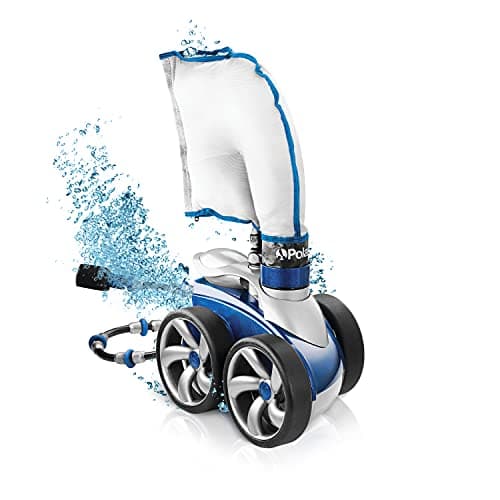
The products people mean when they say “a Polaris” are the pressure-side cleaners: the Vac-Sweep 280 and 3900 Sport. Driven by water pressure, usually from a dedicated booster pump, bagging debris into a zipped bag they carry, with no electronics in the water at all.
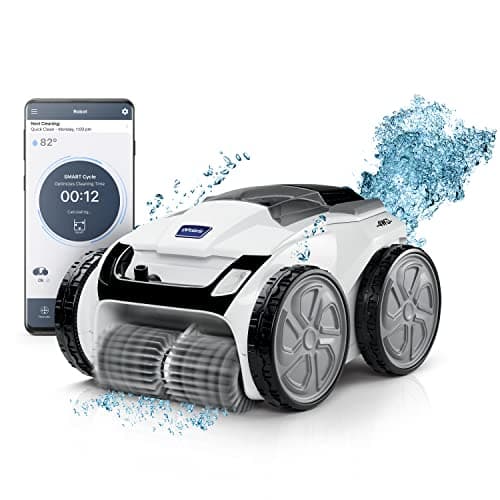
Polaris also makes robots — the VRX iQ+ here — which is the newer and less distinctive half of the range.
What pressure-side does that no robot can
It eats large woody debris. An acorn, a pine cone, a eucalyptus pod, a rigid twig: none of these fold, and a robot’s screened intake either bridges across them or jams on them. That is a geometry limit, not a power limit, and no amount of suction or filtration spec changes it.
A pressure-side cleaner has a wide bag throat and a venturi lifting debris into the bag. An acorn goes in. If you are under a mature oak, that single fact outweighs every specification comparison on this site — robotic versus pressure-side works it through.
The second thing it does: debris never enters your plumbing. Nothing reaches your pump basket or filter, which on a leaf-heavy pool saves hours of backwashing — and on a sand filter saves the treated water that backwashing dumps.
The booster pump, which is the real cost
Both the 280 and 3900 Sport generally need a dedicated booster pump: plumbed into your pad, wired, and running throughout every cleaning cycle. If you already have one — and many pools built in the Polaris era do — these cleaners are excellent value. If you do not, add the pump, the installation and its electricity before you compare prices. Pool pumps are among the largest electrical loads in a home per the Department of Energy.
Bag choice is the lever nobody uses
Pressure-side bags come in grades, and most owners run whatever came in the box forever. The standard all-purpose bag flows well and holds volume. A fine sand-and-silt mesh retains far smaller particles for about $13 and fills faster. Matching bag to debris is the single highest-return adjustment available to a pressure-side owner — both are listed in the parts section.
The VRX iQ+ robot: one real advantage
70 feet of cable on a tangle-reducing swivel. Cable twist is the number one complaint about every corded robot, and Polaris’ swivel is the only genuine engineering answer anyone offers. On a long or freeform pool that is worth real money, and the 70-foot reach exceeds Maytronics’ longest residential rating.
Against that: around $1,499, no published micron figure, and Polaris robot spares are less widely stocked than Maytronics’. A Dolphin Nautilus CC Plus costs about $600 less with the best parts network in the category. The Dolphin comparison does not favor it unless cable management is your binding problem or you are already in the iAquaLink ecosystem.
Longevity, which is Polaris’ underrated strength
The pressure-side machines have no circuit board, no motor and no battery. A complete refresh is a bag, a tail sweep and a set of wheels, and twenty-year-old units are still running. Parts are cheap and available from a dozen suppliers.
For a rental property, a second home, or anyone who would rather buy once than buy a robot twice, that is a genuinely different value proposition.
Which Polaris to buy
- Acorns, cones and heavy woody debris, booster pump installed: 3900 Sport.
- Small-to-mid pool, simplicity, booster pump installed: 280.
- Long or freeform pool where cable twist is the problem: VRX iQ+.
- Anything else: honestly, a robot from Dolphin, Aiper or Beatbot. We would rather say that than oversell the range.