Cordless chargers: the $10 fix
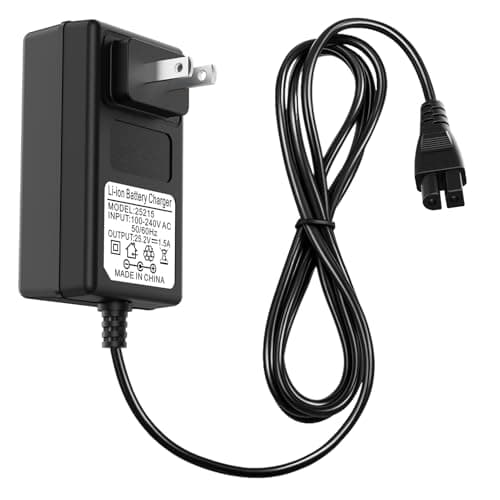
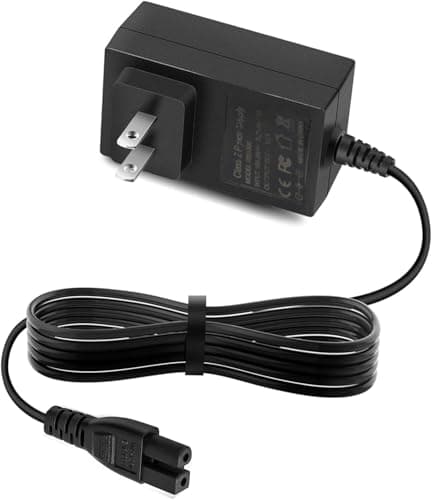
A cordless pool robot’s charger is a small external adapter that lives outdoors, gets splashed, gets stepped on and gets coiled tightly around itself. It fails, and when it does the symptom is exactly the same as a dead battery: plug it in, nothing happens.
Owners overwhelmingly assume the battery. The charger costs a twentieth as much, so it is the correct first test — the full diagnostic runs in cheapest-first order, including the two free checks that come before any purchase.
If your charger has an indicator LED and it does not light, that is your answer. If it has no LED, a known-good replacement is the cheapest possible test.
The voltage rule, which is a safety matter
Match the voltage exactly. It is printed on your original adapter and usually on the robot too:
- 12.6 V — Aiper Scuba SE, Seagull SE and the 600/800B/1000/1500 series
- 25.2 V — WYBOT C1, C2, C2B, OS7010C
- Other models — read your own label. We are not going to list a voltage we cannot verify for your unit.
A wrong-voltage adapter on a lithium pack is a genuine fire risk rather than a performance compromise. Check the connector shape and pin count too — a barrel that fits physically can still be wired differently. The CPSC’s Pool Safely program is the reference for electrical safety around water.
Corded machines: the power supply
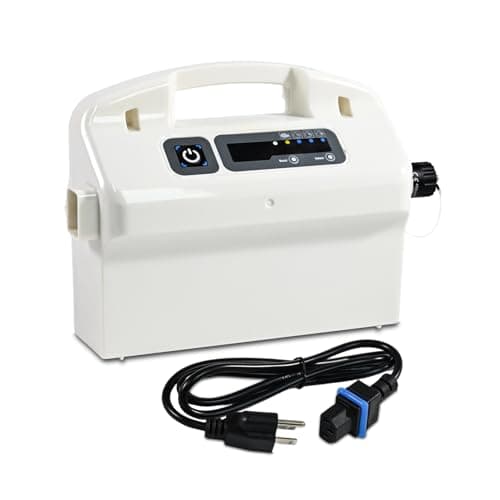
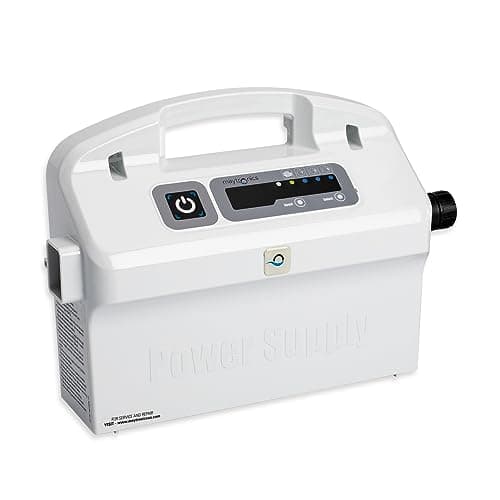
A corded robot’s transformer sits on the deck and steps mains down to the low-voltage DC the machine runs on. It is a genuine failure point after about five years, typically presenting as a machine that does nothing at all.
For Dolphin machines using the 9995678 supply:
- Genuine Maytronics — about $210. No question about output curve or protection circuitry, and it keeps a warranty claim clean.
- Aftermarket 180 W equivalent — about $130. Matches the original rating and is usually in stock when genuine is not.
Either way it is a fraction of a new machine, which is the whole Dolphin ownership argument — every expensive failure on a Dolphin is a purchasable numbered part.
On an out-of-warranty machine the aftermarket unit is the pragmatic choice. Buy from a seller with a real return policy: this is power electronics sitting beside water.
Siting a power supply properly
Three requirements, and getting them wrong is why power supplies fail early:
- Dry. Not in a spot that floods, not where the hose spray lands.
- Shaded. UV and heat age the case and the internals. A transformer baking on hot coping all summer is being cooked.
- GFCI-protected, and within cable reach of the water without the cable being stretched taut.
If your only outdoor outlet is thirty feet from the pool, solve that before buying a corded machine — it is one of the genuine reasons to choose cordless.
Charge ports and dock contacts
Free to check and worth doing before buying anything. Pool robots charge through a port or dock contacts that live in a chlorinated, mineral-rich environment. Look for white crust, green corrosion or a bent pin. Clean gently with a dry brush or contact cleaner — never abrasives on plated contacts.
On dock-charging models (the Aiper Obsidian and Scuba V3), also confirm the robot is seating fully. A dock that looks engaged and is a millimeter short charges nothing.
And the simplest false alarm of all: most cordless robots refuse to charge while water bridges the contacts. That is a safety interlock, not a fault. Dry the port and wait.