Skip to content
Robot PoolCleaner Picks

What a Robotic Pool Cleaner Costs to Buy and Run

The purchase price is the part everyone looks at and the smallest part of the answer. Consumables and pump time are where the money actually is.

By Mike M. · Published November 6, 2026 · Last updated November 6, 2026

How this page is funded: we earn an Amazon commission on qualifying purchases made through links here, at no extra cost to you. It does not change which products we pick or the order we rank them in — here is the method and the full disclosure. Prices are live from Amazon, checked November 6, 2026.

Robotic pool cleaners cost $130-2,500 to buy. Running costs are modest: roughly 150-200 W for a couple of hours per cycle, plus $20-100 a season in filters and $25-35 in brushes. The real saving is shorter pump run-time, since the pump is a far larger load.

What to look for

1. Purchase price, by what you get

BandWhat it buys
$130-200Floor-only cordless, small above-ground pools, ~90 min, 180 micron
$330-450Wall climbing, 150-160 min, app control, both pool types
$450-6006,800 GPH, 5 L baskets, published 10-micron filtration
$600-900Waterline passes, 3-micron filtration, charging docks, cameras
$900-1,500Corded 40-50 ft machines, surface skimming, 70 ft cables
$1,500-2,500Camera mapping with debris detection, five-function flagships

The $450-900 band is where capability per dollar peaks — the under-$1,000 roundup covers it.

2. Electricity: genuinely trivial

A robotic cleaner draws on the order of 150-200 W. A two-hour cycle three times a week is roughly 1-1.2 kWh a week, or something like 25-30 kWh across a six-month season. At typical US residential rates that is a few dollars a season.

We are not going to print a dollar figure as though it were precise: rates vary by a factor of three across the country and your machine’s draw may differ from the range above. Look up your own rate per kWh and multiply — the number will be small either way.

3. The pump-time saving, which is the real money

Here is the comparison that matters. A suction cleaner or a manual vacuum only works while your pool pump runs. Pool pumps are among the largest electrical loads in a home, and the Department of Energy identifies pump run-time and sizing as a primary efficiency target.

A robot cleans with the pump off, so your pump only needs to run for circulation and chemistry — which for most pools is considerably less than the hours a cleaning cycle would demand. On a single-speed pump, cutting an hour a day of run-time dwarfs the entire running cost of the robot.

4. Consumables, with real prices

ItemTypical costHow often
Dolphin ultra-fine cartridges (4-pack)~$19-26Annually
Aiper filter basket or cloth~$20-60Annually
Beatbot genuine filter basket~$60-100Annually
Dolphin brush pair~$301-3 seasons
Dolphin track pair~$352-4 seasons
Replacement charger~$10-17As needed
Replacement battery (where sold)~$69-80Year 3-5
Caddy (optional but advisable)~$99-129Once

Note the spread in filter costs — $19 for a Dolphin four-pack against $100 for a single Beatbot Ultra basket. Over five years that is a real difference, and it is the figure nobody checks before buying. Filters by brand has all of it.

5. Five-year totals, worked

Cordless mid-range, $500: $500 purchase + ~$150 filters + ~$25 brushes + ~$80 battery in year four = roughly $755, or about $150 a year.

Corded Dolphin, $899: $899 purchase + ~$100 filters + ~$30 brushes + ~$35 tracks = roughly $1,064 over five years. But the machine is good for seven to ten, so over eight years with a $110 motor in year seven it is roughly $1,175, or about $147 a year — and falling.

Budget cordless, $130: $130 + ~$60 filters over three seasons = roughly $190. If the battery dies in year three with no replacement sold, that is the end — about $63 a year, which is still the cheapest per-year of the three, for a floor-only machine in a small pool.

The costs people forget

  • A caddy, at $99-129, if the machine is over about 20 lb. Not optional in practice.
  • A booster pump, if you were comparing against a pressure-side cleaner.
  • A second filter set, so you can run two and wash two. The Dolphin four-pack solves this for $26; most brands do not.
  • The sunk cost of buying too small. A machine rated below your pool area never finishes, and no setting recovers that.
What to buy, given the above

Our picks for this job

Tap any row for the full write-up. Prices are live from Amazon, checked November 6, 2026.

#ProductBest forScorePrice
1
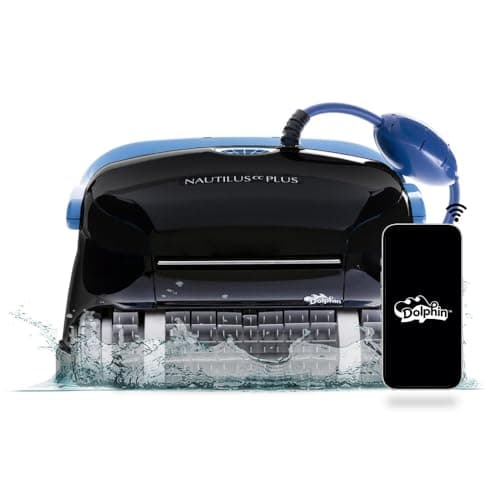
Dolphin Nautilus CC Plus

Dolphin Nautilus CC Plus

Dolphin · Corded, mains power supply — no battery

Lowest cost per year long-term8.1out of 10
$899.00· View on Amazon

Price checked November 6, 2026. #ad How we earn

2
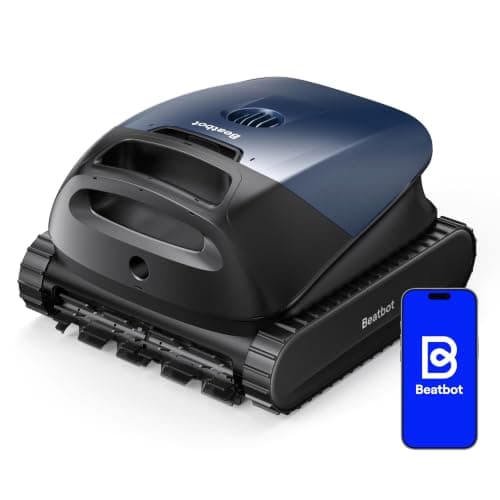
Beatbot Sora 10

Beatbot Sora 10

Beatbot · 6,800 GPH

Best capability per dollar up front8.5out of 10
$499.00$699.00· View on Amazon

29% off. Price checked November 6, 2026. #ad How we earn

3
Ultra-Fine Cartridge Filters for Dolphin Nautilus CC Plus (4-pack)

Ultra-Fine Cartridge Filters for Dolphin Nautilus CC Plus (4-pack)

Aftermarket · Aftermarket, listed as compatible

Cheapest consumable in the category7.1out of 10
$25.99$29.59· View on Amazon

12% off. Price checked November 6, 2026. #ad How we earn

4
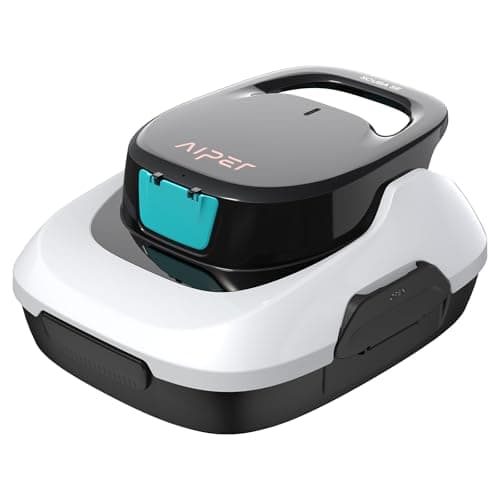
Aiper Scuba SE

Aiper Scuba SE

Aiper · Cordless, 90-minute rated runtime

Lowest total cost, smallest capability5.8out of 10
$129.99$159.99· View on Amazon

19% off. Price checked November 6, 2026. #ad How we earn

The picks in full

Dolphin Nautilus CC Plus

Lowest cost per year long-term

The default corded robot for a 40-foot inground pool: it climbs walls, it has never needed charging, and Maytronics parts are stocked everywhere — which is why it outlives cordless units.

Spec score

8.1/ 10 — derived from published specs, see the rubric
Debris capacity
8.0
Surface coverage
6.5
Filtration
9.0
Runtime & coverage
9.5
Value for spec
8.0

Published specifications

PowerCorded, mains power supply — no battery(retailer listing)
Rated pool sizeInground pools up to 40 ft in length(retailer listing)
WallsWall-climbing scrubber brush(retailer listing)
ControlWi-Fi app control(retailer listing)
Filter accessTop-load filter cartridges(retailer listing)
Fine filtrationUltra-fine cartridges sold separately(retailer listing)

What works

  • No battery means no battery to degrade — the single biggest cause of a dead cordless robot at year three
  • Ultra-fine cartridges are a $19-26 upgrade, which makes it the cheapest route to real fine filtration
  • Maytronics spares — brushes, tracks, filters, power supplies — are stocked by everyone
  • Top-load filter access means you empty it without turning it over

What doesn't

  • A floating cable in the pool, which tangles on a freeform shape and has to be stowed
  • The power supply needs a dry, shaded, GFCI-protected spot near the pool
  • No waterline pass — that is the CC Supreme

Who should skip this

Skip this one if your pool is freeform or over 40 ft, or you cannot site a power supply within cable reach of the water.

Beatbot Sora 10

Best capability per dollar up front

6,800 GPH, a 5-liter basket and five hours of runtime for under $500 — the best published capacity-per-dollar on this site, with a coarse 150-micron filter as the compromise.

Spec score

8.5/ 10 — derived from published specs, see the rubric
Debris capacity
9.0
Surface coverage
8.5
Filtration
6.0
Runtime & coverage
9.5
Value for spec
9.5

Published specifications

Suction6,800 GPH(retailer listing)
PowerCordless, 5-hour rated runtime(retailer listing)
Basket5 L(retailer listing)
Filter rating150 micron(retailer listing)
Surfaces cleanedFloor, walls, waterline and 12-inch shallow water(retailer listing)
NavigationSonicSense AI obstacle avoidance(retailer listing)
RetrievalAuto waterline parking(retailer listing)

What works

  • A 5 L basket is the largest at this price — it is the single best predictor of leaf performance
  • Five hours of runtime means a heavily loaded pool gets a full cycle plus a second pass
  • Shallow-water capability down to 12 inches handles tanning ledges and beach entries
  • 6,800 GPH matches machines costing three times as much

What doesn't

  • 150-micron filtration is coarse — fine silt, pollen and dead algae will pass through
  • No surface skimming
  • SonicSense is avoidance, not mapping, so coverage is pattern-based

Who should skip this

Skip this one if your debris is fine — sand, silt, pollen or post-treatment dead algae. At 150 micron this machine will stir it rather than remove it.

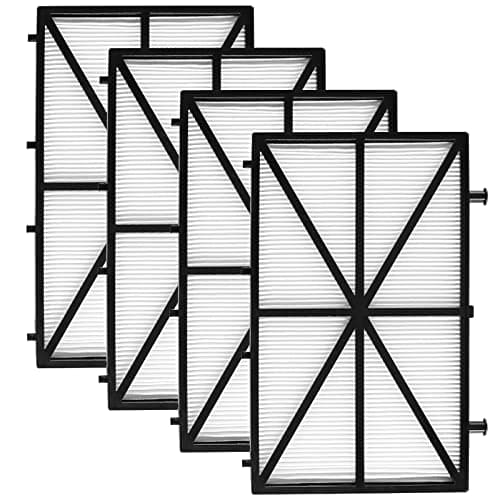
Ultra-Fine Cartridge Filters for Dolphin Nautilus CC Plus (4-pack)

Cheapest consumable in the category
Ultra-Fine Cartridge Filters for Dolphin Nautilus CC Plus (4-pack) robotic pool cleaner
$25.99$29.59· View on Amazon

12% off. Price checked November 6, 2026. #ad How we earn

Four ultra-fine cartridges for about $26 — the single best value upgrade on this entire site, and the reason a corded Dolphin beats most cordless robots on filtration.

Spec score

7.1/ 10 — derived from published specs, see the rubric
Debris capacity
6.0
Surface coverage
5.0
Filtration
9.0
Runtime & coverage
5.0
Value for spec
10.0

Published specifications

Part typeAftermarket, listed as compatible(retailer listing)
Quantity4 cartridges(retailer listing)
FitsDolphin Nautilus CC Plus, M200, M400(retailer listing)
Micron ratingNot published as a figure(not published)

What works

  • Four cartridges means you run two and wash two — the only practical way to use fine filtration
  • Turns a standard CC Plus into a silt and pollen machine for the price of a filter cleaner
  • Cheapest route to fine filtration anywhere in this category

What doesn't

  • Aftermarket, not Maytronics genuine
  • No published micron figure
  • Check the model: these do NOT fit the plain Nautilus CC

Who should skip this

Skip this one if you own the plain Nautilus CC (not the Plus) — the cartridge is a different size.

Aiper Scuba SE

Lowest total cost, smallest capability

The cheapest robot on this site that is still a robot: 90 minutes, 860 sq ft, floor only — exactly right for a 15-24 ft above-ground pool and wrong for anything bigger.

Spec score

5.8/ 10 — derived from published specs, see the rubric
Debris capacity
5.0
Surface coverage
4.0
Filtration
6.0
Runtime & coverage
5.0
Value for spec
9.5

Published specifications

PowerCordless, 90-minute rated runtime(retailer listing)
Rated pool sizeUp to 860 sq ft(retailer listing)
Pool typeAbove-ground(retailer listing)
ModesDual cleaning modes(retailer listing)
RetrievalSelf-parking(retailer listing)
WallsFloor cleaning only — no wall climb(retailer listing)

What works

  • By far the lowest entry price for a genuine cordless robot
  • 860 sq ft covers a 24 ft round above-ground pool with margin
  • Light enough to lift out one-handed, which matters on an above-ground deck
  • Self-parking, so you are not wading after it

What doesn't

  • Floor only — it will not touch your walls or waterline
  • 90 minutes is one cycle; a dirty pool needs two
  • 180-micron filtration is coarse: fine silt passes straight through

Who should skip this

Skip this one if your pool has walls you need scrubbed, you are fighting algae or fine silt, or your pool is over about 860 sq ft.

Questions people actually ask

How much electricity does a robotic pool cleaner use?

On the order of 150-200 W, so roughly 1-1.2 kWh a week on three two-hour cycles. Look up your own rate per kWh — the figure will be a few dollars a season either way.

What are the ongoing costs of a pool robot?

Filters ($19-100 a year depending on brand), brushes (~$30 every one to three seasons), tracks (~$35 every two to four), and on a cordless machine a battery around year four (~$70-80 where sold).

Does a pool robot save money overall?

Mostly through pump run-time, since a robot cleans with the pump off and the pump is a far larger load than the robot. It also saves backwashing and your time.

Which brand is cheapest to run?

Dolphin, clearly — ultra-fine cartridges at about $26 for four, brushes at $23-30, tracks at $35, all numbered and stocked. Beatbot is the most expensive on consumables.

How much is a pool cleaning robot?

$130 for a floor-only above-ground machine up to about $2,500 for a camera-mapping flagship. Capability per dollar peaks between $450 and $900.