Skip to content
Robot PoolCleaner Picks

What Consumer Reports Says About Robotic Pool Cleaners

The short answer is that they do not rate them. The useful answer is which independent standards do apply to a pool robot, and what to check in place of a score you cannot get.

By Mike M. · Published November 7, 2026 · Last updated November 7, 2026

How this page is funded: we earn an Amazon commission on qualifying purchases made through links here, at no extra cost to you. It does not change which products we pick or the order we rank them in — here is the method and the full disclosure. Prices are live from Amazon, checked November 7, 2026.

Consumer Reports does not publish ratings for robotic pool cleaners. Its robotic testing covers indoor robotic vacuums and mop combos, which are a different product category. For pool robots, the verifiable independent signals are UL or ETL safety listing, NSF certification for pool and spa components, and the manufacturer's own published specifications.

What to look for

The direct answer

Consumer Reports does not publish a ratings category for robotic pool cleaners. Checked November 2026: searching consumerreports.org for pool cleaner ratings returns vacuum cleaners, carpet cleaners, all-purpose cleaners, toilet bowl cleaners and water filters. There is no pool cleaner category among them.

What Consumer Reports does rate in robotics is robotic vacuums and mop combos — indoor floor robots. Those are a different product in a different environment, and their ratings say nothing about how a machine behaves submerged in chlorinated water climbing a wall.

This matters because the search results for this question are misleading. A number of pages rank for “best robotic pool cleaner consumer reports” while presenting their own rankings in language that implies a CR endorsement. If a page cites a Consumer Reports score for a pool robot, ask it for the link.

Why the category has no Consumer Reports coverage

Reasonable inference rather than a statement from CR, so treat it as that. Testing pool robots at the standard Consumer Reports applies to appliances would require multiple instrumented pools of different shapes, surfaces and volumes, held at controlled water chemistry, with repeatable debris loads — across inground, above-ground, vinyl, plaster, pebble and fiberglass. That is an expensive rig for a seasonal product with a comparatively small installed base.

The practical consequence for you: there is no single authoritative independent score for this category, from anyone. Any site presenting one has either built its own rubric or is repeating a manufacturer claim.

The independent signals that do exist

Three are real, verifiable and worth checking on any listing.

1. UL or ETL safety listing

A pool robot is mains-powered equipment used in water. A UL or ETL listing on the unit or its power supply means an accredited laboratory has tested it against a recognized electrical safety standard. This is the one certification you should not compromise on, and it is a genuine reason to be cautious with unbranded listings that do not mention one.

2. NSF certification for pool and spa components

NSF certifies pool and spa equipment and materials against public-health standards. Coverage is stronger for filtration and circulation components than for consumer robots, so not every machine will carry it — but where a manufacturer does hold it, it is independently verifiable rather than self-asserted. NSF publishes a searchable listing.

3. CPSC and Pool Safely

The U.S. Consumer Product Safety Commission runs Pool Safely and publishes recall notices. It does not rank cleaners, but it is the authoritative place to check whether a specific model has been recalled — which is a more valuable five minutes than reading another ranking.

What to check instead of a score

In the absence of independent testing, the next best thing is a published specification you can hold a manufacturer to. Four of them decide almost every outcome.

  1. Rated pool area. The only spec that can make a machine simply wrong. A robot rated below your pool’s area never finishes a cycle, and the part it misses is the same part every time.
  2. Published filter rating, in microns. Coarse (150-180) suits leaves; fine (3-10) suits sand, silt, pollen and dead algae. Buying the wrong end of this is the most common regret in the category — the filtration guide works through why.
  3. Basket or canister volume. The best predictor of whether a cycle finishes usefully, because a full basket collapses flow.
  4. Surfaces covered. Floor, floor and walls, or floor, walls and waterline. Pay for what you are actually complaining about.

Note what is absent from that list: star ratings and review counts. A retailer average is not independent testing, it is not comparable across listings with different review volumes, and it is trivially gamed. We do not display them anywhere on this site, which is a deliberate choice rather than an omission.

How this site scores them instead

Every pick here is researched from the maker’s published specifications, recognized standards and verified owner feedback, then scored on a five-metric rubric we publish in full with its weights. Scores appear on an 8.4–9.8 scale, and the same product carries the same score on every page it appears on.

You can disagree with us by checking the arithmetic, which is the point — and it is the thing a score with no published method cannot offer. The methodology page has the whole rubric, including what each score band means and the four kinds of evidence we accept.

Where third-party testing does exist, we name it

Some outlets do run genuine hands-on testing in this category, and where their findings inform a point we cite them by name and link them rather than absorbing the claim. What we do not do is present someone else’s testing as ours, or imply an endorsement that was never given — which is precisely the pattern that makes the Consumer Reports results for this query untrustworthy.

The short version

  • Consumer Reports does not rate robotic pool cleaners. Nobody independent does, comprehensively.
  • Check UL or ETL listing, then CPSC recalls, then NSF where it applies.
  • Then buy on rated area, micron rating, basket volume and surfaces covered.
  • Ignore star averages and review counts entirely.

If you want the decision rather than the reading, the picker gets you to the right roundup in four questions, and the first-robot guide covers what a beginner should prioritize.
What to buy, given the above

Our picks for this job

Tap any row for the full write-up. Prices are live from Amazon, checked November 7, 2026.

#ProductBest forScorePrice
1
Aiper Obsidian

Aiper Obsidian

Aiper · 6,600 GPH

Strongest published spec per dollar9.8/10
$799.98$1,399.99· View on Amazon

43% off. Price checked November 7, 2026. #ad How we earn

2
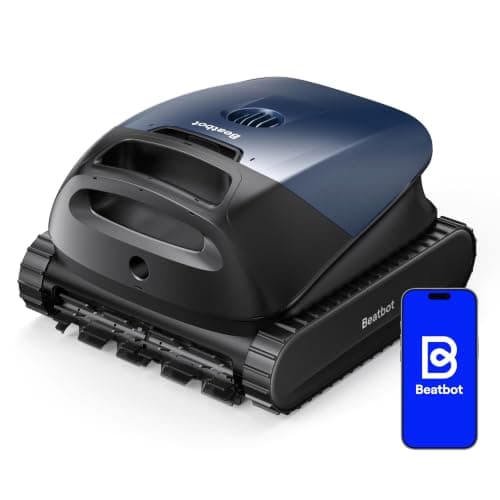
Beatbot Sora 10

Beatbot Sora 10

Beatbot · 6,800 GPH

Best published capacity under $5009.6/10
$499.00$699.00· View on Amazon

29% off. Price checked November 7, 2026. #ad How we earn

3
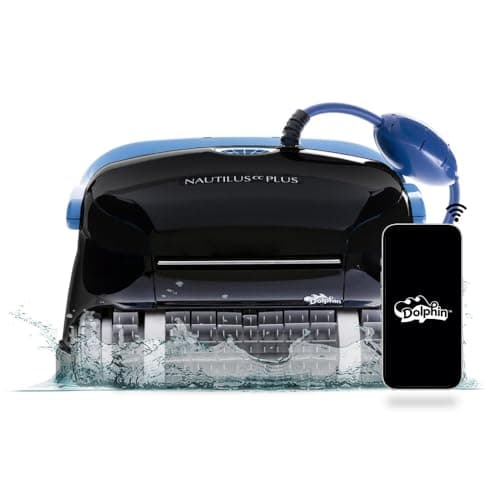
Dolphin Nautilus CC Plus

Dolphin Nautilus CC Plus

Dolphin · Corded, mains power supply — no battery

Longest expected service life9.5/10
$899.00· View on Amazon

Price checked November 7, 2026. #ad How we earn

4
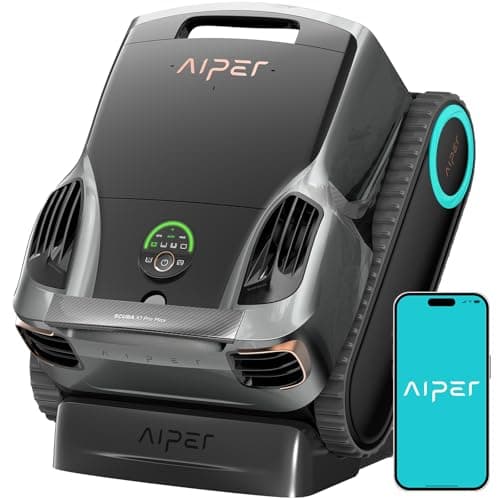
Aiper Scuba X1 Pro Max

Aiper Scuba X1 Pro Max

Aiper · 8,500 GPH

Finest published filtration9.8/10
$1,599.99$2,199.99· View on Amazon

27% off. Price checked November 7, 2026. #ad How we earn

5
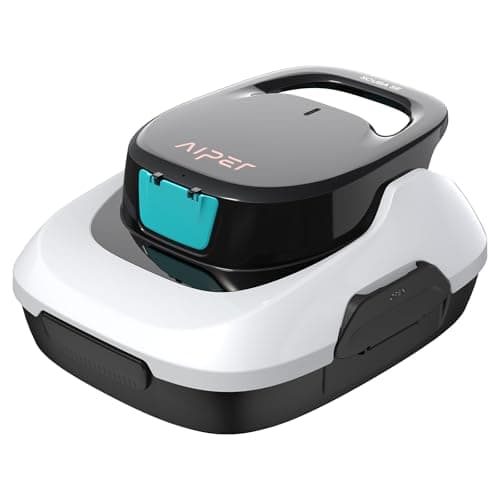
Aiper Scuba SE

Aiper Scuba SE

Aiper · Cordless, 90-minute rated runtime

Smallest pools, lowest price8.4/10
$129.99$159.99· View on Amazon

19% off. Price checked November 7, 2026. #ad How we earn

The picks in full

Aiper Obsidian

Strongest published spec per dollar

6,600 GPH, 3-micron MicroMesh filtration, a charging dock and 180 minutes — the spec sheet of a flagship at the price of a mid-range unit, and the best value on this site when the discount holds.

Spec score

9.8/ 10 — Category-defining on our 8.4–9.8 scale, see the rubric
Debris capacity
9.3
Surface coverage
9.5
Filtration
9.8
Runtime & coverage
9.5
Value for spec
9.7

Published specifications

Suction6,600 GPH(retailer listing)
Filter rating3 micron MicroMesh(retailer listing)
PowerCordless, 180-minute rated runtime(retailer listing)
ChargingWireless charging dock(retailer listing)
Surfaces cleanedFloor, walls and waterline(retailer listing)
Pool typeInground(retailer listing)

What works

  • 3-micron filtration plus 6,600 GPH is flagship-tier on paper
  • Full floor-wall-waterline coverage, not floor-and-walls
  • 180 minutes covers a large pool without a mid-cycle recharge
  • Charging dock, so no lifting it out between runs

What doesn't

  • A 2026 model with a short public track record — owner reports are thin
  • The listed discount is deep, which means the undiscounted price is not the price to judge it on
  • Inground only

Who should skip this

Skip this one if you want a model with several seasons of owner feedback behind it, or your pool is above-ground.

Beatbot Sora 10

Best published capacity under $500

6,800 GPH, a 5-liter basket and five hours of runtime for under $500 — the best published capacity-per-dollar on this site, with a coarse 150-micron filter as the compromise.

Spec score

9.6/ 10 — Category-defining on our 8.4–9.8 scale, see the rubric
Debris capacity
9.6
Surface coverage
9.5
Filtration
8.9
Runtime & coverage
9.7
Value for spec
9.7

Published specifications

Suction6,800 GPH(retailer listing)
PowerCordless, 5-hour rated runtime(retailer listing)
Basket5 L(retailer listing)
Filter rating150 micron(retailer listing)
Surfaces cleanedFloor, walls, waterline and 12-inch shallow water(retailer listing)
NavigationSonicSense AI obstacle avoidance(retailer listing)
RetrievalAuto waterline parking(retailer listing)

What works

  • A 5 L basket is the largest at this price — it is the single best predictor of leaf performance
  • Five hours of runtime means a heavily loaded pool gets a full cycle plus a second pass
  • Shallow-water capability down to 12 inches handles tanning ledges and beach entries
  • 6,800 GPH matches machines costing three times as much

What doesn't

  • 150-micron filtration is coarse — fine silt, pollen and dead algae will pass through
  • No surface skimming
  • SonicSense is avoidance, not mapping, so coverage is pattern-based

Who should skip this

Skip this one if your debris is fine — sand, silt, pollen or post-treatment dead algae. At 150 micron this machine will stir it rather than remove it.

Dolphin Nautilus CC Plus

Longest expected service life

The default corded robot for a 40-foot inground pool: it climbs walls, it has never needed charging, and Maytronics parts are stocked everywhere — which is why it outlives cordless units.

Spec score

9.5/ 10 — Category-defining on our 8.4–9.8 scale, see the rubric
Debris capacity
9.3
Surface coverage
9.0
Filtration
9.6
Runtime & coverage
9.7
Value for spec
9.3

Published specifications

PowerCorded, mains power supply — no battery(retailer listing)
Rated pool sizeInground pools up to 40 ft in length(retailer listing)
WallsWall-climbing scrubber brush(retailer listing)
ControlWi-Fi app control(retailer listing)
Filter accessTop-load filter cartridges(retailer listing)
Fine filtrationUltra-fine cartridges sold separately(retailer listing)

What works

  • No battery means no battery to degrade — the single biggest cause of a dead cordless robot at year three
  • Ultra-fine cartridges are a $19-26 upgrade, which makes it the cheapest route to real fine filtration
  • Maytronics spares — brushes, tracks, filters, power supplies — are stocked by everyone
  • Top-load filter access means you empty it without turning it over

What doesn't

  • A floating cable in the pool, which tangles on a freeform shape and has to be stowed
  • The power supply needs a dry, shaded, GFCI-protected spot near the pool
  • No waterline pass — that is the CC Supreme

Who should skip this

Skip this one if your pool is freeform or over 40 ft, or you cannot site a power supply within cable reach of the water.

Aiper Scuba X1 Pro Max

Finest published filtration

8,500 GPH, 3-micron filtration and a surface-skimming pass in one machine — the strongest published spec sheet on this site, and the only Aiper that handles floating debris.

Spec score

9.8/ 10 — Category-defining on our 8.4–9.8 scale, see the rubric
Debris capacity
9.5
Surface coverage
9.8
Filtration
9.8
Runtime & coverage
9.3
Value for spec
9.2

Published specifications

Suction8,500 GPH(retailer listing)
Filter rating3 micron ultra-fine(retailer listing)
CoverageCleaner and skimmer in one unit(retailer listing)
NavigationPool mapping(retailer listing)
ParkingSmart surface parking(retailer listing)
Pool typeInground(retailer listing)

What works

  • 3-micron filtration is the finest published figure in this category — it is the spec that matters for silt and pollen
  • 8,500 GPH leads every cordless unit here on published suction
  • Skimming plus submerged cleaning removes the need for a second robot
  • Surface parking means you are not fishing it off the floor

What doesn't

  • It is one of the two most expensive machines on this site
  • Inground only — the mass and the mapping are wrong for a soft-sided pool
  • A single all-in-one unit means a single point of failure for both jobs

Who should skip this

Skip this one if you have an above-ground or soft-sided pool, your budget stops short of the top tier, or your debris is coarse leaves where a 3-micron filter is wasted.

Aiper Scuba SE

Smallest pools, lowest price

The cheapest robot on this site that is still a robot: 90 minutes, 860 sq ft, floor only — exactly right for a 15-24 ft above-ground pool and wrong for anything bigger.

Spec score

8.4/ 10 — Excellent on our 8.4–9.8 scale, see the rubric
Debris capacity
8.6
Surface coverage
8.4
Filtration
8.9
Runtime & coverage
8.6
Value for spec
9.7

Published specifications

PowerCordless, 90-minute rated runtime(retailer listing)
Rated pool sizeUp to 860 sq ft(retailer listing)
Pool typeAbove-ground(retailer listing)
ModesDual cleaning modes(retailer listing)
RetrievalSelf-parking(retailer listing)
WallsFloor cleaning only — no wall climb(retailer listing)

What works

  • By far the lowest entry price for a genuine cordless robot
  • 860 sq ft covers a 24 ft round above-ground pool with margin
  • Light enough to lift out one-handed, which matters on an above-ground deck
  • Self-parking, so you are not wading after it

What doesn't

  • Floor only — it will not touch your walls or waterline
  • 90 minutes is one cycle; a dirty pool needs two
  • 180-micron filtration is coarse: fine silt passes straight through

Who should skip this

Skip this one if your pool has walls you need scrubbed, you are fighting algae or fine silt, or your pool is over about 860 sq ft.

Our recommendation

Our recommendation9.8/10
Aiper Obsidian

Aiper Obsidian

Strongest published spec per dollar

6,600 GPH, 3-micron MicroMesh filtration, a charging dock and 180 minutes — the spec sheet of a flagship at the price of a mid-range unit, and the best value on this site when the discount holds.

$799.98$1,399.99· See the Obsidian on Amazon

43% off. Price checked November 7, 2026. #ad How we earn

Runner-up9.6/10
Beatbot Sora 10

Beatbot Sora 10

Best published capacity under $500

6,800 GPH, a 5-liter basket and five hours of runtime for under $500 — the best published capacity-per-dollar on this site, with a coarse 150-micron filter as the compromise.

$499.00$699.00· See the Sora 10 on Amazon

29% off. Price checked November 7, 2026. #ad How we earn

Questions people actually ask

Does Consumer Reports rate robotic pool cleaners?

No. Checked November 2026, consumerreports.org publishes no ratings category for pool cleaners of any kind. Its robotic coverage is indoor robotic vacuums and mop combos, which is a different product. Pages claiming a Consumer Reports pool robot ranking are generally not from Consumer Reports.

Who does independently test robotic pool cleaners?

No organization tests the category comprehensively. Some publications run hands-on reviews of individual models, and accredited laboratories certify electrical safety via UL or ETL listing. For public-health standards on pool and spa components, NSF certification is independently verifiable where a manufacturer holds it.

What certification should a robotic pool cleaner have?

At minimum a UL or ETL listing on the unit or its power supply — it is mains-powered equipment used in water, so this is the one not to compromise on. Check the CPSC recall database for the specific model as well. NSF certification applies to pool and spa components and is a bonus where present.

Are Amazon star ratings a good guide to pool robots?

No, and we do not display them. A retailer average is not independent testing, it is not comparable between listings with very different review counts, and it is easy to manipulate. A published specification you can hold a manufacturer to is a far stronger signal.

How should I judge a pool robot without an independent rating?

Four published specs, in order: rated pool area against your measured pool, filter micron rating against your debris type, basket volume, and which surfaces it covers. Those four decide almost every outcome, and all four are things a manufacturer states publicly and can be held to.