Skip to content
Robot PoolCleaner Picks

Do You Still Need to Brush Your Pool?

A good robot removes most of the brushing. It does not remove all of it, and the places it misses are the places algae starts.

By Mike M. · Published November 6, 2026 · Last updated November 6, 2026

How this page is funded: we earn an Amazon commission on qualifying purchases made through links here, at no extra cost to you. It does not change which products we pick or the order we rank them in — here is the method and the full disclosure. Prices are live from Amazon, checked November 6, 2026.

Yes, but less often and in fewer places. A robot with an active brush handles the floor and, if it climbs, the walls. Steps, benches, behind ladders, light niches, the skimmer throat and tight corners still need a manual brush every week or two.

What to look for

Why brushing matters at all

Algae in a pool is a biofilm anchored to the surface, and its outer layer shields the cells beneath from chlorine. That is why a green patch survives a shock and returns in the same place. Mechanical abrasion breaks the film open so the sanitizer can reach the organism — which is a thing chemistry alone cannot do.

A robot with an active scrubbing brush does this across the floor and, on a climbing machine, the walls. What it does not do is the awkward geometry, and the awkward geometry is also where circulation is poorest, which is exactly where algae establishes.

The seven places no robot reaches

  1. Steps and benches. Vertical faces and horizontal treads in quick succession. Almost no robot handles them; platform-mode machines (Beatbot Sora 30, Sora 70) do more than most.
  2. Behind and around ladders. A shaded enclosed pocket with no flow. One of the two most reliable algae sites in any pool.
  3. Light niches. Recessed, warm, shaded. The other reliable algae site.
  4. The skimmer throat and faceplate. Water passes through constantly and film builds on the plastic.
  5. Tight corners, especially in freeform pools. A robot’s turning radius leaves a wedge.
  6. Under return fittings. Oddly, high-flow areas build film at their edges.
  7. The last inch under the coping. A brush cannot reach the angle. The waterline guide covers this.

How often, with a robot

AreaWith a floor-only robotWith a climbing robot
FloorMonthly spot-checkNot needed
WallsWeeklyMonthly spot-check
WaterlineWeeklyFortnightly, or not if it has a waterline pass
Steps and benchesWeeklyWeekly
Behind ladders, light nichesWeeklyWeekly
Corners and skimmer throatFortnightlyFortnightly

So: five or ten minutes a week with a pole brush on the specific spots, rather than twenty minutes on the whole pool. That is what a robot buys you here.

Surface changes the answer

  • Plaster and gunite: porous and alkaline, so algae gets a foothold easily. Brush more. Black algae roots into plaster and needs a stiff brush plus targeted treatment — no robot handles it. See the pebble and gunite page.
  • Pebble and exposed aggregate: texture holds film in the valleys between stones. Brush more, and expect never to get it perfectly clean.
  • Fiberglass gelcoat: non-porous, so film sits on the surface and lifts easily. Brush less, and use nothing abrasive — gelcoat scratches permanently.
  • Vinyl liner: brush gently with a soft brush. Never a stainless brush, which will mark the liner — see the liner page.
  • Tile: easiest surface; a brush pass plus balanced chemistry keeps it clean.

Brush choice matters as much as frequency

Nylon brushes for vinyl and gelcoat. Nylon-and-stainless combination brushes for plaster and gunite only. Never stainless on vinyl or fiberglass. The CDC’s healthy-swimming guidance is the reference for the chemistry side of the equation; the brush handles the mechanical side.

Brush before you shock, not after

The order matters. Brush the affected surfaces first to break the biofilm, then shock so the chlorine reaches the exposed cells, then run the robot with a fine filter to remove the dead algae as the water clears. The algae roundup sets out the full sequence.
What to buy, given the above

Our picks for this job

Tap any row for the full write-up. Prices are live from Amazon, checked November 6, 2026.

#ProductBest forScorePrice
1
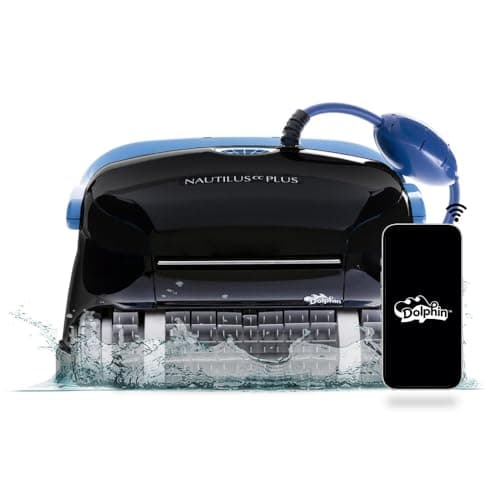
Dolphin Nautilus CC Plus

Dolphin Nautilus CC Plus

Dolphin · Corded, mains power supply — no battery

Active scrubbing plus cheap fine filters8.1out of 10
$899.00· View on Amazon

Price checked November 6, 2026. #ad How we earn

2
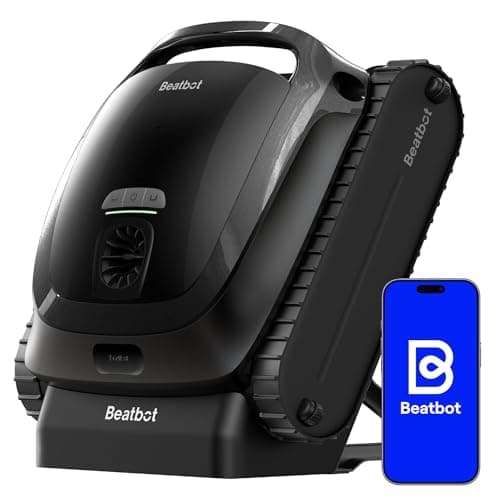
Beatbot Sora 30

Beatbot Sora 30

Beatbot · 6,800 GPH

Best for ledges and steps8.5out of 10
$699.00$999.00· View on Amazon

30% off. Price checked November 6, 2026. #ad How we earn

3
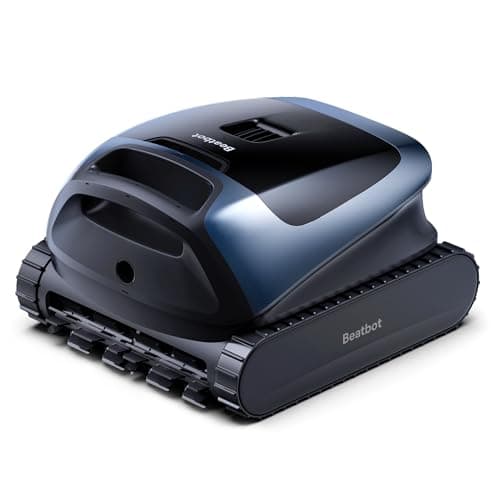
Beatbot AquaSense 2

Beatbot AquaSense 2

Beatbot · Floor, walls and waterline

Best waterline scrubbing7.5out of 10
$849.00$1,298.00· View on Amazon

35% off. Price checked November 6, 2026. #ad How we earn

4
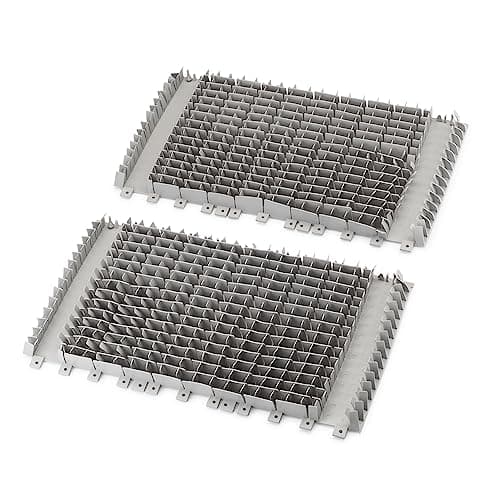
Dolphin Genuine Front and Rear Brushes (2-pack, 6101641-R2)

Dolphin Genuine Front and Rear Brushes (2-pack, 6101641-R2)

Dolphin · Genuine Maytronics part

Keep the robot's own brushes fresh6.7out of 10
$29.99· View on Amazon

Price checked November 6, 2026. #ad How we earn

The picks in full

Dolphin Nautilus CC Plus

Active scrubbing plus cheap fine filters

The default corded robot for a 40-foot inground pool: it climbs walls, it has never needed charging, and Maytronics parts are stocked everywhere — which is why it outlives cordless units.

Spec score

8.1/ 10 — derived from published specs, see the rubric
Debris capacity
8.0
Surface coverage
6.5
Filtration
9.0
Runtime & coverage
9.5
Value for spec
8.0

Published specifications

PowerCorded, mains power supply — no battery(retailer listing)
Rated pool sizeInground pools up to 40 ft in length(retailer listing)
WallsWall-climbing scrubber brush(retailer listing)
ControlWi-Fi app control(retailer listing)
Filter accessTop-load filter cartridges(retailer listing)
Fine filtrationUltra-fine cartridges sold separately(retailer listing)

What works

  • No battery means no battery to degrade — the single biggest cause of a dead cordless robot at year three
  • Ultra-fine cartridges are a $19-26 upgrade, which makes it the cheapest route to real fine filtration
  • Maytronics spares — brushes, tracks, filters, power supplies — are stocked by everyone
  • Top-load filter access means you empty it without turning it over

What doesn't

  • A floating cable in the pool, which tangles on a freeform shape and has to be stowed
  • The power supply needs a dry, shaded, GFCI-protected spot near the pool
  • No waterline pass — that is the CC Supreme

Who should skip this

Skip this one if your pool is freeform or over 40 ft, or you cannot site a power supply within cable reach of the water.

Beatbot Sora 30

Best for ledges and steps

The Sora 10 with four-zone coverage, platform cleaning and tap-to-retrieve — the sensible middle of the Beatbot range for a pool with steps and a ledge.

Spec score

8.5/ 10 — derived from published specs, see the rubric
Debris capacity
9.0
Surface coverage
9.0
Filtration
6.5
Runtime & coverage
9.0
Value for spec
8.5

Published specifications

Suction6,800 GPH(retailer listing)
Battery10,000 mAh(retailer listing)
Basket5 L(retailer listing)
CoverageFour zones: floor, walls, waterline and platform(retailer listing)
NavigationSonicSense AI avoidance, auto park(retailer listing)
RetrievalTap-to-retrieve(retailer listing)
Filter ratingNot stated on this listing(not published)

What works

  • Platform cleaning is a real differentiator if you have a tanning ledge or wide steps
  • Tap-to-retrieve brings it to the nearest wall — the single most underrated convenience feature here
  • Same 5 L basket and 6,800 GPH as the Sora 10
  • Four-zone logic means walls and waterline are scheduled, not incidental

What doesn't

  • Beatbot does not state a micron figure on this listing
  • Around $200 more than the Sora 10 for coverage logic rather than hardware
  • No surface skimming — that starts at the Sora 70

Who should skip this

Skip this one if your pool is a plain rectangle with no ledge or wide steps. You would be paying for zone logic you will never use — take the Sora 10.

Beatbot AquaSense 2

Best waterline scrubbing

Beatbot's mainstream robot, and the only one here that passes the waterline twice on purpose — the pick when a grease and sunscreen line is your actual complaint.

Spec score

7.5/ 10 — derived from published specs, see the rubric
Debris capacity
7.5
Surface coverage
8.5
Filtration
6.5
Runtime & coverage
7.5
Value for spec
7.0

Published specifications

Surfaces cleanedFloor, walls and waterline(retailer listing)
WaterlineDouble-pass waterline scrubbing(retailer listing)
RetrievalSmart surface parking(retailer listing)
PowerCordless(retailer listing)
Filter ratingNot published as a micron figure on this listing(not published)

What works

  • Two waterline passes shifts a tide line that one pass smears
  • Surface parking means it comes to you instead of sitting on the deep end floor
  • Beatbot's build quality is the one thing owner reports are consistently positive about

What doesn't

  • No published micron figure on this listing, so you cannot compare filtration on paper
  • Mid-$800s is a lot for a machine that does not skim the surface
  • The Ultra sits above it and the Sora 30 below it; this model is squeezed from both sides

Who should skip this

Skip this one if the waterline is not your problem — the Sora 30 does floor and walls for substantially less.

Dolphin Genuine Front and Rear Brushes (2-pack, 6101641-R2)

Keep the robot's own brushes fresh
Dolphin Genuine Front and Rear Brushes (2-pack, 6101641-R2) robotic pool cleaner
$29.99· View on Amazon

Price checked November 6, 2026. #ad How we earn

Both brushes in one box. Replace them as a pair — a new front against a worn rear makes the robot track crooked.

Spec score

6.7/ 10 — derived from published specs, see the rubric
Debris capacity
5.0
Surface coverage
9.0
Filtration
5.0
Runtime & coverage
5.0
Value for spec
9.0

Published specifications

Part typeGenuine Maytronics part(retailer listing)
Part number6101641-R2(retailer listing)
Quantity2 brushes (front and rear)(retailer listing)

What works

  • Matched pair, so the robot tracks straight
  • Genuine
  • Barely more than a single brush

What doesn't

  • Gray compound only — check which color your model takes

Who should skip this

Skip this one if only one brush is worn and you are mid-season — but replace the pair at the next opening.

Questions people actually ask

Do I need to brush my pool if I have a robotic cleaner?

Yes, but far less — five or ten minutes a week on steps, behind ladders, light niches and corners, rather than the whole pool.

What parts of a pool does a robot not clean?

Steps and benches, behind ladders, light niches, the skimmer throat, tight corners, under return fittings and the last inch beneath the coping.

How often should I brush my pool?

Weekly for the areas a robot misses. Floors and walls only need a monthly spot-check if your robot covers them.

Should I brush before or after shocking the pool?

Before. Brushing opens the biofilm so the chlorine can reach the algae underneath. Then run the robot with a fine filter as the water clears.

Can I use a stainless brush on a vinyl liner?

No. Stainless brushes are for plaster and gunite only; on vinyl or fiberglass they cause permanent marking.