A fiberglass pool is a one-piece gelcoat shell: smooth, non-porous and slick. That makes it the easiest surface to keep clean and the hardest one to climb, and it inverts most of the advice written for plaster and pebble pools.
Track grip is the spec that matters
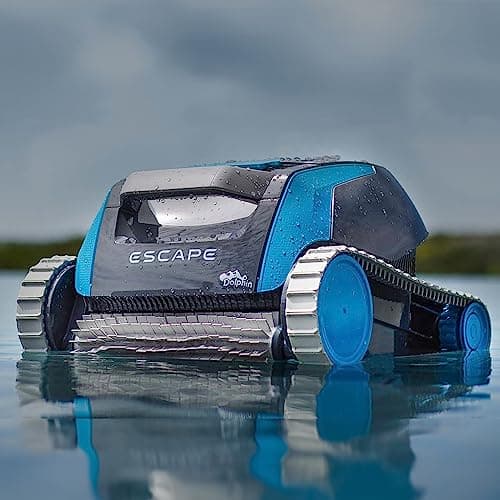
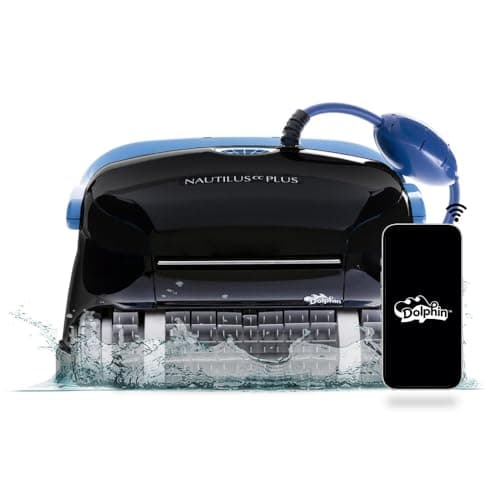
On gelcoat, wheels spin. A tracked drive with a defined tread holds. Maytronics markets HyperGrip tracks specifically for this, and it is the main reason two Dolphins lead this page. If you are shopping cordless, look for tracked drive rather than wheels and treat “wall climbing” claims on a wheeled machine with skepticism on this surface.
The corollary is that worn tracks fail faster here than anywhere else. A track that has lost its tread pattern will not hold gelcoat at all, so “it stopped climbing” on a fiberglass pool is the classic worn-tracks diagnosis. Tracks are about $35 a pair for a Dolphin.
The good news: brushes last
A smooth gelcoat surface is gentle on brush compounds. Where a pebble pool chews through brushes in a season, a fiberglass pool will see two or three. Your consumable spend here is lower than almost any other surface, which changes the long-run cost arithmetic in favor of machines with slightly pricier parts.
Gelcoat shows everything
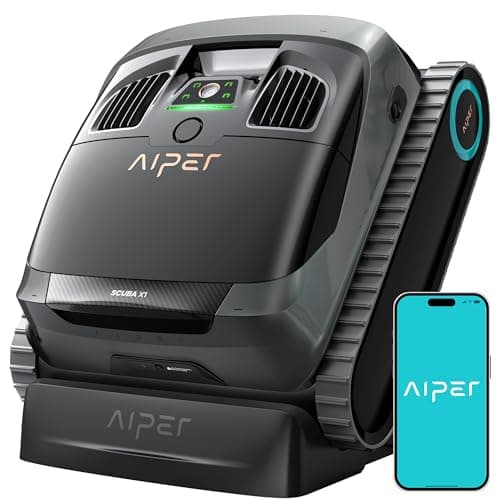
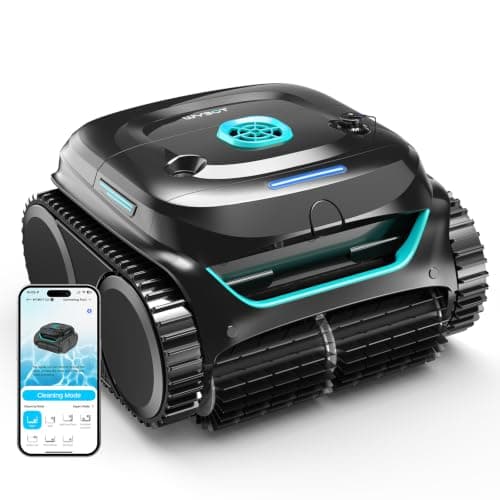
A non-porous light-colored surface displays fine sediment beautifully — a thin film of silt that would be invisible on pebble is obvious on gelcoat. The practical consequence is that fiberglass owners care about fine filtration more than most. A 180-micron basket will leave a visible haze; a 3-micron or 10-micron filter will not. That is why the Aiper Obsidian and WYBOT C2 are on this page, and the filtration explainer is worth reading before you choose.
The waterline on gelcoat
Non-porous surfaces hold the waterline film on the surface rather than absorbing it, which means a waterline pass is unusually effective here — the film lifts cleanly instead of having soaked into texture. If the waterline is your complaint and you have a fiberglass pool, a machine with a real waterline pass will do visibly more for you than it would on a pebble pool. See the waterline roundup.
What to avoid on fiberglass
- Abrasive or wire brushes. Gelcoat scratches, and scratches dull permanently. Nothing stiffer than the manufacturer’s standard compound.
- Wheeled budget machines sold on wall climbing. They will not climb your walls.
- Suction cleaners with hard wheels, for the same traction reason — although they remain fine as floor-only machines.