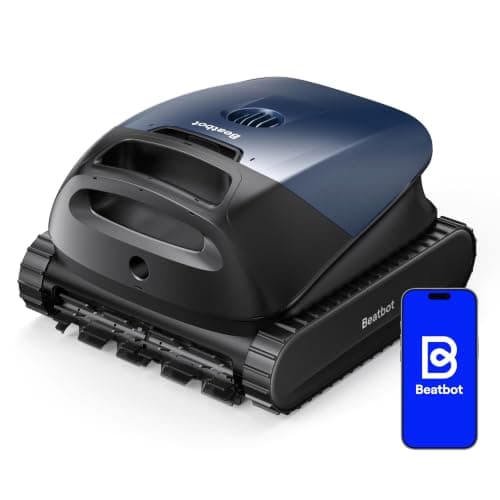
Best for Leaves
The Best Pool Cleaners for Leaves
Six picks for leaf-heavy pools, ranked by basket volume.
Top pick: Beatbot Sora 10
$499.00$699.00· View on Amazon
29% off. Price checked November 6, 2026. #ad How we earn
Canister volume beats suction for leaves. Micron rating beats everything for silt. Start from the debris and the shortlist writes itself.
By Mike M. · Published November 6, 2026 · Last updated November 6, 2026
How this page is funded: we earn an Amazon commission on qualifying purchases made through links here, at no extra cost to you. It does not change which products we pick or the order we rank them in — here is the method and the full disclosure. Prices are live from Amazon, checked November 6, 2026.
The debris in your pool decides the machine. Leaves need basket volume, silt needs a fine micron rating, pine needles need surface interception, and a waterline ring needs a scrubbing pass along the line. Those are four different specifications, and no single machine leads on all of them.
Each route below ranks machines on the specification that actually governs that debris type, with a live Amazon price for the top pick — checked November 6, 2026.
Best for Leaves
Six picks for leaf-heavy pools, ranked by basket volume.
Top pick: Beatbot Sora 10
29% off. Price checked November 6, 2026. #ad How we earn
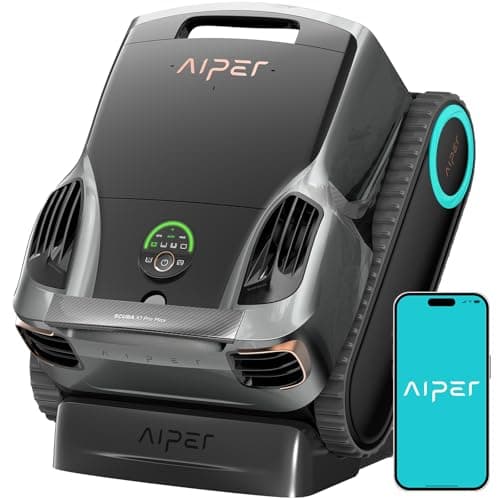
Best for Algae
Five picks for algae, on brush aggression plus fine filtration.
Top pick: Aiper Scuba X1 Pro Max
27% off. Price checked November 6, 2026. #ad How we earn
Best for Sand & Silt
Five picks for fine sediment, ranked on published micron rating.
Top pick: Aiper Scuba X1 Pro Max
27% off. Price checked November 6, 2026. #ad How we earn
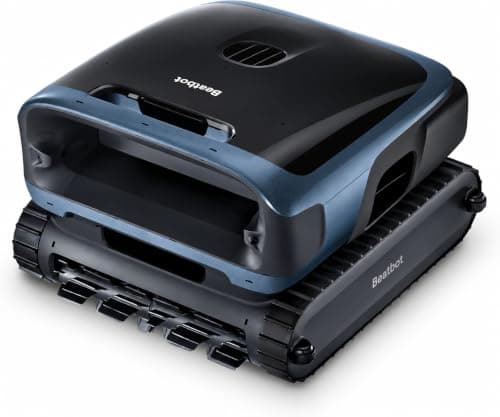
Best for Pine Needles
Five picks for pine needles, on intake geometry and interception.
Top pick: Beatbot Sora 70
Price checked November 6, 2026. #ad How we earn
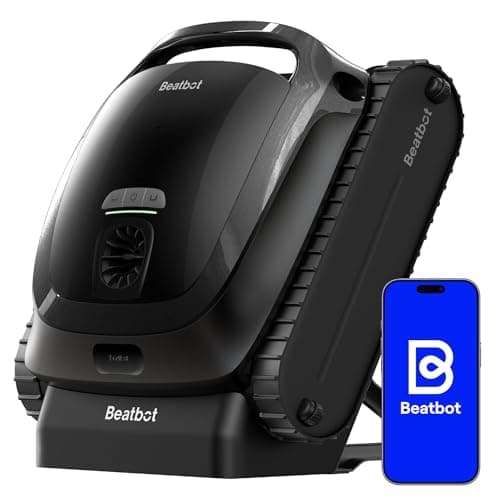
Best for Waterline
Five machines that scrub the waterline, not just climb to it.
Top pick: Beatbot AquaSense 2
35% off. Price checked November 6, 2026. #ad How we earn
Almost every pool cleaner guide is organized by brand or by price. Both are the wrong axis, because they tell you nothing about whether a machine will solve the problem in front of you. A $2,300 flagship with 3-micron filtration is genuinely worse at oak leaves than a $499 machine with a 5-liter basket — and that is not a close call.
A robot’s cycle is limited by debris capacity, not runtime. Once the basket is full, flow collapses and the rest of the cycle collects essentially nothing: the machine drives around with a plug of wet debris in it. That is why “it is not strong enough” is the standard autumn complaint, and it is a capacity problem rather than a suction one.
Published figures are the thing to compare. Beatbot publishes 5 liters on the Sora 10 and 30 and 9 liters on the iSkim skimmer; most machines in the $300-600 band carry 1-2 liters and publish nothing at all, which is itself informative. The leaf roundup ranks on this.
A micron is a thousandth of a millimeter. Pool sand runs roughly 100-500 microns; silt, pollen and post-shock dead algae are 2-50. A 180-micron basket — what most machines ship with — passes the entire fine fraction straight back into the water. All it has done is relocate your problem, which is exactly what “it just pushes the sand around” means.
Aiper publishes 3 micron on the Obsidian and X1 Pro Max; WYBOT publishes a 10-micron layer on the C2; a Dolphin with $26 ultra-fine cartridges does the job for the least money in the category. The filtration explainer sets out what each rating catches.
And here is the part most reviews get backwards: finer is not better. A 3-micron filter blinds within minutes in leaf litter, leaving you with worse suction than a coarse basket would have given you — and it stops the robot climbing walls too, since climbing depends on flow. Matched beats fine.
Debris floats for a few hours before it waterlogs and sinks. In that window it is weightless, has stained nothing, and has not touched your filter. After it sinks it becomes a vacuuming job, a tannin stain on your plaster, and a load on your filtration.
For a pool under a mature oak or pine, intercepting at the surface removes more total debris than any improvement to floor cleaning. That means a dedicated solar skimmer alongside a floor robot, or one of the three machines that does both.
The ring at your waterline is not dirt. It is body oil, sunscreen, hair product and airborne pollen bound into a greasy film, continuously replenished. Grease responds to repetition, not pressure.
Crucially, wall climbing is not waterline cleaning. A climb drags a brush vertically through the film once and generally smears it. A waterline pass travels along the line. Only a few machines publish the second — the waterline roundup separates them.
Two sensible answers. The first is a staged filter: a coarse layer in front of a fine one, so leaf fragments do not blind the fine mesh. The WYBOT C2 and Beatbot’s dual-layer baskets both work this way, and it is the right architecture for a real pool.
The second is to swap filters seasonally — coarse through leaf and needle fall, fine for pollen season and after any shock treatment. Most machines accept more than one grade, and on a Dolphin a four-pack of ultra-fine cartridges costs about $26, which makes the swap trivial. Filters by brand has every price and fitment.
Kill algae. Algae is a living biofilm anchored to your plaster or liner, and it is killed by chemistry. What a robot does is break the film open so the sanitizer can reach it, and then filter out the dead cells — which is genuinely useful and is not the same as removing algae. The algae page sets out the correct order of operations, and it starts with a test kit rather than a purchase.
Six how-to guides for the debris problems above. Each one ends at the roundup that solves it, and several will save you a purchase entirely.
The right order, and the habit that halves the problem.
The five-step sequence, in the order that works.
The settle-and-slow method, plus the source diagnostic.
Why it's grease, and the frequency that actually prevents it.
What each micron rating catches, and why matched beats fine.
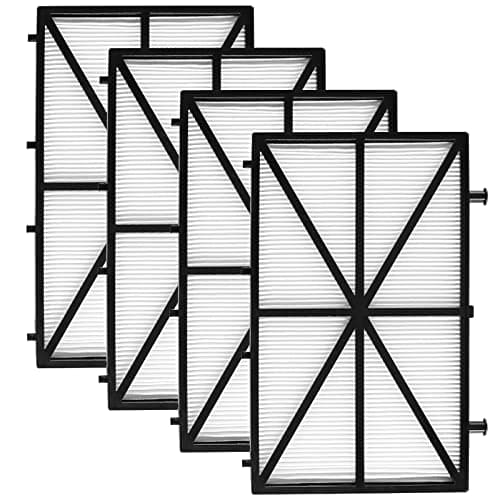
The method, the three ruinous mistakes, and when to replace.
If your debris is mixed or you are not sure which problem dominates, the selector tool works from your pool type, size, surface and dominant debris and narrows it to a shortlist. Or start with the master roundup, which covers the four gating specifications in order.
Every pick on this site is chosen from published specifications, retailer listings and owner reports by a rubric we publish in full. We do not physically test pool cleaners and nothing here implies that we do.