What a micron is, and what is in your pool
A micron is one thousandth of a millimeter. Roughly, by size:
| Debris | Approximate size |
|---|
| Leaves, twigs, large debris | Millimeters to centimeters |
| Pool sand | ~100-500 micron |
| Pollen | ~10-100 micron |
| Silt and fine soil | ~2-50 micron |
| Dead algae after a shock | A few microns |
| Bacteria | Under 1 micron — chemistry’s job, not a filter’s |
A filter rated at X microns retains particles larger than X and passes smaller ones. So a 180-micron basket is excellent at leaves, adequate at coarse sand, and useless at pollen, silt or dead algae.
What the market actually publishes
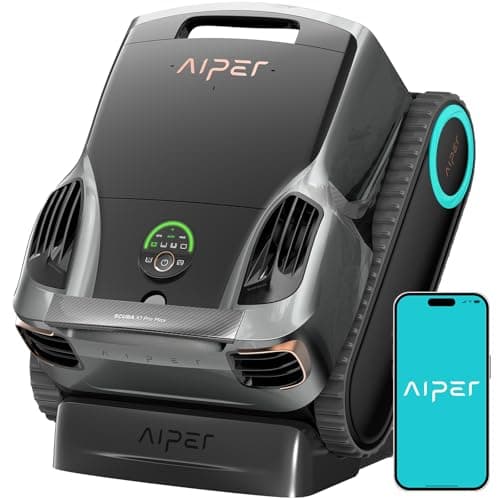
- 3 micron — Aiper Scuba X1 Pro Max, Aiper Obsidian. The finest published figures on this site.
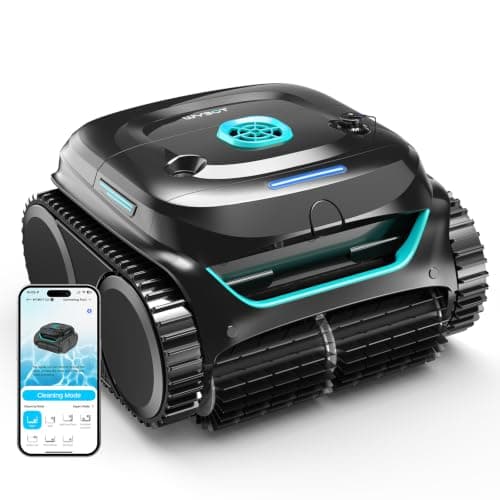
- 10 micron — WYBOT C2, as a fine layer behind a 180-micron coarse layer. The best fine rating under $500.
- 150 micron — Beatbot Sora 10. Coarse, and correct for its purpose.
- 180 micron — Aiper Scuba S1 and SE standard baskets, and most budget machines.
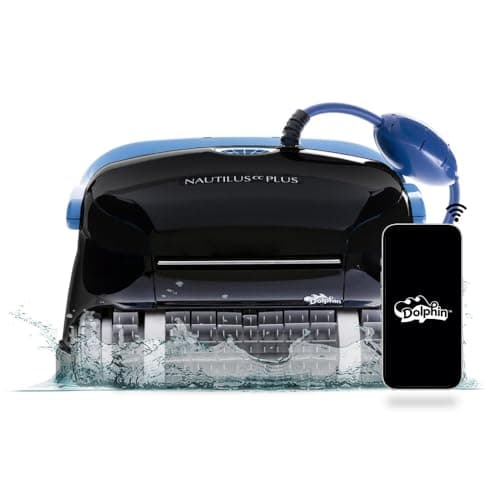
- Not published — a surprising number of machines, including several flagships. Dolphin’s ultra-fine cartridges perform well without Maytronics publishing a figure.
We mark every unpublished figure as unpublished on the machine’s own page rather than estimating one. For a buyer shopping on filtration, an unpublished figure should be treated as an unknown, not as “probably fine”.
Why finer is not better
This is the part that is counterintuitive. A 3-micron filter in a leaf-heavy pool blinds within minutes: leaf fragments and hair plug the mesh, flow collapses, and your expensive fine-filtration machine now has less effective suction than a cheap coarse one — and it stops climbing walls too, because climbing depends on flow.
So the correct filter is the one matched to your dominant debris:
| Your debris | Fit this |
|---|
| Leaves, pine needles, twigs | Coarse — 150-180 micron |
| Sand, grit | Fine — 10-50 micron |
| Silt, pollen, dust | Very fine — 3-10 micron |
| Dead algae after treatment | Very fine — 3-10 micron, rinsed every run |
| A mix (most pools) | A staged filter: coarse layer in front of fine |
Staged filtration is the right architecture
The WYBOT C2’s approach — a 180-micron coarse layer protecting a 10-micron fine layer — is the engineering answer to the blinding problem. The coarse layer intercepts leaf fragments and hair so the fine layer keeps flowing, which means you actually get the fine rating in use rather than for the first twenty minutes.
The Beatbot AquaSense 2 Ultra and Sora 30 both use dual-layer baskets on the same principle. If you are choosing between a single very fine element and a staged coarse-over-fine design with a slightly worse headline number, take the staged one.
The cheapest fine filtration in the category
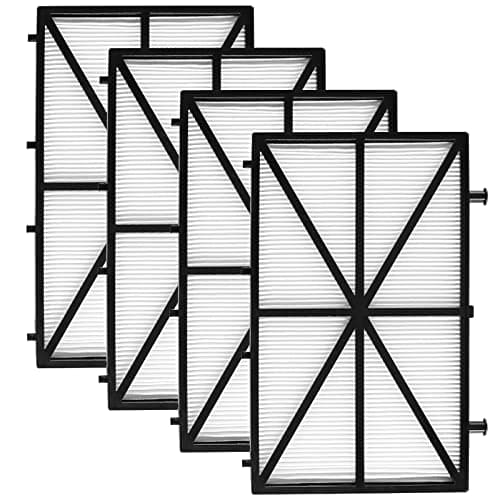
A corded Dolphin with ultra-fine cartridges at about $26 for four. That is the whole point: four cartridges lets you run two and wash two, which is the only practical way to use fine filtration, and no other brand comes close on price. Aiper’s fine cloths are $33-60 for one or two; a genuine Beatbot fine basket is $60-100 for one.
Filters by brand has every price and fitment.
Rinse it, or the rating is fiction
A fine filter must be rinsed after every run. A blinded 3-micron element passes nothing and flows nothing, which means in practice your machine is doing less than a clean coarse basket would. And three habits permanently destroy the rating: letting debris dry in the mesh, pressure-washing it, and scrubbing it with a stiff brush — a stretched fine mesh quietly becomes a coarse mesh while still looking intact. The cleaning method is here.
What a robot filter does not do
It does not sanitize. Bacteria are sub-micron and are dealt with by chlorine, per CDC guidance. And it does not process your whole pool volume — your main filter does that continuously, while the robot filters only the water it moves through itself during a cycle. A robot’s filtration is a supplement with the advantage of being targeted at the floor, where the debris is.