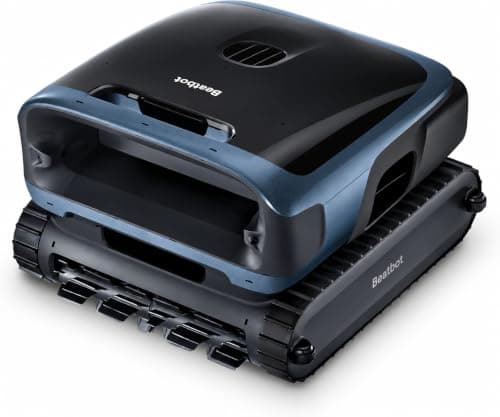
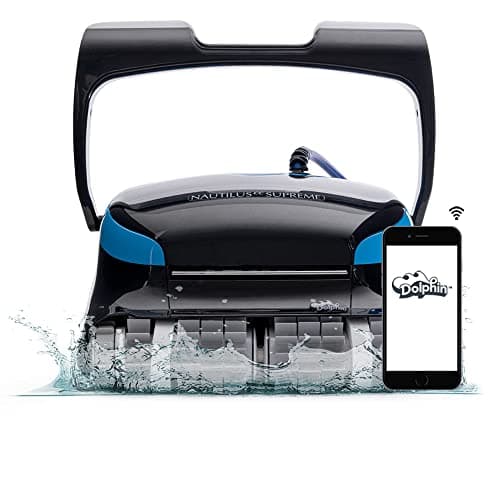
Large pools invert the normal buying logic. Below about 1,500 sq ft, every machine on this site finishes, so you choose on features. Above about 2,000 sq ft, most machinesdo not finish, and a machine that stops at 70% leaves the same 30% dirty every single cycle. That is the whole problem, and it is a runtime problem rather than a cleaning-quality problem.
Why corded wins here, clearly
A corded robot has no runtime limit. It cleans until its cycle logic says it is done, however long that takes. On a 50 ft pool that is a decisive advantage that no battery specification overcomes — and it is why four of the six machines here are corded.
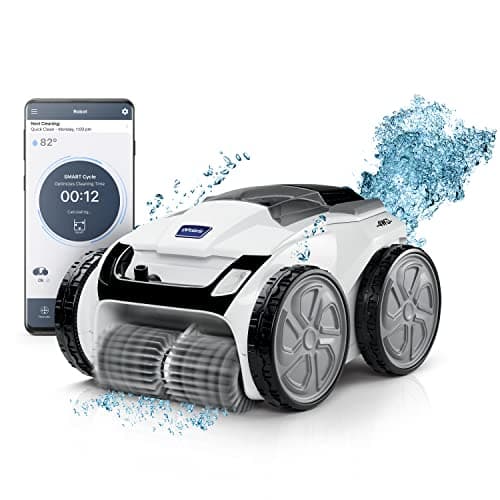
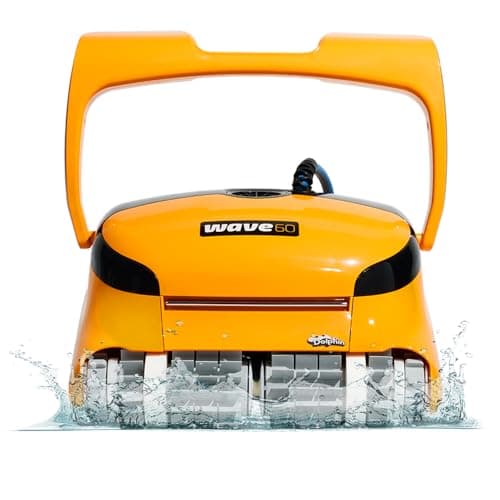
Maytronics rates the Nautilus CC Supreme and Wave 60 to 50 ft, which covers nearly every residential pool including long lap pools. The Polaris VRX iQ+ carries 70 ft of cable on a tangle-reducing swivel, which is the only real engineering answer anyone has offered to the cable-twist problem that large pools make worse. The corded roundup has more.
The cordless machines that actually qualify
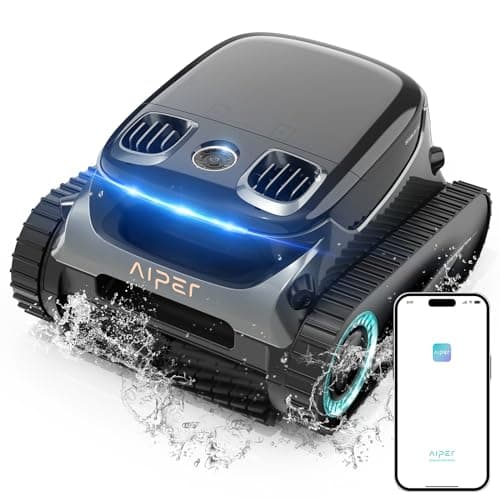
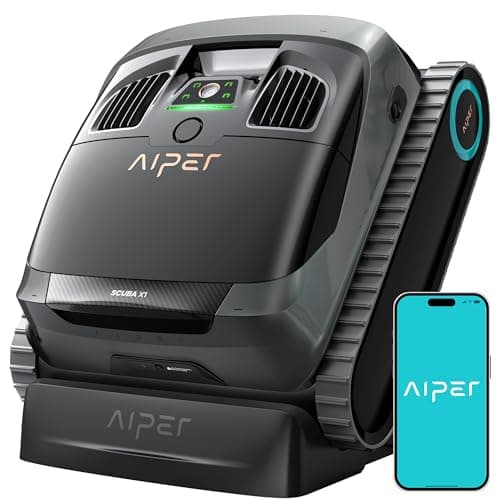
Two, honestly. The Aiper Scuba S1 Pro publishes 2,150 sq ft, which is the highest rated area of any cordless machine here — with the caveat that the listing at its price is a factory-renewed unit. The Aiper Obsidian publishes 180 minutes, which is enough runtime to cover a large pool in one cycle, and it comes with a dock so a second cycle needs no intervention from you.
Everything else cordless on this site is rated at or below 1,600 sq ft. Buying one of those for a 2,500 sq ft pool is the single most expensive mistake available in this category, because it is not recoverable by changing settings.
Cable management on a long pool
A long pool means a long cable, and cable twist compounds with length. Three habits make it manageable:
- Uncoil the entire cable into the water before starting, rather than feeding it in.
- Site the power supply at the midpoint of the long side, not at one end.
- Store it coiled on a caddy, not folded in a corner.
A caddy stops being optional on a large pool, both for the cable and because large-pool machines are heavy.
Shared, HOA and rental pools
If the pool is used daily rather than a few times a week, the duty cycle changes the answer. The Dolphin Wave 60 is a commercial-rated machine with a caddy included — overkill for a backyard, correct for a pool with twenty users a day, because a residential-duty machine run daily ages in seasons.
Two cheaper strategies worth considering
First: split the job. A mid-range floor robot plus a dedicated solar skimmer can beat one large machine, because the skimmer works continuously and for free while the robot handles the floor in shifts.
Second: run it more often. Two cycles a week on a large pool with a machine that covers 60% each time, starting from a different corner, is not the same as one cycle — but it is a great deal better than one, and the scheduling guide covers how to make it work.