The verdict first: cordless for most pools under about 2,200 sq ft, corded for anything larger or for a buyer who measures value over a decade. Everything below is why, and the condition under which that flips.
The honest scorecard
| What you care about | Cordless | Corded |
|---|
| Setup each run | Drop it in | Uncoil cable, plug in supply |
| Runtime limit | 90-300 min, then it stops | None |
| Pool shape tolerance | Excellent — no cable to twist | Cable twists on freeform shapes |
| Typical lifespan | 3-5 seasons, battery-limited | 7-10 years with parts |
| Best published suction here | 8,500 GPH (Aiper X1 Pro Max) | Not published by most corded brands |
| Best published filtration here | 3 micron (Aiper) | Ultra-fine cartridges, ~$26 for four |
| Infrastructure needed | An outlet, anywhere | Dry shaded GFCI spot near the pool |
| Repairability | Varies — some have no spares at all | Maytronics parts stocked nationwide |
The case for cordless
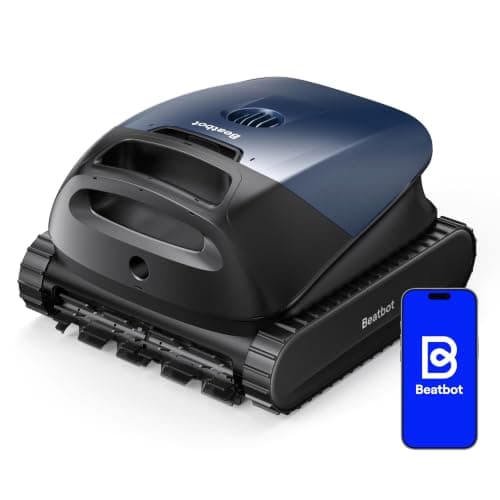
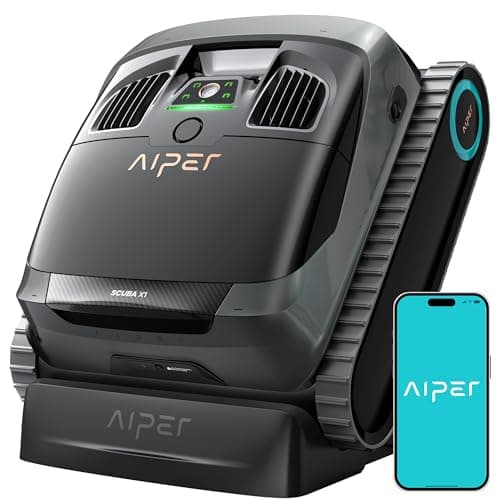
Cordless machines carry the better current specifications, and it is not close. The top published suction figure on this site (8,500 GPH) is cordless. The only published 3-micron filtration is cordless. Charging docks, camera mapping, surface skimming and tap-to-retrieve are all cordless features. If you ranked machines purely on capability per dollar today, the top of the list would be cordless.
The practical case is stronger still: there is nothing to set up. A cordless robot goes in the water and runs. No cable in the pool, no transformer on the deck, no coiling afterwards. That difference is the reason cordless machines get used more often than corded ones, and a robot that runs three times a week beats one that runs once because it is a hassle.
The case for corded
One fact: there is no battery. The dominant failure mode of a cordless pool robot is a lithium pack that has spent three summers cycling in warm chlorinated water. When it goes, the machine is either a $75 repair (if a third-party pack exists — see the battery section) or scrap.
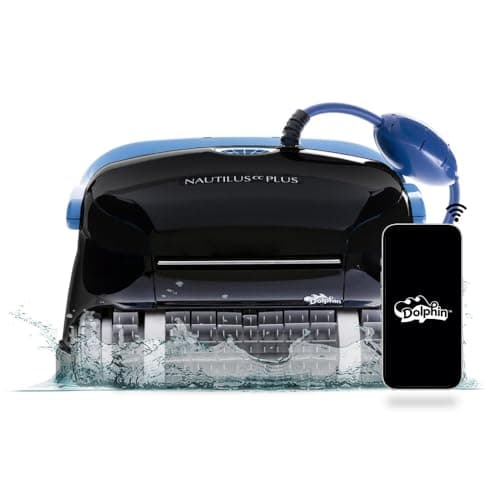
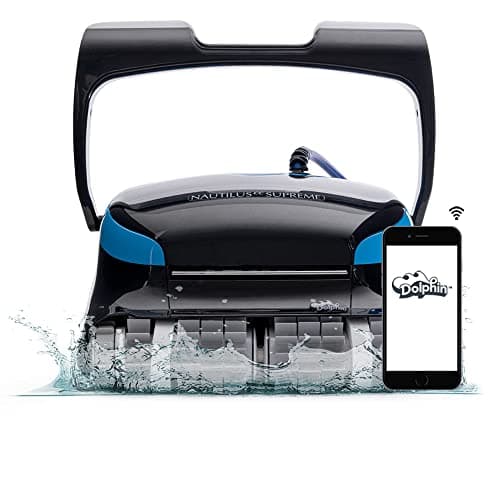
A corded Dolphin’s wear items are brushes (~$23), tracks (~$35) and filter cartridges (~$26 for four), all published by part number and stocked by every pool retailer in the country. The motor assembly is itself a replaceable part. That is why owner reports routinely describe seven-to-ten-year service lives, and why a corded machine at $899 can be cheaper over a decade than two cordless machines at $500.
The second corded advantage is runtime: on a pool over about 2,200 sq ft a cordless machine has to charge mid-job, and the half it does second is always the same half. See the large-pool roundup.
When the answer flips
- Your pool is over 40 ft or 2,200 sq ft → corded, decisively.
- Your pool is freeform, kidney or multi-level → cordless, because cable twist on those shapes is a weekly annoyance that never goes away.
- You cannot site a power supply within cable reach → cordless, by elimination.
- The pool is used daily, or shared → corded, because daily cycling ages a pack in seasons.
- You want the waterline genuinely cleaned → either, but check for a published waterline pass rather than wall climbing. The waterline roundup has both.
The question that settles it
Before you buy a cordless machine, check whether a replacement battery for that specific model is sold. If it is, cordless is a four-to-eight-year purchase and the spec advantage is real. If it is not, you are buying a three-to-four-year machine, and you should price it that way against a corded Dolphin.