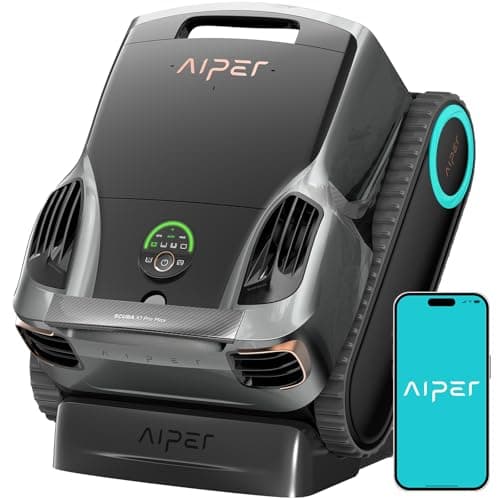
Start with the uncomfortable part, because nobody selling pool robots will say it: a robotic pool cleaner does not kill algae. Algae is a living organism and it is killed by chlorine, by an algaecide, or by both. If your water is green, no machine on this page will fix it and buying one instead of shocking the pool will waste a week.
What a robot does is two things that genuinely matter, and they map to two different specifications.
Job one: break the biofilm (brush specification)
Algae in a pool is not loose dirt — it is a biofilm anchored to the plaster, grout or liner, and its surface layer shields the cells underneath from chlorine. That is why a green patch survives a shock treatment and comes back in the same spot. Mechanical abrasion is what opens it up.
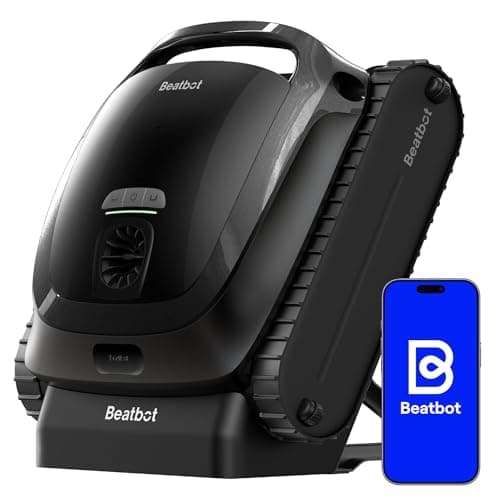
So the spec to look for is an active scrubbing brush rather than a passive wheel, and coverage that includes the surfaces where algae actually grows: the shaded wall, the floor-to-wall cove, the waterline, and steps. Maytronics’ HyperBrush and active scrubber designs and Beatbot’s double-pass waterline motion are both aimed at this. A floor-only robot is close to useless for algae, because algae does not preferentially grow on the floor — it grows where circulation is poorest, which is usually a corner or a wall.
Job two: remove the dead cells (filtration specification)
After a successful shock, your pool goes cloudy. That cloudiness is dead algae — particles of a few microns. A 180-micron basket passes them entirely, which is why a pool can look worse after treatment and stay cloudy for days while your sand filter slowly catches up.
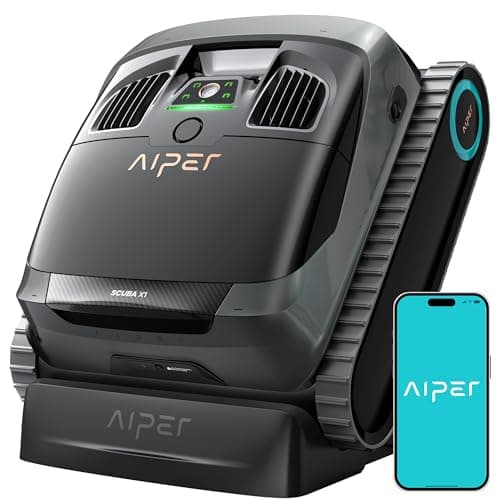
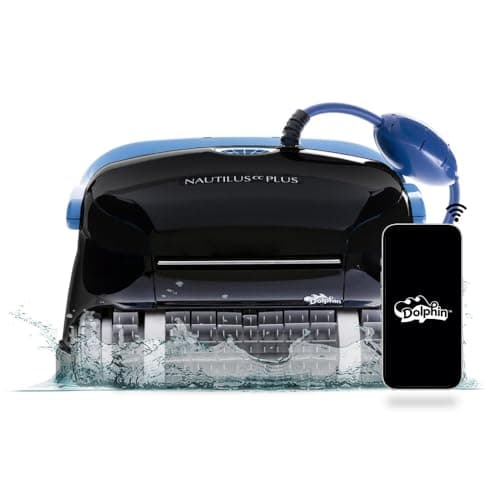
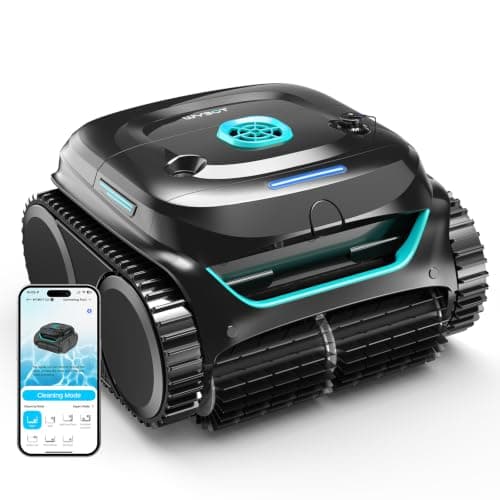
A robot with fine filtration short-circuits that. The Aiper Scuba X1 Pro Max and Obsidian both publish 3-micron filtration; the WYBOT C2 publishes a 10-micron layer. The Dolphin Nautilus CC Plus is on this page partly because its ultra-fine cartridges cost about $26 for four, making it the cheapest route to fine filtration in the whole category — see filters by brand.
The correct order of operations
- Test and balance. Chlorine cannot work outside a sane pH range. CDC healthy-swimming guidance is the reference for target ranges.
- Brush the affected surfaces manually first. Yes, by hand, this once. Get into the corners and steps a robot will not reach.
- Shock. Follow the product’s own dosing — this is chemistry, not cleaning.
- Run the robot with its FINE filter fitted, repeatedly, as the water clears. This is where the machine earns its place.
- Rinse the fine filter after every single run. It will blind fast. That is it working.
- Then switch to maintenance. Regular scrubbing cycles prevent the biofilm re-establishing in the same spot.
Where algae comes back, and why
Always the same places: the shaded wall, behind the ladder, the deep-end corners, the step treads, and the waterline. These are the low-circulation zones. A robot that climbs and scrubs the walls and waterline — rather than one that does an excellent job of the floor — is doing the preventive work. The wall-algae guide covers the manual technique, and this one covers what still needs hand-brushing even with a good robot.
What to skip
Any machine marketed on suction alone with no published filter rating and no active brush. Algae is the one problem where both specs have to be right, and a machine that publishes neither is a machine that does neither well.