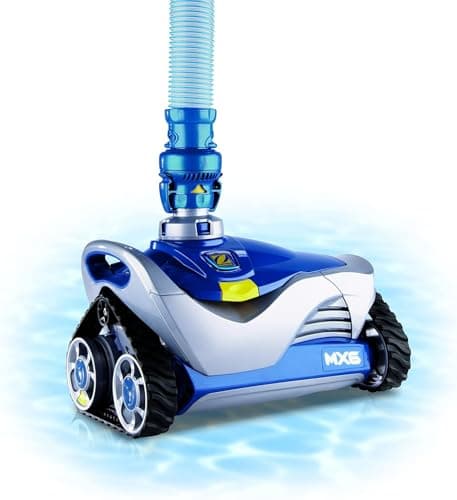
A suction cleaner is the simplest automatic cleaner there is. It plugs into your skimmer or a dedicated suction line, your existing pump drags it around the floor, and whatever it picks up ends up in your pump basket and filter. No battery, no electronics, no charging, nothing to replace in four years.
That simplicity is real and it is why these still sell. It is also why the running costs land somewhere you do not see them.
What you are actually buying, and what it costs
The purchase price of a suction cleaner is not its price. Three costs sit behind it, and none of them appear on the listing:
- Pump hours. A suction cleaner only works while your pump runs, and it needs sustained flow to keep moving. For most owners that means running the pump longer than they otherwise would, every day, through the season. That is the real bill.
- Filter load. Everything the cleaner collects goes into your pump basket and your filter, because it has no basket of its own. You empty and backwash more often, and your filter media works harder.
- Coverage you do not get. Floor and cove. No walls in any meaningful sense, no waterline pass, no scheduling, and no filtration finer than whatever your sand or cartridge filter already does.
None of that makes them a bad buy. It makes them a specific buy, for a specific situation: an existing strong pump, a floor-only complaint, and a preference for equipment with nothing in it to fail.
How we ranked these
Same five-metric rubric as everything else on this site, applied to published specifications — the weights are published in full. For suction cleaners three of those metrics do most of the work:
- Rated pool area against your pool. First gate, as always. A cleaner rated below your pool’s area will not finish a pass.
- Traction on your surface. This is the one that separates suction cleaners from each other. Wheels slip on pebble and rough gunite; treads do not. Buy the wrong one for a pebble pool and it will stall on the slopes.
- Flow requirement against your pump. An undersized or tired pump turns a good suction cleaner into a cleaner that parks in a corner. Check the published flow requirement before you buy, not after.
Which one
Most pools: the Zodiac MX6
Cyclonic suction, X-Trax treads and a turning circle tight enough for a small pool. Nothing to charge, under $400 at the time of writing, and the cheapest honest route to an automated floor. Good to know: debris goes to your filter, and it does floor and cove only.
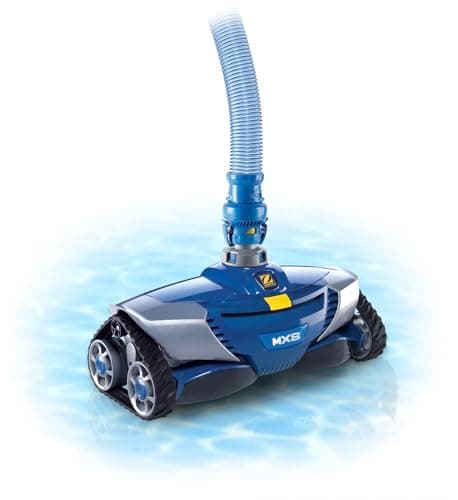
Pebble or gunite: the Zodiac MX8
The MX6 with more reach and traction tuned for every surface. On a rough pebble pool this is the sensible buy and the MX6 is not — wheels and softer treads slip where the MX8 grips. The pebble and gunite roundup covers surface traction in more depth.
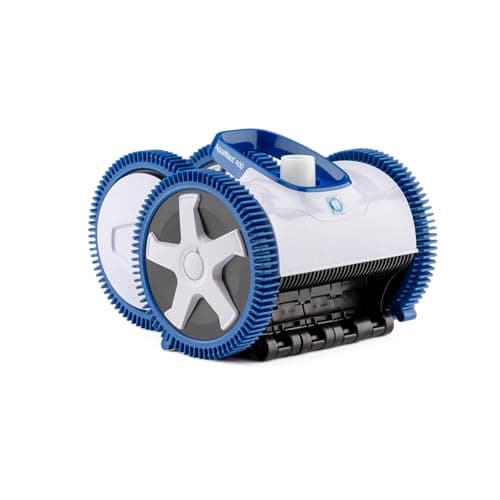
Large pools on a strong pump: the Hayward AquaNaut 400
Four-wheel drive, rated for a 20 x 40 ft pool, and it runs off your existing pump with no booster. The rated area is the reason it is here: it is the only suction cleaner on this site that publishes a figure large enough for a full-size pool. It wants sustained pump flow to deliver that, which is the trade.
If leaves are the problem, look at pressure-side instead
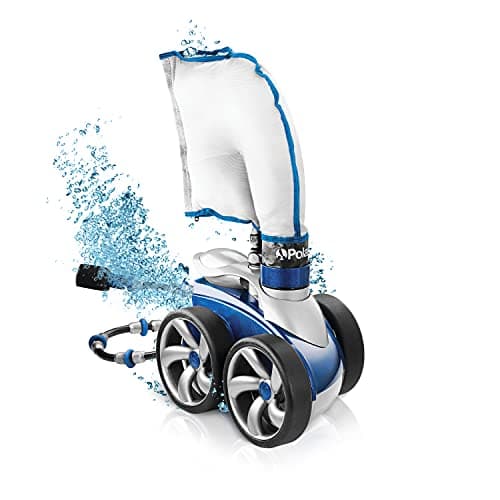
A suction cleaner sends leaves into your pump basket, and a heavy leaf load will clog it within one cycle. Pressure-side cleaners exist precisely for this: they carry their own bag, so debris never reaches your filter at all.
The Polaris 3900 Sport is the one worth having — a dual-chamber bag that catches acorns, twigs and heavy leaf fall before your filter ever sees them. It needs a dedicated booster pump, which is a real cost and the reason it is not the default recommendation. The pressure-side comparison works through whether that booster is worth it, and the leaf roundup ranks every option for heavy leaf fall side by side.
The honest case for buying a robot instead
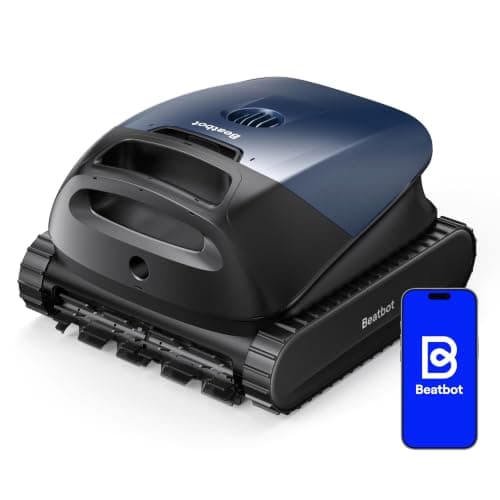
We would be doing you a disservice not to put this plainly. For most people shopping suction cleaners today, a cordless robot is the better purchase, and the reason is arithmetic rather than preference.
A robot filters the water itself, so nothing it collects reaches your filter. It runs independently of your pump, so it adds no pump hours. It climbs walls and several models pass the waterline. And the price gap has closed: under $500 now buys 6,800 GPH, a five-liter basket and five hours of runtime in the Beatbot Sora 10 — which is where a decent suction cleaner plus the booster or pump upgrade it implies often lands anyway.
Buy suction if you genuinely want equipment with nothing in it to fail, you already have pump capacity to spare, and the floor is your only complaint. Buy a robot if you are optimizing for the result. The full robotic-versus-suction comparison has the complete ownership math, and the under $500 roundup shows what that budget buys on the robot side.
What to check before you buy any of these
- Your pump’s actual flow, not its label. A ten-year-old pump on a dirty filter does not deliver its rated flow. If your cleaner stalls, this is almost always why.
- Whether you have a dedicated suction line. Running one off the skimmer works but costs you skimming while the cleaner runs, which matters if you also have floating debris.
- Hose length against your pool’s longest run. Short hose, missed corners, every cycle.
- Whether your surface will defeat the wheels. Pebble, rough gunite and heavily textured plaster are where traction decides everything.