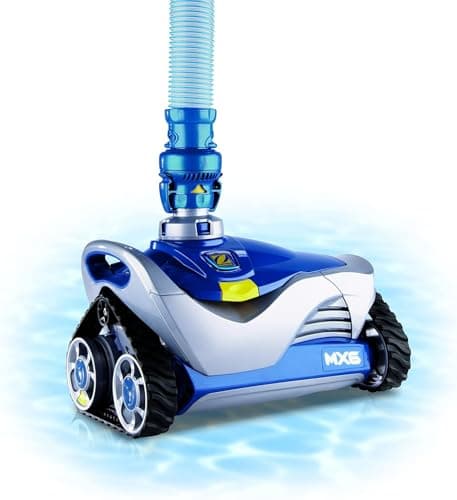
The MX6’s reputation rests on maneuverability, and it is deserved. Where a robot drives systematic parallel passes and a larger suction cleaner needs room to turn, the MX6 turns tightly and works into corners and odd geometry. In a small or awkwardly shaped pool that matters more than any specification on the box.
Cyclonic suction, and why it matters as the line loads
Zodiac publishes cyclonic suction for this model. The practical consequence is that flow holds up better as debris accumulates in the line than it does with a simple straight-path design. On a suction cleaner — which is at the mercy of whatever flow your pump supplies — anything that preserves effective suction is worth having.
X-Trax treads
Zodiac’s tread system is the traction answer, and it is a reasonable one. Treads grip textured plaster and pebble well, which is part of why suction cleaners remain competitive on those surfaces — the pebble and gunite roundup explains the case. On slick fiberglass gelcoat, expect less.
No batteries, which is the whole other argument
There is no motor, no circuit board and no lithium pack. There is nothing to charge, nothing to store at half voltage over winter, and nothing that stops working in year four. A fifteen-year service life is normal for a machine like this, and a complete refresh is a set of wear parts.
Set against a $400 cordless robot whose battery will likely need replacing in year three or four, that is a genuinely different value proposition — not obviously worse, just different. The same logic underpins the cordless-versus-corded argument.
What Zodiac does not publish
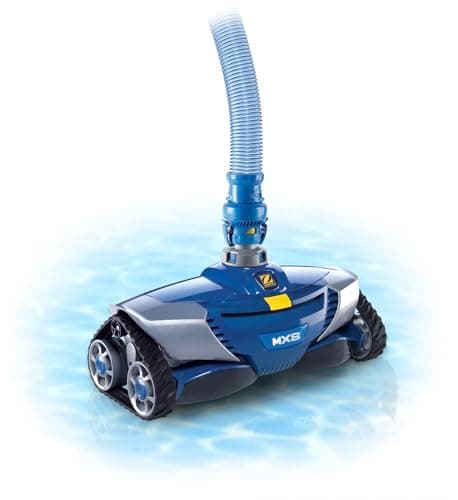
No rated pool area for this model. Reach is constrained by the hose length you install, and the MX8 is explicitly rated to 39 feet where the MX6 is not rated at all. For a small pool that is unimportant; for a mid-sized one, size up to the MX8.
The honest limits
Debris goes into your pump basket and filter, so you clean those more often. Your pump has to run throughout. There is no wall or waterline cleaning in any meaningful sense, and no filtration of its own — so fine silt and dead algae are beyond it entirely.
For under $400, a cordless robot filters water, climbs walls and runs with your pump off. For most buyers that is the better machine. The MX6 is for the specific case: a small or awkward pool, a pump with flow to spare, and a preference for a machine with nothing in it to fail.
How we assessed it
Every figure in the specification table on this page is attributed: to Zodiac’s published specifications, to the Amazon listing for this exact model, or marked as not published where neither source gives a figure. The score is derived from those published numbers by the five-metric rubric, which is published in full.
This assessment is built from Zodiac’s published specifications, recognized industry standards and verified owner feedback, scored on our published rubric. Every number shows where it came from, the page says plainly who the machine is wrong for, and no figure appears that we cannot source. Where owner reports inform a point, they are described as owner reports. Where independent laboratory or standards work exists for a figure, it is cited by name.
Who should skip it
Skip the Zodiac MX6 if you want your water filtered finer than your sand filter manages, or you want walls cleaned.
That is not a throwaway line. The most expensive mistake in this category is buying a capable machine that is wrong for your pool — and a machine rated below your pool’s area or missing the one capability your debris requires cannot be fixed by any setting.
Alternatives worth considering
- Zodiac MX8 — 39 ft reach and rated for every inground surface, for about $330 more. Read the review
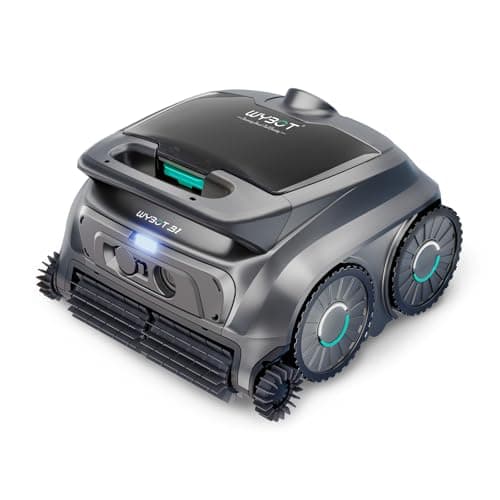
- WYBOT B1 — a cordless robot that climbs walls, at a similar price. Read the review
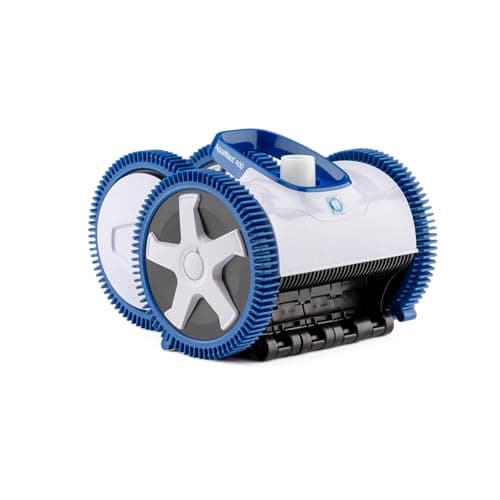
- Hayward AquaNaut 400 — four-wheel suction with a published 20 x 40 ft rating. Read the review
If you are still narrowing down, the selector tool works from your pool type, size, surface and dominant debris, and the Zodiac brand guide covers the whole range and where it stops.