Skip to content
Robot PoolCleaner Picks

Hayward AquaNaut 400 Review (2026) — Who It's Actually For

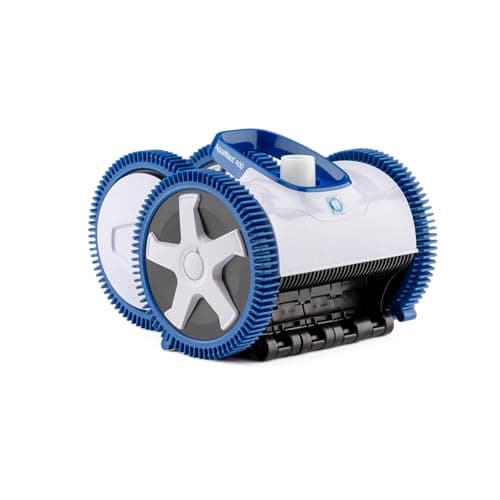
A four-wheel suction cleaner that runs off your existing pump — no booster, no battery, no electronics, rated for a 20 x 40 ft pool.

By Mike M. · Published November 6, 2026 · Last updated November 6, 2026

How this page is funded: we earn an Amazon commission on qualifying purchases made through links here, at no extra cost to you. It does not change which products we pick or the order we rank them in — here is the method and the full disclosure. Prices are live from Amazon, checked November 6, 2026.

The Hayward AquaNaut 400 is a four-wheel suction cleaner running off your existing pump, rated for pools to 20 x 40 ft. It is the cheapest route to automatic floor cleaning, provided your pump has sustained flow — but debris goes into your filter.

At a glance

Quick picks

Tap any row for the full write-up. Prices are live from Amazon, checked November 6, 2026.

#ProductBest forScorePrice
1
Hayward AquaNaut 400

Hayward AquaNaut 400

Hayward · W3PHS41CST

Best suction value5.9out of 10
$599.00· View on Amazon

Price checked November 6, 2026. #ad How we earn

2
Zodiac MX8

Zodiac MX8

Zodiac · Suction-side

39 ft reach and rated for every inground surface, with cyclonic suction6.1out of 10
$679.99· View on Amazon

Price checked November 6, 2026. #ad How we earn

3
Zodiac MX6

Zodiac MX6

Zodiac · Suction-side, cyclonic suction

cheaper and more maneuverable in a small or awkward pool6.2out of 10
$349.00· View on Amazon

Price checked November 6, 2026. #ad How we earn

4
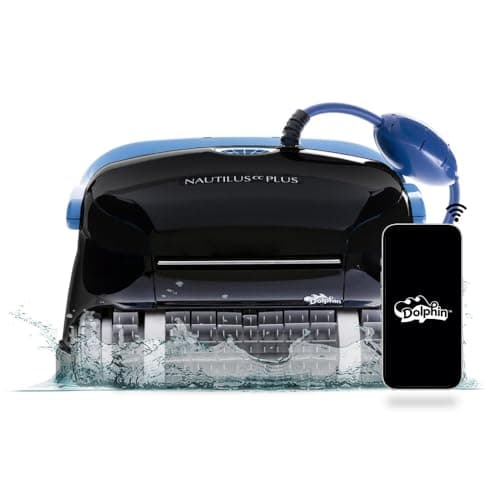
Dolphin Nautilus CC Plus

Dolphin Nautilus CC Plus

Dolphin · Corded, mains power supply — no battery

a robot: filters water, climbs walls, and runs with your pump off8.1out of 10
$899.00· View on Amazon

Price checked November 6, 2026. #ad How we earn

What actually decides this

The AquaNaut 400 is a suction-side cleaner, which means it has no motor of its own and is driven entirely by the suction your pool pump already produces. Understanding that one fact explains everything about it, good and bad.

The four-wheel drive is the distinguishing feature

Hayward sells a two-wheel AquaNaut 200 and a four-wheel 400. Four wheels handle slopes and transitions better — the shallow-to-deep slope in particular, where two-wheel suction cleaners can stall or lose contact. On a pool with a pronounced hopper, that is the version to buy.

What you give up by not having a motor

Three things, and they are the same three for every suction cleaner:

Everything it collects goes into your filter. Up the hose, into your pump basket, into your filter. That means more frequent backwashing or cartridge cleaning, and on a sand filter backwashing dumps treated water. Under tree cover this becomes a real chore.

Your pump has to run the whole time. Pool pumps are among the largest electrical loads in a home per the Department of Energy. A robot cleans with the pump off; this does not. That is where the real cost difference between the two categories lives, not in the purchase price — robotic versus suction works it through.

No walls, no waterline, no scheduling. It is a floor-and-cove machine.

Check your pump before buying

Suction cleaners need sustained flow. On an undersized pump, a variable-speed pump run on a low setting for efficiency, or a small above-ground cartridge system, they move sluggishly or not at all. If your pump is modest, a robot is the reliable choice — which is why above-ground pools mostly use robots.

Where it is genuinely the right buy

A pool whose pump is already running long hours anyway — for a heater, a salt cell, or chemistry — where the pump time is not an avoidable cost. A rough pebble or gunite surface, where a suction cleaner has no brushes to grind down and good traction on the texture. And a budget where $599 with nothing electronic to fail is more attractive than $500 with a battery that will age. The pebble page explains why suction stays competitive there.

How we assessed it, and what we did not do

Every figure in the specification table on this page is attributed: to Hayward’s published specifications, to the Amazon listing for this exact model, or marked as not published where neither source gives a figure. The score is derived from those published numbers by the five-metric rubric, which is published in full.

We have not physically tested this machine. We do not run a test pool, we do not own this unit, and nothing on this site claims otherwise. What we do instead is show where every number comes from, say plainly who the machine is wrong for, and refuse to print a figure we cannot source. Where owner reports inform a point, they are described as owner reports — never as our own experience.

Who should skip it

Skip the Hayward AquaNaut 400 if your pump is undersized or you are trying to cut pump run-time. A suction cleaner trades electricity and filter load for a lower purchase price.

That is not a throwaway line. The most expensive mistake in this category is buying a capable machine that is wrong for your pool — and a machine rated below your pool’s area or missing the one capability your debris requires cannot be fixed by any setting.

Alternatives worth considering

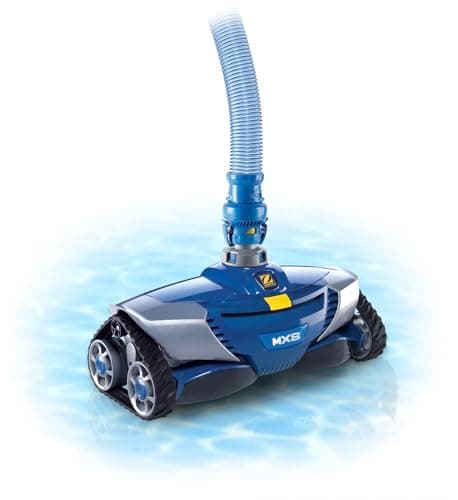
  • Zodiac MX8 — 39 ft reach and rated for every inground surface, with cyclonic suction. Read the review
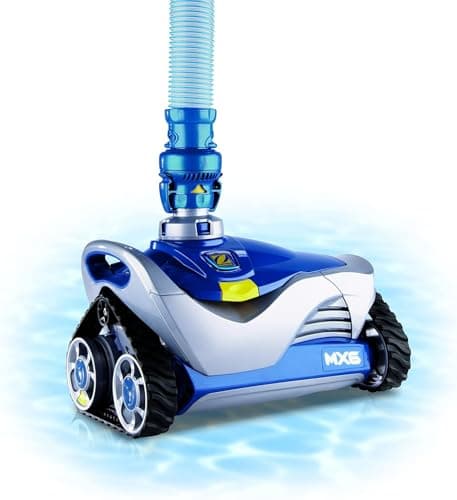
  • Zodiac MX6 — cheaper and more maneuverable in a small or awkward pool. Read the review
  • Dolphin Nautilus CC Plus — a robot: filters water, climbs walls, and runs with your pump off. Read the review

If you are still narrowing down, the selector tool works from your pool type, size, surface and dominant debris, and the Hayward brand guide covers the whole range and where it stops.
The picks in full

Hayward AquaNaut 400

Best suction value

A four-wheel suction cleaner that runs off your existing pump — no booster, no battery, no electronics, rated for a 20 x 40 ft pool.

Spec score

5.9/ 10 — derived from published specs, see the rubric
Debris capacity
6.0
Surface coverage
4.5
Filtration
5.5
Runtime & coverage
7.5
Value for spec
7.0

Published specifications

Model codeW3PHS41CST(retailer listing)
TypeSuction-side, 4-wheel drive(retailer listing)
Rated pool sizeInground pools up to 20 x 40 ft(retailer listing)
Power sourceRuns off the pool's existing pump(retailer listing)

What works

  • Cheapest route to automatic floor cleaning if you already have adequate pump flow
  • Nothing to charge and nothing electronic to fail
  • Four-wheel drive handles slopes better than two-wheel suction cleaners

What doesn't

  • Everything it picks up goes into your pump basket and filter, so you clean those more often
  • Needs sustained pump flow, which means running the pump longer and paying for it
  • No walls, no waterline, no scheduling

Who should skip this

Skip this one if your pump is undersized or you are trying to cut pump run-time. A suction cleaner trades electricity and filter load for a lower purchase price.

Zodiac MX8

39 ft reach and rated for every inground surface, with cyclonic suction

The MX6 with 39 feet of reach and traction tuned for every surface — the suction cleaner for a pebble or gunite pool where wheels slip.

Spec score

6.1/ 10 — derived from published specs, see the rubric
Debris capacity
6.5
Surface coverage
4.5
Filtration
5.5
Runtime & coverage
8.5
Value for spec
6.0

Published specifications

TypeSuction-side(retailer listing)
Reach39 ft(retailer listing)
SurfacesAll inground pool surfaces(retailer listing)
TractionRated for traction on all surfaces(retailer listing)

What works

  • 39 ft of reach covers a large pool without a booster pump
  • Explicitly rated for every inground surface, including rough pebble finishes
  • Nothing electronic, so it outlasts every robot here

What doesn't

  • Debris ends up in your filter
  • Floor and cove only
  • Nearly $700 for a suction cleaner, when $500 buys a cordless robot that filters water and climbs walls

Who should skip this

Skip this one if you want water filtration or wall cleaning. On a rough pebble surface this is a sensible buy; on plaster or vinyl, a robot is better value.

Zodiac MX6

cheaper and more maneuverable in a small or awkward pool

The small-pool suction cleaner that turns on a dime: cyclonic suction, X-Trax treads and nothing to charge, for under $400.

Spec score

6.2/ 10 — derived from published specs, see the rubric
Debris capacity
6.0
Surface coverage
4.5
Filtration
5.5
Runtime & coverage
7.5
Value for spec
8.0

Published specifications

TypeSuction-side, cyclonic suction(retailer listing)
TractionX-Trax treads(retailer listing)
PowerNo batteries — runs off pool suction(retailer listing)
Pool typeInground(retailer listing)
Rated pool sizeNot stated on this listing(not published)

What works

  • Among the most maneuverable suction cleaners made — it works in small and awkward pools
  • Cyclonic suction keeps flow up as the line loads
  • No battery, no electronics, nothing to charge
  • Under $400, which is suction-cleaner territory rather than robot territory

What doesn't

  • Debris goes into your pump basket and filter
  • No walls, no waterline, no filtration of its own
  • Zodiac does not state a rated pool area on this listing

Who should skip this

Skip this one if you want your water filtered finer than your sand filter manages, or you want walls cleaned.

Dolphin Nautilus CC Plus

a robot: filters water, climbs walls, and runs with your pump off

The default corded robot for a 40-foot inground pool: it climbs walls, it has never needed charging, and Maytronics parts are stocked everywhere — which is why it outlives cordless units.

Spec score

8.1/ 10 — derived from published specs, see the rubric
Debris capacity
8.0
Surface coverage
6.5
Filtration
9.0
Runtime & coverage
9.5
Value for spec
8.0

Published specifications

PowerCorded, mains power supply — no battery(retailer listing)
Rated pool sizeInground pools up to 40 ft in length(retailer listing)
WallsWall-climbing scrubber brush(retailer listing)
ControlWi-Fi app control(retailer listing)
Filter accessTop-load filter cartridges(retailer listing)
Fine filtrationUltra-fine cartridges sold separately(retailer listing)

What works

  • No battery means no battery to degrade — the single biggest cause of a dead cordless robot at year three
  • Ultra-fine cartridges are a $19-26 upgrade, which makes it the cheapest route to real fine filtration
  • Maytronics spares — brushes, tracks, filters, power supplies — are stocked by everyone
  • Top-load filter access means you empty it without turning it over

What doesn't

  • A floating cable in the pool, which tangles on a freeform shape and has to be stowed
  • The power supply needs a dry, shaded, GFCI-protected spot near the pool
  • No waterline pass — that is the CC Supreme

Who should skip this

Skip this one if your pool is freeform or over 40 ft, or you cannot site a power supply within cable reach of the water.

Questions people actually ask

Does the Hayward AquaNaut 400 need a booster pump?

No — it runs off your existing pump’s suction. It does need that pump to produce sustained flow.

What is the difference between the AquaNaut 200 and 400?

Two wheels against four. The four-wheel 400 handles slopes and the shallow-to-deep transition better.

Does a suction cleaner clean the water?

No. It sends debris into your filter, which then does the work. A robot filters the water itself in its own basket.

Will the AquaNaut work on a variable-speed pump?

Only at a speed that produces enough flow, which may undo the efficiency saving you bought the variable-speed pump for. Check your flow before committing.