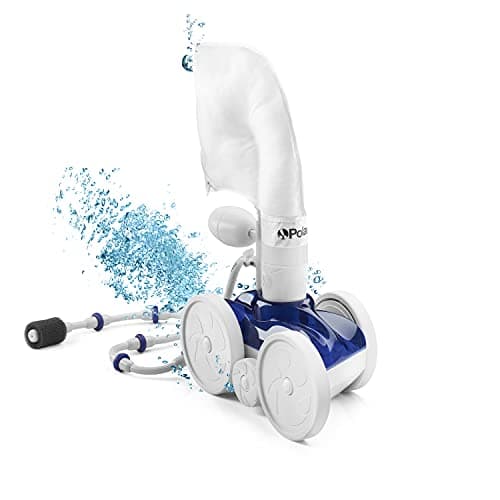
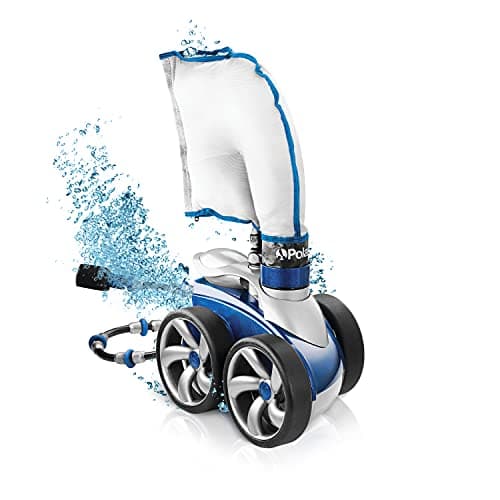
Among a site full of robots, the 3900 Sport is here because it does one thing no robot on any budget does: it eats large woody debris.
Why robots cannot do this
A robot’s intake is sized and screened for leaf-and-finer debris. An acorn, a pine cone, a eucalyptus pod or a rigid twig does not fold and does not fit — it bridges the intake and blocks it while the basket is still empty, or jams the impeller. That is a geometry limit, and no amount of suction or filtration spec changes it.
A pressure-side cleaner has a wide bag throat and a venturi lifting debris into a zipped bag it carries. An acorn goes in. If you are under a mature oak, that single fact outweighs every spec comparison on this site — robotic versus pressure-side works it through.
The dual-chamber SuperBag matters more than the jets
Polaris publishes triple jets, all-wheel PosiDrive, auto-reverse and TailSweep PRO, and those are real. But the component that makes the machine is the bag: two chambers hold substantial volume without choking flow, and because debris is bagged rather than passed through your plumbing, it never reaches your pump basket or filter.
On a leaf-heavy pool that saves hours of backwashing, and on a sand filter it saves the treated water that backwashing dumps. Bag choice is also a real lever most owners never use: the standard all-purpose bag flows well, while a fine sand-and-silt mesh retains much smaller particles for about $13. Both are listed in the parts section.
The booster pump, which is the hidden cost
This is the thing to establish before you buy. The 3900 Sport generally needs a dedicated booster pump — plumbed into your pad, wired, and running throughout every cleaning cycle. If you already have one (many pools built in the Polaris era do), the cleaner is excellent value. If you do not, add the pump, the installation and its electricity to the comparison, and the arithmetic changes substantially. Pool pumps are among the largest electrical loads in a home per the Department of Energy.
What it genuinely does not do
It does not filter your water — it relocates debris into a bag, which is useful but different. It does not clean walls or the waterline in any meaningful sense. And it will not touch fine silt or dead algae, which need a micron rating no bag mesh provides.
The compensation is longevity: no electronics, no battery, no circuit board. A full rebuild is a bag, a tail sweep and a set of wheels, and these machines routinely run for over a decade. If you want one machine, buy a robot. If you are under an oak and already have a booster pump, this plus a robot is the setup that actually works.
How we assessed it, and what we did not do
Every figure in the specification table on this page is attributed: to Polaris’s published specifications, to the Amazon listing for this exact model, or marked as not published where neither source gives a figure. The score is derived from those published numbers by the five-metric rubric, which is published in full.
We have not physically tested this machine. We do not run a test pool, we do not own this unit, and nothing on this site claims otherwise. What we do instead is show where every number comes from, say plainly who the machine is wrong for, and refuse to print a figure we cannot source. Where owner reports inform a point, they are described as owner reports — never as our own experience.
Who should skip it
Skip the Polaris Vac-Sweep 3900 Sport if you do not have a booster pump, or you want water filtration. A pressure-side cleaner is a debris collector, not a filter.
That is not a throwaway line. The most expensive mistake in this category is buying a capable machine that is wrong for your pool — and a machine rated below your pool’s area or missing the one capability your debris requires cannot be fixed by any setting.
Alternatives worth considering
- Polaris Vac-Sweep 280 — the simpler, cheaper jet-powered Polaris, with a 31 ft hose. Read the review
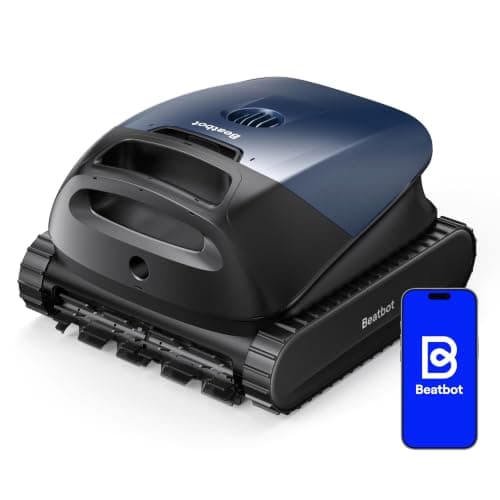
- Beatbot Sora 10 — a robot with a 5-liter basket if your debris is leaves rather than acorns. Read the review
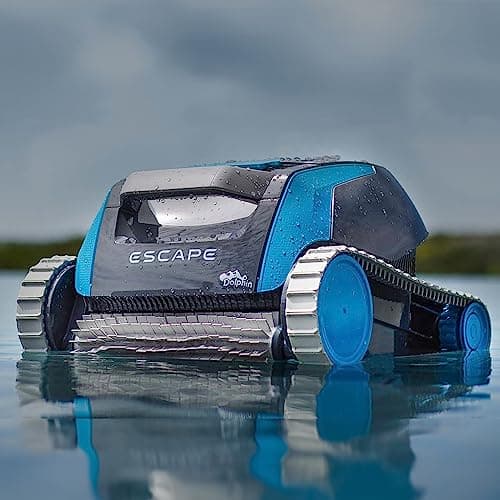
- Dolphin Escape — a corded robot with a large top-load bin and no booster pump needed. Read the review
If you are still narrowing down, the selector tool works from your pool type, size, surface and dominant debris, and the Polaris brand guide covers the whole range and where it stops.