Skip to content
Robot PoolCleaner Picks

Robotic vs Pressure-Side Pool Cleaners

A pressure-side cleaner bags acorns and twigs no robot can swallow. A robot filters silt no bag will ever catch. Your trees decide this one.

By Mike M. · Published November 6, 2026 · Last updated November 6, 2026

How this page is funded: we earn a commission on qualifying purchases made through links here, at no extra cost to you — from Amazon Associates, or for Aiper machines through Aiper’s own brand partner program. Either way the purchase is on Amazon at the same price, and it does not change which products we pick or the order we rank them in — here is the method and the full disclosure. Prices are live from Amazon, checked November 7, 2026.

Choose a pressure-side cleaner if your pool gets acorns, pine cones and heavy twig debris and you have a booster pump; choose a robot for fine debris, wall cleaning and water filtration. Pressure-side collects, robotic filters — they solve different problems.

At a glance

Quick picks

Tap any row for the full write-up. Prices are live from Amazon, checked November 7, 2026.

#ProductBest forScorePrice
1
Polaris Vac-Sweep 3900 Sport

Polaris Vac-Sweep 3900 Sport

Polaris · Pressure-side; requires a booster pump

Best pressure-side8.9/10
$848.72$899.99· View on Amazon

6% off. Price checked November 7, 2026. #ad How we earn

2
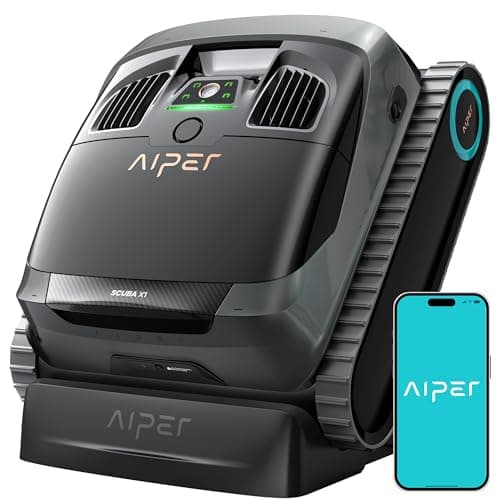
Aiper Obsidian

Aiper Obsidian

Aiper · 6,600 GPH

Best robotic9.8/10
$799.98$1,399.99· View on Amazon

43% off. Price checked November 7, 2026. #ad How we earn

3
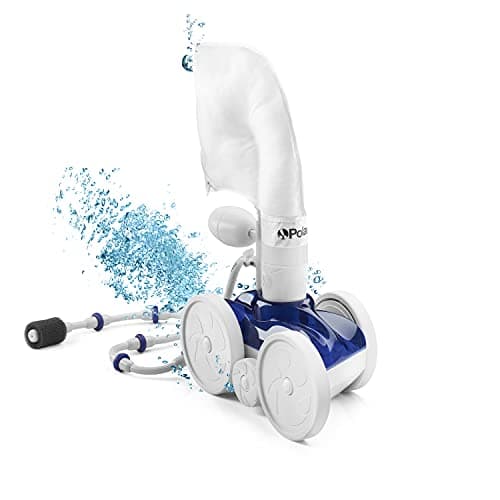
Polaris Vac-Sweep 280

Polaris Vac-Sweep 280

Polaris · Pressure-side, double venturi jet-powered

Best budget pressure-side8.6/10
$599.00· View on Amazon

Price checked November 7, 2026. #ad How we earn

4
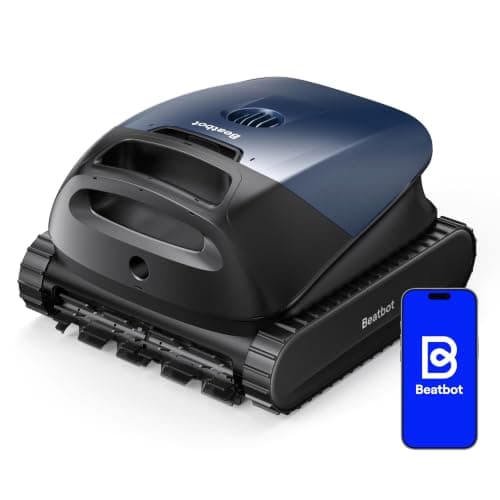
Beatbot Sora 10

Beatbot Sora 10

Beatbot · 6,800 GPH

Best robotic for leaf volume9.6/10
$499.00$699.00· View on Amazon

29% off. Price checked November 7, 2026. #ad How we earn

What actually decides this

The verdict: pressure-side if your debris is big and woody and you already have a booster pump; robotic for everything else. These are not competing products so much as tools for different debris.

How a pressure-side cleaner works

It is driven by water pressure on the return side of your system, usually from a dedicated booster pump. Jets propel it around and create a venturi that lifts debris into a zipped bag the cleaner carries. The debris never enters your filtration system at all.

That architecture has one enormous advantage: a bag with a wide throat will swallow an acorn, a pine cone, a eucalyptus pod or a rigid twig. No robot on this site will. Robot intakes are sized and screened for leaf-and-finer debris, and rigid objects jam them.

The trade

RoboticPressure-side
Large woody debrisJams the intakeHandles it easily
Fine silt and sand3-180 micron filtrationBag mesh only — fine fraction escapes
Filters the waterYesNo — it relocates debris into a bag
Extra equipmentNoneBooster pump on most installs
Wall and waterlineMany modelsFloor, with some wall contact
Electronics in waterYesNone
Typical lifespan4-10 yearsA decade or more

The booster pump is the hidden cost

A pressure-side cleaner that needs a booster pump needs a pump you may not have, plumbed into your pad, running during every cleaning cycle. If you have one already — many pools built in the Polaris era do — the cleaner is excellent value. If you do not, add the pump, the plumbing and the running cost to the comparison before you decide.

Bag mesh is a real choice

Pressure-side bags come in grades. The standard all-purpose bag flows well and holds volume; a fine sand-and-silt bag retains much smaller particles but fills faster and restricts flow. For the Polaris 3900 Sport both exist at very different prices — see filters and bags by brand. Matching bag to debris is the single biggest adjustment a pressure-side owner can make, and most never change the bag that came in the box.

The hybrid approach, which is often correct

Under a mature oak or pine, the genuinely best setup is often both: a pressure-side cleaner or a surface skimmer taking the coarse load out before it reaches your filter, plus a robot handling the fine fraction and the walls. It costs more than one machine and it removes more debris than any single machine at any price. The pine-needle roundup covers that strategy in detail.

The picks in full

Polaris Vac-Sweep 3900 Sport

Best pressure-side
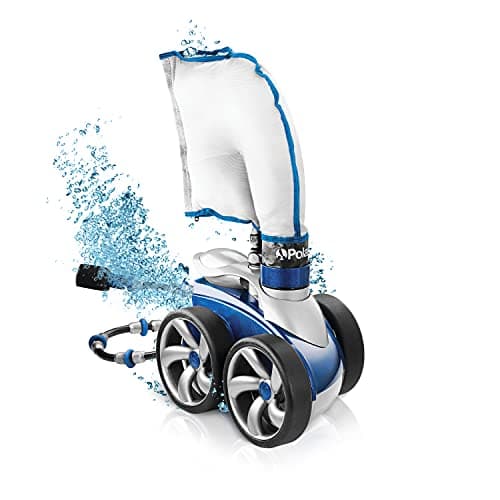
A pressure-side cleaner with a dual-chamber bag that catches debris before it reaches your filter — the right machine for acorns, twigs and heavy leaf fall, if you already have a booster pump.

Spec score

8.9/ 10 — Excellent on our 8.4–9.8 scale, see the rubric
Debris capacity
9.8
Surface coverage
8.5
Filtration
8.4
Runtime & coverage
9.5
Value for spec
9.0

Published specifications

TypePressure-side; requires a booster pump(retailer listing)
Debris collectionDual-chamber SuperBag(retailer listing)
JetsTriple jets(retailer listing)
DriveAll-wheel PosiDrive with auto-reverse(retailer listing)
ExtrasTailSweep PRO(retailer listing)
Pool typeAll inground(retailer listing)

What works

  • Debris goes into the bag, not through your pool filter — with heavy leaf fall that saves hours of backwashing
  • It handles large debris no robot here will touch: acorns, pine cones, twigs
  • No electronics in the water, which is why these machines last a decade
  • Replacement bags and tail sweeps are cheap and universally stocked

What doesn't

  • It needs a dedicated booster pump — budget for one, and for the electricity it uses
  • It does not filter the water; it only relocates debris into a bag
  • No wall or waterline cleaning in any meaningful sense

Who should skip this

Skip this one if you do not have a booster pump, or you want water filtration. A pressure-side cleaner is a debris collector, not a filter.

Aiper Obsidian

Best robotic

6,600 GPH, 3-micron MicroMesh filtration, a charging dock and 180 minutes — the spec sheet of a flagship at the price of a mid-range unit, and the best value on this site when the discount holds.

Spec score

9.8/ 10 — Category-defining on our 8.4–9.8 scale, see the rubric
Debris capacity
9.3
Surface coverage
9.5
Filtration
9.8
Runtime & coverage
9.5
Value for spec
9.7

Published specifications

Suction6,600 GPH(retailer listing)
Filter rating3 micron MicroMesh(retailer listing)
PowerCordless, 180-minute rated runtime(retailer listing)
ChargingWireless charging dock(retailer listing)
Surfaces cleanedFloor, walls and waterline(retailer listing)
Pool typeInground(retailer listing)

What works

  • 3-micron filtration plus 6,600 GPH is flagship-tier on paper
  • Full floor-wall-waterline coverage, not floor-and-walls
  • 180 minutes covers a large pool without a mid-cycle recharge
  • Charging dock, so no lifting it out between runs

What doesn't

  • A 2026 model with a short public track record — owner reports are thin
  • The listed discount is deep, which means the undiscounted price is not the price to judge it on
  • Inground only

Who should skip this

Skip this one if you want a model with several seasons of owner feedback behind it, or your pool is above-ground.

Polaris Vac-Sweep 280

Best budget pressure-side

The long-running jet-powered Polaris: 31 feet of hose, an all-purpose bag and a three-hour cycle, with nothing electronic to fail.

Spec score

8.6/ 10 — Excellent on our 8.4–9.8 scale, see the rubric
Debris capacity
9.5
Surface coverage
8.4
Filtration
8.4
Runtime & coverage
9.3
Value for spec
9.0

Published specifications

TypePressure-side, double venturi jet-powered(retailer listing)
Hose31 ft(retailer listing)
Debris collectionAll-purpose debris bag(retailer listing)
Cycle timeCleans in 3 hours or less(retailer listing)
Pool typeInground(retailer listing)

What works

  • Mechanically about as simple as a pool cleaner gets, which is why 20-year-old units are still running
  • Bags debris instead of pushing it into your filter
  • Parts are cheap and available from a dozen suppliers

What doesn't

  • Needs a booster pump on most installations
  • No filtration, no wall climbing, no scheduling
  • A 31 ft hose limits it to small and mid-sized pools

Who should skip this

Skip this one if you want a machine that filters water, cleans walls or runs on a schedule. This is a debris collector and nothing more.

Beatbot Sora 10

Best robotic for leaf volume

6,800 GPH, a 5-liter basket and five hours of runtime for under $500 — the best published capacity-per-dollar on this site, with a coarse 150-micron filter as the compromise.

Spec score

9.6/ 10 — Category-defining on our 8.4–9.8 scale, see the rubric
Debris capacity
9.6
Surface coverage
9.5
Filtration
8.9
Runtime & coverage
9.7
Value for spec
9.7

Published specifications

Suction6,800 GPH(retailer listing)
PowerCordless, 5-hour rated runtime(retailer listing)
Basket5 L(retailer listing)
Filter rating150 micron(retailer listing)
Surfaces cleanedFloor, walls, waterline and 12-inch shallow water(retailer listing)
NavigationSonicSense AI obstacle avoidance(retailer listing)
RetrievalAuto waterline parking(retailer listing)

What works

  • A 5 L basket is the largest at this price — it is the single best predictor of leaf performance
  • Five hours of runtime means a heavily loaded pool gets a full cycle plus a second pass
  • Shallow-water capability down to 12 inches handles tanning ledges and beach entries
  • 6,800 GPH matches machines costing three times as much

What doesn't

  • 150-micron filtration is coarse — fine silt, pollen and dead algae will pass through
  • No surface skimming
  • SonicSense is avoidance, not mapping, so coverage is pattern-based

Who should skip this

Skip this one if your debris is fine — sand, silt, pollen or post-treatment dead algae. At 150 micron this machine will stir it rather than remove it.

Our recommendation

Our recommendation8.9/10

A pressure-side cleaner with a dual-chamber bag that catches debris before it reaches your filter — the right machine for acorns, twigs and heavy leaf fall, if you already have a booster pump.

$848.72$899.99· See the Vac-Sweep 3900 Sport on Amazon

6% off. Price checked November 7, 2026. #ad How we earn

Runner-up9.8/10
Aiper Obsidian

Aiper Obsidian

Best robotic

6,600 GPH, 3-micron MicroMesh filtration, a charging dock and 180 minutes — the spec sheet of a flagship at the price of a mid-range unit, and the best value on this site when the discount holds.

$799.98$1,399.99· See the Obsidian on Amazon

43% off. Price checked November 7, 2026. #ad How we earn

Questions people actually ask

Do pressure-side pool cleaners need a booster pump?

Most do, including the Polaris 3900 Sport. Some models run off return pressure alone if your system supplies enough. Check the specific model before buying.

Will a pressure-side cleaner pick up acorns and pine cones?

Yes — that is its main advantage. A wide bag throat swallows rigid debris that jams every robot intake.

Does a pressure-side cleaner filter the water?

No. It collects debris into a bag, which keeps it out of your filter but does nothing for fine suspended particles. That is what a robot’s filter is for.

Are pressure-side cleaners obsolete?

No — they remain the best answer for large woody debris and they outlast robots by years. They are a specialist tool now rather than a default.