Skip to content
Robot PoolCleaner Picks

Robotic vs Manual Pool Vacuum

A robot buys back time. A manual vacuum buys precision. For a small pool or a spa, the cheap tool genuinely wins — and for a big pool it genuinely doesn't.

By Mike M. · Published November 6, 2026 · Last updated November 6, 2026

How this page is funded: we earn an Amazon commission on qualifying purchases made through links here, at no extra cost to you. It does not change which products we pick or the order we rank them in — here is the method and the full disclosure. Prices are live from Amazon, checked November 6, 2026.

Buy a robot if your pool is over about 300 sq ft and you clean it weekly — it replaces 2-4 hours a week. Buy a manual or handheld vacuum for spas, plunge pools, steps and spot cleaning, where it is faster, cheaper and more precise than any robot.

At a glance

Quick picks

Tap any row for the full write-up. Prices are live from Amazon, checked November 6, 2026.

#ProductBest forScorePrice
1
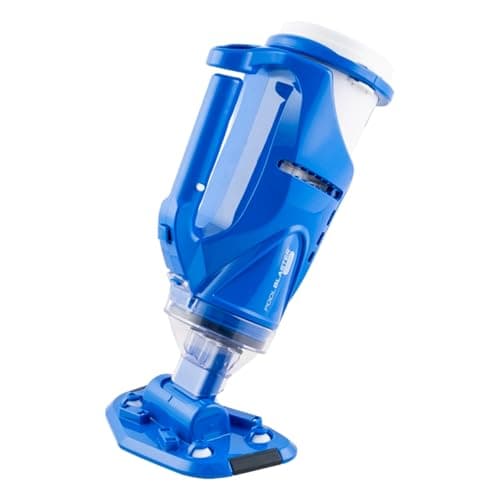
Pool Blaster Max CG

Pool Blaster Max CG

Water Tech · Cordless handheld, hoseless

Best manual for pools8.6/10
$299.99· View on Amazon

Price checked November 6, 2026. #ad How we earn

2
Pool Blaster Catfish Gen 2

Pool Blaster Catfish Gen 2

Water Tech · Cordless handheld, rechargeable

Best manual for spas8.4/10
$121.44$139.99· View on Amazon

13% off. Price checked November 6, 2026. #ad How we earn

3
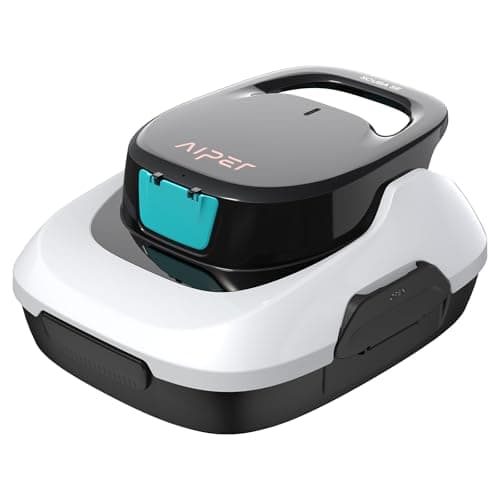
Aiper Scuba SE

Aiper Scuba SE

Aiper · Cordless, 90-minute rated runtime

Cheapest robot alternative8.4/10
$129.99$159.99· View on Amazon

19% off. Price checked November 6, 2026. #ad How we earn

4
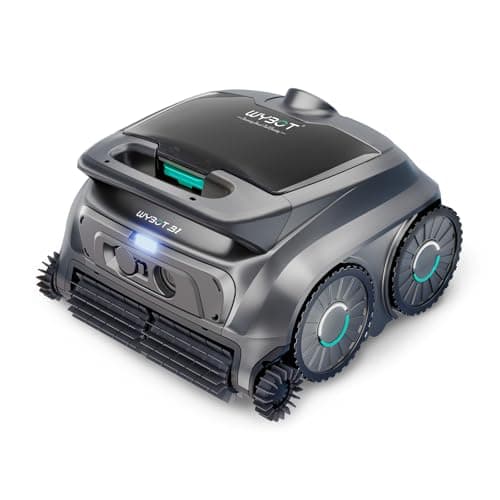
WYBOT B1

WYBOT B1

WYBOT · Quad-roller brushes for edge cleaning

Best small-pool robot9.0/10
$334.99$379.99· View on Amazon

12% off. Price checked November 6, 2026. #ad How we earn

What actually decides this

The verdict: a robot above roughly 300 sq ft, a handheld below it — and ideally one of each. They are not really substitutes.

What you are actually buying with a robot

Time. A manual vacuum session on a 16 × 32 ft pool is 45-75 minutes of standing in the sun pushing a head around, plus setup and takedown. Weekly, that is 40-60 hours a season. A robot replaces that with pressing a button and emptying a basket.

A robot also does things a manual session practically cannot: it runs three times a week without complaint, it climbs walls, and it filters the water as it goes rather than sending everything into your filter.

Four things a manual vacuum does better

  • Steps, benches and tanning ledges. Almost no robot cleans steps properly.
  • A defined patch of sand or silt. You can park a handheld on it. A robot drives past and stirs it — which is why the sand guide exists.
  • Spas and hot tubs. No robot here fits one.
  • Right now. Setup is thirty seconds with a cordless handheld.

Manual does not have to mean a hose

The old manual setup — a vac head, a pole, a hose, priming the line through the skimmer — is genuinely tedious, and it sends every scrap of debris into your pump basket. Modern cordless handhelds (the Pool Blaster line here) are hoseless and self-contained: no priming, no pump involvement, debris into their own bag. That changes the comparison considerably, and it is why the honest answer to “robot or manual” is usually “a robot plus a handheld” rather than one or the other.

Where the crossover sits

PoolBuy
Spa or hot tubHandheld only
Plunge pool / spool, under ~150 sq ftHandheld only
Small pool, 150-300 sq ftEither; a handheld is defensible
Standard pool, 300-1,600 sq ftRobot, plus a handheld for spots
Large pool, over 1,600 sq ftRobot, not optional

The cost comparison people get wrong

A handheld is $120-300 and a robot is $130-2,300, so manual looks cheaper. But a manual vacuum that connects to your skimmer requires your pump to run for the whole session, and everything it collects loads your filter. A robot runs with the pump off and keeps debris out of the system. Over a season the gap narrows a lot — the worth-it guide works the arithmetic.

The picks in full

Pool Blaster Max CG

Best manual for pools
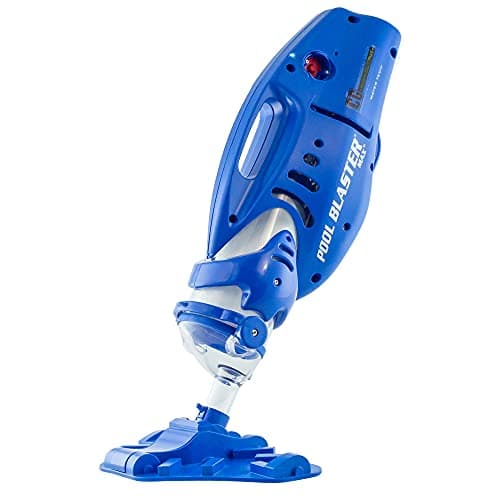
A 12.75-inch cordless hand vacuum with no hose and no pump involvement — the tool for the patch of sand in the corner that your robot keeps missing.

Spec score

8.6/ 10 — Excellent on our 8.4–9.8 scale, see the rubric
Debris capacity
8.9
Surface coverage
8.8
Filtration
9.2
Runtime & coverage
8.4
Value for spec
9.2

Published specifications

TypeCordless handheld, hoseless(retailer listing)
Head width12.75 in(retailer listing)
Pool typeInground and above-ground(retailer listing)
RuntimeNot stated on this listing(not published)

What works

  • No hose and no pump: you are vacuuming in 30 seconds, not after 10 minutes of setup
  • A 12.75 in head is wide for a handheld, which makes a sand patch a short job
  • The right tool for spot work after a storm or a liner repair
  • Catches debris in its own bag, so nothing reaches your filter

What doesn't

  • It is a handheld, not an automatic cleaner — you are in the pool doing the work
  • Water Tech does not state a runtime figure on this listing
  • Micro-filter bags are a recurring consumable

Who should skip this

Skip this one if you want automatic cleaning. A handheld complements a robot; it does not replace one.

Pool Blaster Catfish Gen 2

Best manual for spas

A 45-minute cordless spot vacuum that fits a standard 1.25-inch pole — the cheapest honest answer to a hot tub, a spa or a small above-ground pool.

Spec score

8.4/ 10 — Excellent on our 8.4–9.8 scale, see the rubric
Debris capacity
8.4
Surface coverage
8.6
Filtration
9.1
Runtime & coverage
8.5
Value for spec
9.5

Published specifications

TypeCordless handheld, rechargeable(retailer listing)
RuntimeUp to 45 minutes(retailer listing)
Pole fittingStandard 1.25 in poles(retailer listing)
Intended useHot tubs, spas, spot-cleaning small above-ground pools(retailer listing)

What works

  • 45 minutes of published runtime is plenty for a spa or a spot job
  • Fits the telescopic pole you already own
  • Cheapest machine on this site, and the only sensible one for a hot tub

What doesn't

  • Good to know: it is built for spas, hot tubs and spot jobs — a full-size pool is more than one 45-minute charge
  • Manual: you are doing the work
  • Small debris capacity

Who should skip this

Skip this one if you are cleaning a full-size pool. This is a spa and spot tool, and buying it for a 30 ft pool is the most common mistake in this category.

Aiper Scuba SE

Cheapest robot alternative

The cheapest robot on this site that is still a robot: 90 minutes, 860 sq ft, floor only — exactly right for a 15-24 ft above-ground pool and wrong for anything bigger.

Spec score

8.4/ 10 — Excellent on our 8.4–9.8 scale, see the rubric
Debris capacity
8.6
Surface coverage
8.4
Filtration
8.9
Runtime & coverage
8.6
Value for spec
9.7

Published specifications

PowerCordless, 90-minute rated runtime(retailer listing)
Rated pool sizeUp to 860 sq ft(retailer listing)
Pool typeAbove-ground(retailer listing)
ModesDual cleaning modes(retailer listing)
RetrievalSelf-parking(retailer listing)
WallsFloor cleaning only — no wall climb(retailer listing)

What works

  • By far the lowest entry price for a genuine cordless robot
  • 860 sq ft covers a 24 ft round above-ground pool with margin
  • Light enough to lift out one-handed, which matters on an above-ground deck
  • Self-parking, so you are not wading after it

What doesn't

  • Floor only — it will not touch your walls or waterline
  • 90 minutes is one cycle; a dirty pool needs two
  • 180-micron filtration is coarse: fine silt passes straight through

Who should skip this

Skip this one if your pool has walls you need scrubbed, you are fighting algae or fine silt, or your pool is over about 860 sq ft.

WYBOT B1

Best small-pool robot

Four roller brushes aimed squarely at the floor-to-wall corner, in a light chassis that crosses drains and steps — the pick when your debris collects in the cove.

Spec score

9.0/ 10 — Outstanding on our 8.4–9.8 scale, see the rubric
Debris capacity
9.0
Surface coverage
9.0
Filtration
8.9
Runtime & coverage
9.2
Value for spec
9.6

Published specifications

BrushesQuad-roller brushes for edge cleaning(retailer listing)
CoverageFloor and wall(retailer listing)
ObstaclesHigh obstacle crossing(retailer listing)
WeightDescribed as lightweight; no figure published(not published)
ControlApp control(retailer listing)
Pool typeInground(retailer listing)

What works

  • Quad rollers are a real answer to the cove, where most robots leave a debris line
  • High obstacle crossing means main drains and step returns do not strand it
  • Light enough to lift out without making a job of it
  • Among the lowest-priced wall-climbing robots here

What doesn't

  • No waterline pass
  • No published micron rating and no published weight
  • Newest model in WYBOT's line, so almost no owner feedback yet

Who should skip this

Skip this one if you want the waterline cleaned or a published filtration figure — the C2 is $165 more and publishes 10 micron.

Our recommendation

Our recommendation8.6/10
Pool Blaster Max CG

Pool Blaster Max CG

Best manual for pools

A 12.75-inch cordless hand vacuum with no hose and no pump involvement — the tool for the patch of sand in the corner that your robot keeps missing.

Runner-up8.4/10
Pool Blaster Catfish Gen 2

Pool Blaster Catfish Gen 2

Best manual for spas

A 45-minute cordless spot vacuum that fits a standard 1.25-inch pole — the cheapest honest answer to a hot tub, a spa or a small above-ground pool.

Questions people actually ask

Is a robotic pool cleaner better than vacuuming by hand?

For regular whole-pool cleaning, yes — it replaces hours a week and filters the water. For steps, spas and defined debris patches, a handheld is faster and more precise.

Do I still need a manual vacuum if I have a robot?

Most owners end up keeping one. Steps, benches, behind ladders and post-storm spot jobs are all faster by hand.

What is the cheapest way to vacuum a pool?

A pole-and-hose vac head using your existing pump is the cheapest to buy, but it is the most tedious and it loads your filter. A cordless handheld costs more and is far more pleasant to use.

How long does it take to vacuum a pool manually?

Typically 45-75 minutes for a standard residential pool including setup, against pressing a button for a robot.