Start by establishing which of two problems you have, because they have completely different answers.
Same spot every cycle → a physical feature of your pool. Geometry.
Random spots → something on or in the machine. Mechanical.
Same spot: the six usual fixtures
1. The main drain
A raised or recessed main drain cover is the most common stranding point in an inground pool. A robot drives onto it and high-centers, or a wheel drops into the recess.
Separately and more importantly: if your main drain cover is cracked, missing or not compliant, that is a serious safety matter independent of your robot. The CPSC’s Pool Safely program exists largely because of drain entrapment, and it is worth checking while you are down there.
2. Step returns and water features
A return jet at step level pushes a light robot off course repeatedly and can pin it in a corner. Running cycles with the pump off — which a robot allows and a suction cleaner does not — removes this entirely.
3. Floor seams and liner wrinkles
A liner wrinkle or a seam between floor panels is a small ridge a tired drivetrain cannot climb. If your robot used to cross it and now does not, that is worn tracks rather than a new wrinkle.
4. Tanning ledges and shallow shelves
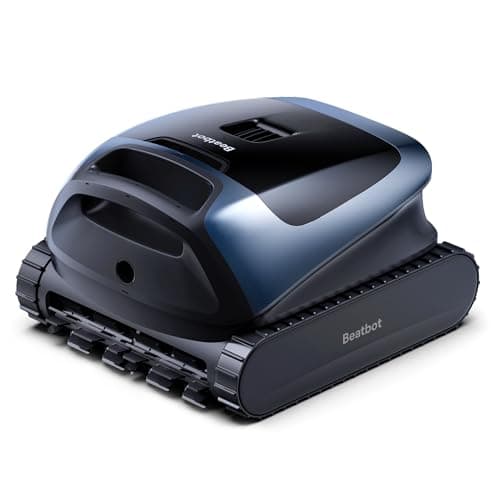
Most robots either refuse a ledge or beach on it. Machines with explicit shallow-water or platform modes — the Beatbot Sora 30 and Sora 70 — handle them deliberately. If your pool has a ledge and your robot keeps beaching on it, that is the wrong machine rather than a fault.
5. Corners on a soft-sided pool
A flexible floor deforms under the machine’s weight and it sits in a depression it made itself. Lighter is better here — the Intex and soft-sided page covers it.
6. The cable, on a corded machine
A twisted cable physically limits how far the robot can travel and will stop it mid-pool. Uncoil the full length into the water before the cycle rather than feeding it in, and site the power supply on the midpoint of the long side.
Random spots: the mechanical causes
A wrap on a rotating shaft
Pine needles, long grass and hair wrap around brush and wheel axles and load the drive motor progressively. The robot stalls, backs off, stalls again. Check the axle ends specifically — the wrap forms there. Needle season is the usual cause.
A blinded filter
A filter so loaded that the pump is working against a closed system draws excess current, which on many machines trips a protection cutout mid-cycle. It presents as random stopping.
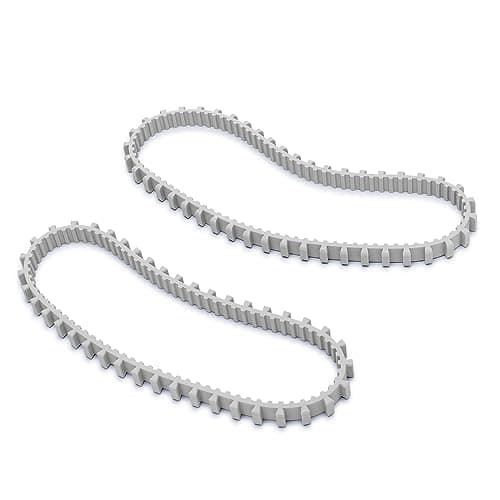
Worn tracks
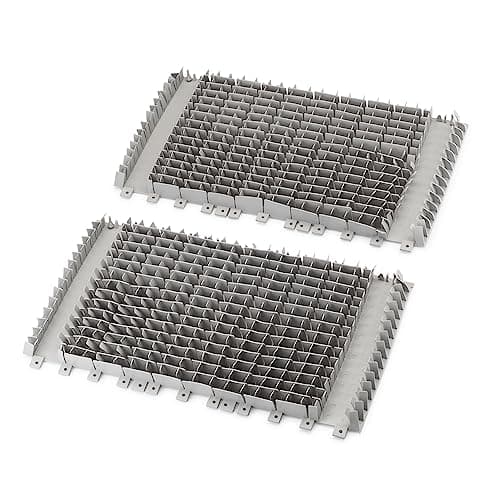
A machine with no tread left cannot climb a seam, a drain lip or a cove radius it managed last season. This is also the failed-wall-climbing cause, and it is about $35 to fix.
A degraded battery under load
A tired pack sags under the current draw of climbing or crossing an obstacle. The robot manages it when freshly charged and strands after thirty minutes.
What actually helps
- Start the cycle from a different point so the fixture is encountered differently.
- Run with the pump off, removing return-jet interference.
- Clear brush and wheel axles weekly in debris season.
- Rinse the filter every cycle.
- Replace brushes and tracks before they go smooth.
- For a pool with a ledge, buy a machine with a platform mode rather than fighting one that has none.