Skip to content
Robot PoolCleaner Picks

How to Get Sand Out of a Pool

Sand removal is a technique problem as much as an equipment problem. Move too fast and you lift it into suspension; use too coarse a filter and you simply relocate it.

By Mike M. · Published November 6, 2026 · Last updated November 6, 2026

How this page is funded: we earn an Amazon commission on qualifying purchases made through links here, at no extra cost to you. It does not change which products we pick or the order we rank them in — here is the method and the full disclosure. Prices are live from Amazon, checked November 6, 2026.

Let the sand settle for several hours, then vacuum slowly with the finest filter you have — moving fast lifts sand into suspension instead of collecting it. If sand keeps returning in a cone near a return jet, your sand filter's laterals are cracked and the filter is the source.

What to look for

First: find out where it is coming from

This matters before you clean anything, because one of the possible causes means you will be removing sand forever until you fix something else.

PatternLikely source
A cone or fan near a return jet, keeps returning after every cleaningYour sand filter is feeding sand back in — cracked laterals or a broken standpipe
Spread evenly across the floor after windy weatherAirborne grit and dust
Concentrated in the shallow end and on stepsCarried in on swimmers’ feet from a sandy yard or beach
Appeared after a nearby construction or landscaping jobOne-off external contamination
Fine brown silt rather than gritty sandSoil runoff, or dead algae after a treatment

If it is the filter, no cleaner will solve it. Fix the filter first — otherwise you are removing sand your own equipment keeps adding.

The removal method

  1. Stop everything and let it settle. Several hours, ideally overnight. Sand in suspension cannot be collected; sand on the floor can. This is the step that most changes the outcome and it costs nothing but patience.
  2. Fit the finest filter you have. Pool sand runs roughly 100-500 microns so a 180-micron basket catches the coarse fraction, but silt and the fine fraction need 10 microns or finer. If your machine has a fine option, now is when it earns its price.
  3. Move slowly. A fast pass creates a bow wave that lifts sediment ahead of the intake. If your robot has a “fine”, “intensive” or “deep clean” mode, that mode is largely just slowing down — use it.
  4. For a defined patch, use a handheld. Nothing beats parking a cordless hand vacuum directly on the sand. A robot drives past; you can hold still.
  5. Rinse the filter between passes. A fine filter loaded with sand has no flow. Mid-session rinses make a large difference.
  6. Brush the cove and corners afterwards, then let it settle again and do a second pass. Sand almost always needs two.

Do not vacuum sand to your filter

If you use a manual vac through your skimmer, sand goes into your pump basket and then your filter — which on a sand filter means straight back out through the returns, and on a cartridge filter means grinding the pleats. Where your system has a “waste” or “drain” setting on a multiport valve, vacuum to waste so the sand leaves the system entirely. Top the pool back up afterwards.

This is one of the clearest advantages of a robot: it captures sand in its own basket, so nothing reaches your filter and no water is dumped. Robotic versus suction covers the difference.

Why your robot “just pushes it around”

Two causes, both fixable:

  • The filter is coarser than the sand. It goes in the intake and out the exhaust. Nothing has been removed — it has been relocated. Fit a fine filter.
  • It is moving too fast. The bow wave lifts sediment before the intake reaches it. Use the slowest mode.

The sand and silt roundup ranks machines on published micron rating for exactly this reason.

Preventing the next time

  • Service your sand filter’s laterals on schedule, before they crack.
  • Put a rinse station or a footbath at the pool entry if your yard is sandy.
  • Keep a fine filter fitted through dry, windy seasons.
  • Use a cover when the pool is unused — it keeps airborne grit out as well as leaves, and the EPA notes the water saving too.
What to buy, given the above

Our picks for this job

Tap any row for the full write-up. Prices are live from Amazon, checked November 6, 2026.

#ProductBest forScorePrice
1
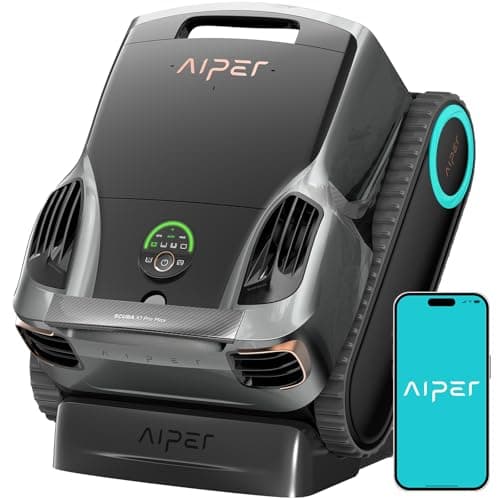
Aiper Scuba X1 Pro Max

Aiper Scuba X1 Pro Max

Aiper · 8,500 GPH

3-micron filtration8.9out of 10
$1,599.99$2,199.99· View on Amazon

27% off. Price checked November 6, 2026. #ad How we earn

2
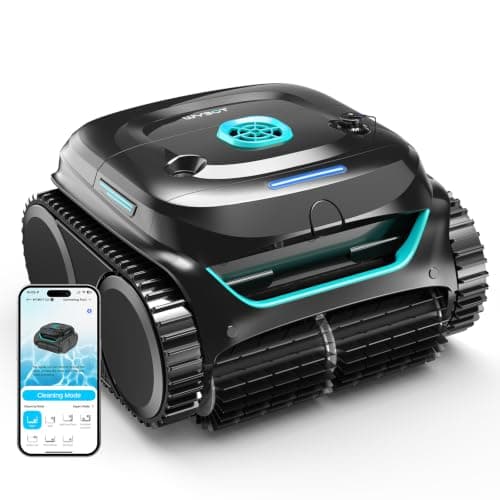
WYBOT C2

WYBOT C2

WYBOT · Dual filter: 10 micron and 180 micron

Best fine filtration under $5007.8out of 10
$499.99· View on Amazon

Price checked November 6, 2026. #ad How we earn

3
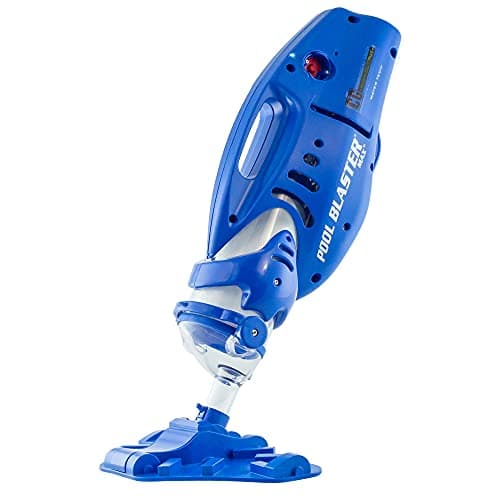
Pool Blaster Max CG

Pool Blaster Max CG

Water Tech · Cordless handheld, hoseless

Best for a defined sand patch6.2out of 10
$299.99· View on Amazon

Price checked November 6, 2026. #ad How we earn

4
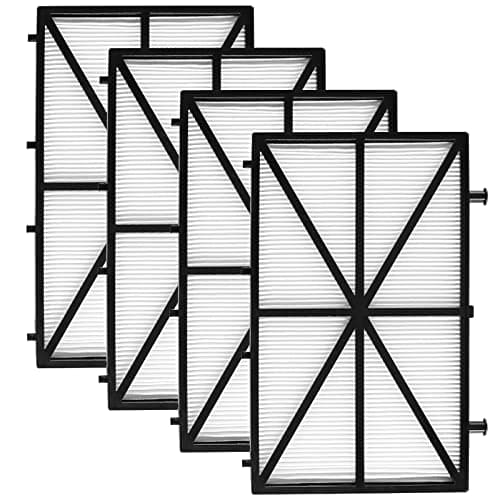
Ultra-Fine Cartridge Filters for Dolphin Nautilus CC Plus (4-pack)

Ultra-Fine Cartridge Filters for Dolphin Nautilus CC Plus (4-pack)

Aftermarket · Aftermarket, listed as compatible

Cheapest fine filtration7.1out of 10
$25.99$29.59· View on Amazon

12% off. Price checked November 6, 2026. #ad How we earn

The picks in full

Aiper Scuba X1 Pro Max

3-micron filtration

8,500 GPH, 3-micron filtration and a surface-skimming pass in one machine — the strongest published spec sheet on this site, and the only Aiper that handles floating debris.

Spec score

8.9/ 10 — derived from published specs, see the rubric
Debris capacity
8.5
Surface coverage
10.0
Filtration
10.0
Runtime & coverage
8.0
Value for spec
7.5

Published specifications

Suction8,500 GPH(retailer listing)
Filter rating3 micron ultra-fine(retailer listing)
CoverageCleaner and skimmer in one unit(retailer listing)
NavigationPool mapping(retailer listing)
ParkingSmart surface parking(retailer listing)
Pool typeInground(retailer listing)

What works

  • 3-micron filtration is the finest published figure in this category — it is the spec that matters for silt and pollen
  • 8,500 GPH leads every cordless unit here on published suction
  • Skimming plus submerged cleaning removes the need for a second robot
  • Surface parking means you are not fishing it off the floor

What doesn't

  • It is one of the two most expensive machines on this site
  • Inground only — the mass and the mapping are wrong for a soft-sided pool
  • A single all-in-one unit means a single point of failure for both jobs

Who should skip this

Skip this one if you have an above-ground or soft-sided pool, your budget stops short of the top tier, or your debris is coarse leaves where a 3-micron filter is wasted.

WYBOT C2

Best fine filtration under $500

A 10-micron fine filter alongside a 180-micron coarse layer, covering 2,152 sq ft per cycle — the cheapest machine here that publishes a genuinely fine filtration figure.

Spec score

7.8/ 10 — derived from published specs, see the rubric
Debris capacity
7.0
Surface coverage
6.5
Filtration
8.5
Runtime & coverage
8.5
Value for spec
9.0

Published specifications

Filter ratingDual filter: 10 micron and 180 micron(retailer listing)
Coverage per cycle2,152 sq ft(retailer listing)
PowerCordless(retailer listing)
WallsCleans pool walls(retailer listing)
ControlApp control(retailer listing)
RetrievalAuto parking on low battery(retailer listing)

What works

  • A published 10-micron layer is the standout spec at this price — only the 3-micron flagships beat it
  • The dual-layer design means coarse leaves do not blind the fine mesh
  • 2,152 sq ft per cycle covers a large residential pool in one run
  • Auto-parks when the battery drops instead of dying in the deep end

What doesn't

  • No waterline pass
  • A 10-micron layer loads up fast and needs rinsing after most runs
  • Shorter owner-report history than the Aiper and Dolphin equivalents

Who should skip this

Skip this one if your debris is all coarse leaves — you will be rinsing a fine filter you did not need. The Beatbot Sora 10 is the better leaf machine.

Pool Blaster Max CG

Best for a defined sand patch

A 12.75-inch cordless hand vacuum with no hose and no pump involvement — the tool for the patch of sand in the corner that your robot keeps missing.

Spec score

6.2/ 10 — derived from published specs, see the rubric
Debris capacity
6.0
Surface coverage
5.5
Filtration
7.5
Runtime & coverage
4.0
Value for spec
7.5

Published specifications

TypeCordless handheld, hoseless(retailer listing)
Head width12.75 in(retailer listing)
Pool typeInground and above-ground(retailer listing)
RuntimeNot stated on this listing(not published)

What works

  • No hose and no pump: you are vacuuming in 30 seconds, not after 10 minutes of setup
  • A 12.75 in head is wide for a handheld, which makes a sand patch a short job
  • The right tool for spot work after a storm or a liner repair
  • Catches debris in its own bag, so nothing reaches your filter

What doesn't

  • It is a handheld, not an automatic cleaner — you are in the pool doing the work
  • Water Tech does not state a runtime figure on this listing
  • Micro-filter bags are a recurring consumable

Who should skip this

Skip this one if you want automatic cleaning. A handheld complements a robot; it does not replace one.

Ultra-Fine Cartridge Filters for Dolphin Nautilus CC Plus (4-pack)

Cheapest fine filtration
Ultra-Fine Cartridge Filters for Dolphin Nautilus CC Plus (4-pack) robotic pool cleaner
$25.99$29.59· View on Amazon

12% off. Price checked November 6, 2026. #ad How we earn

Four ultra-fine cartridges for about $26 — the single best value upgrade on this entire site, and the reason a corded Dolphin beats most cordless robots on filtration.

Spec score

7.1/ 10 — derived from published specs, see the rubric
Debris capacity
6.0
Surface coverage
5.0
Filtration
9.0
Runtime & coverage
5.0
Value for spec
10.0

Published specifications

Part typeAftermarket, listed as compatible(retailer listing)
Quantity4 cartridges(retailer listing)
FitsDolphin Nautilus CC Plus, M200, M400(retailer listing)
Micron ratingNot published as a figure(not published)

What works

  • Four cartridges means you run two and wash two — the only practical way to use fine filtration
  • Turns a standard CC Plus into a silt and pollen machine for the price of a filter cleaner
  • Cheapest route to fine filtration anywhere in this category

What doesn't

  • Aftermarket, not Maytronics genuine
  • No published micron figure
  • Check the model: these do NOT fit the plain Nautilus CC

Who should skip this

Skip this one if you own the plain Nautilus CC (not the Plus) — the cartridge is a different size.

Questions people actually ask

How do you get sand out of a pool?

Let it settle for several hours, then vacuum slowly with the finest filter you have. Moving fast lifts sand into suspension rather than collecting it.

Why does sand keep appearing in my pool?

If it forms a cone near a return jet and returns after every cleaning, your sand filter has cracked laterals or a broken standpipe and is feeding sand back into the pool. Fix the filter.

Why does my pool robot not pick up sand?

Its filter is coarser than the sand so it passes straight through, or it is moving fast enough to lift sediment ahead of the intake. Fit a fine filter and use the slowest mode.

Should I vacuum sand to waste?

If you are using a manual vac through your skimmer, yes — otherwise sand goes into your filter and, on a sand filter, straight back out. A robot avoids the problem by catching it in its own basket.

What micron filter catches pool sand?

Pool sand is roughly 100-500 microns so 180 micron catches the coarse fraction. Silt and fines need 10 microns or finer.