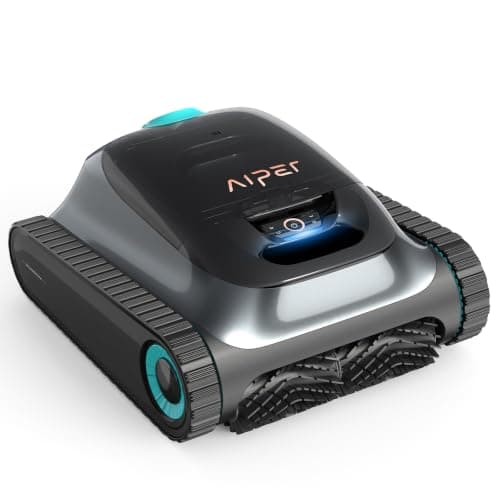
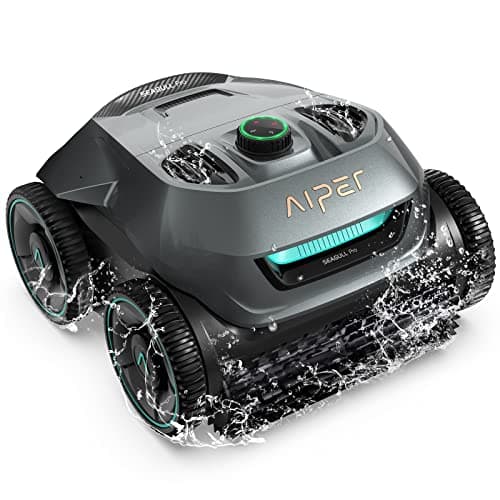
The Seagull Pro is the Aiper to buy if your budget stops around $400 and you want the walls cleaned. What makes it interesting is the quad-motor layout, which is a real engineering decision rather than a marketing number.
Why four motors matters for climbing
A pool robot climbs by using its own exhaust flow to press itself against the wall while brushes and tread provide grip. On a two-motor machine, drive and suction share the power budget — so when the drive works hard on a climb, suction drops, and when suction drops the downforce holding it to the wall drops with it. That is the mechanism behind a robot that climbs halfway and slides back.
Separating drive and suction across four motors keeps the downforce up while climbing. The climbing explainer covers the physics, and it is why this machine climbs at a price where most competitors are floor-only.
150 minutes and 1,600 sq ft, both published
Aiper states both figures, which more expensive machines in its own range do not. 1,600 sq ft covers the majority of residential pools including the walls; 150 minutes is enough to finish a mid-sized pool in one cycle. For a $400 machine, having both numbers available is itself worth something — you can size it to your pool rather than guessing.
WavePath navigation: a pattern, not a map
WavePath is a path pattern rather than mapping. On a rectangle it covers the floor systematically; on a freeform or multi-level pool expect repeat coverage in some areas and gaps in others. That is the correct trade at this price — camera navigation starts around $630 — but it is worth knowing rather than being surprised by.
What you give up
No waterline pass. It climbs and cleans walls; the grease line stays. If the ring at the waterline is your actual complaint, the standard Scuba S1 publishes waterline coverage for about $200 more, and the waterline roundup has the full field.
No published micron rating. Standard-basket filtration, so fine silt and pollen pass through. Aftermarket fine cloths for the Seagull line are cheap — the same $19-32 range as other Aiper filters — and they are listed in the Aiper parts page.
Simpler app control than the Scuba line, which at this price is expected.
Parts, which Aiper does well
The Seagull line has a genuine aftermarket: filters at about $20, 12.6 V chargers at about $10, side flaps and chassis clips. For a $400 machine, being able to buy a $10 charger instead of replacing the robot is the difference between four years and seven — and the charger is the most common failure, not the battery.
How we assessed it
Every figure in the specification table on this page is attributed: to Aiper’s published specifications, to the Amazon listing for this exact model, or marked as not published where neither source gives a figure. The score is derived from those published numbers by the five-metric rubric, which is published in full.
This assessment is built from Aiper’s published specifications, recognized industry standards and verified owner feedback, scored on our published rubric. Every number shows where it came from, the page says plainly who the machine is wrong for, and no figure appears that we cannot source. Where owner reports inform a point, they are described as owner reports. Where independent laboratory or standards work exists for a figure, it is cited by name.
Who should skip it
Skip the Aiper Seagull Pro if the waterline is your actual complaint, or you want app-level scheduling — this is a simpler machine than the Scuba line.
That is not a throwaway line. The most expensive mistake in this category is buying a capable machine that is wrong for your pool — and a machine rated below your pool’s area or missing the one capability your debris requires cannot be fixed by any setting.
Alternatives worth considering
- Aiper Scuba S1 — adds a published waterline pass and an $80 replacement battery, for about $200 more. Read the review
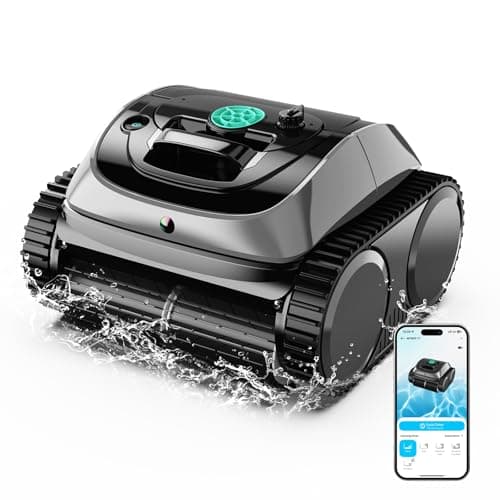
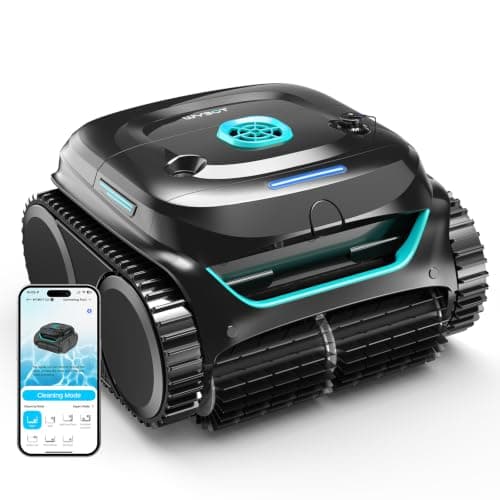
- WYBOT C1 — 160 minutes and app control at a similar price, rated for both pool types. Read the review
- WYBOT C2 — publishes a 10-micron fine filter layer, for about $100 more. Read the review
If you are still narrowing down, the selector tool works from your pool type, size, surface and dominant debris, and the Aiper brand guide covers the whole range and where it stops.