The mechanics
A pool robot does not stick to the wall by magnetism or by suction cups. It uses its own water flow: the exhaust is directed so that the resulting thrust presses the machine against the surface, while brushes and track tread supply the friction to drive upward.
Three things therefore have to be true simultaneously:
- Adequate flow — so a blinded filter kills climbing outright.
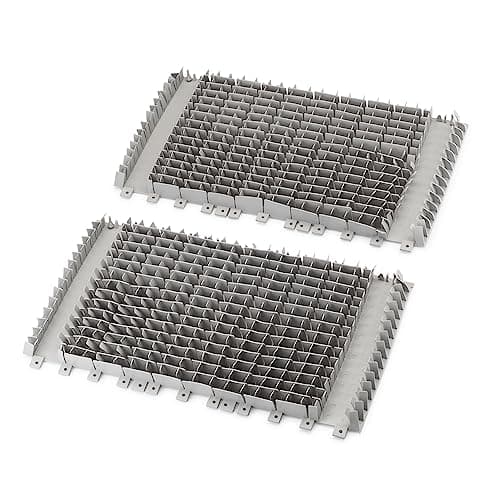
- Compliant brushes — so a brush worn flat kills climbing outright.
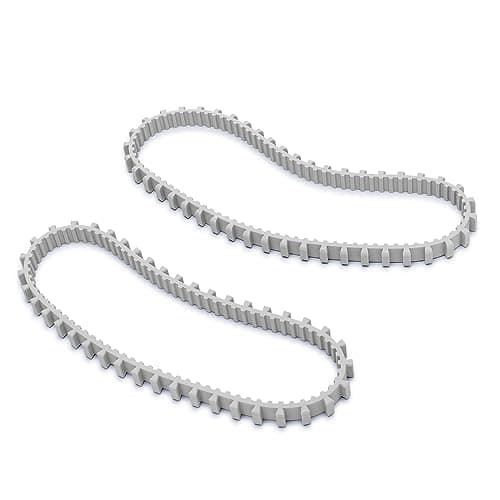
- Track or wheel tread — so smooth tracks kill climbing on slick surfaces.
That is the entire explanation for why a robot that used to climb and now does not is almost always a $23 brush or a $35 track pair rather than a failed motor.
Climbing is not waterline cleaning
The most important distinction on this page, and the one listings blur. A climbing robot drives up the wall and generally continues to the waterline before releasing. In doing so it drags a brush vertically through the grease film at the line — which smears it more often than it lifts it.
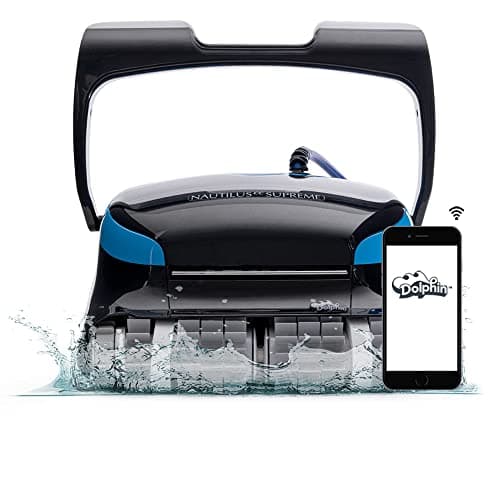
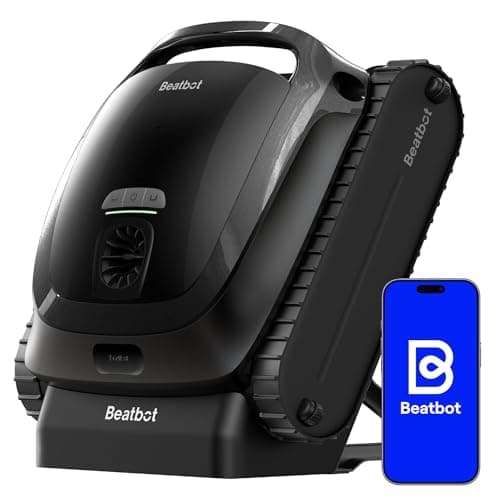
Actual waterline cleaning is a different motion: holding position at the line and traveling along it, with enough passes to break the film. Only some machines do that, and they say so explicitly — the Beatbot AquaSense 2’s double pass, the Dolphin CC Supreme’s dedicated waterline brush, the horizontal pass on the Aiper S1 Pro, X1 line and WYBOT S2 Vision.
If a listing says “wall climbing” and nothing about the waterline, assume it does not clean the waterline. The waterline roundup separates them.
Surfaces, from easiest to hardest to climb
| Surface | Climbing | Why |
|---|
| Pebble, exposed aggregate | Easiest | Texture gives excellent grip — at the cost of fast brush wear |
| Plaster | Good | Mildly textured |
| Tile | Fair | Smooth but grout lines help |
| Vinyl liner | Harder | Slick; needs good tread and a compliant brush |
| Fiberglass gelcoat | Hardest | Very slick; tracked drives hold where wheels spin |
| Soft-sided / Intex walls | Impossible | The wall deflects — there is nothing to climb against |
Two consequences worth acting on. On fiberglass, prefer tracks over wheels and treat tread wear as the thing to monitor. On soft-sided pools, any premium you pay for climbing is wasted — the feature cannot work.
Do you actually need wall climbing?
Yes, if: you get algae (it grows on walls, not floors), you care about the waterline, your pool is small (a small pool has a high wall-to-floor ratio, so walls are proportionally more of the surface), or you have staining on the walls.
No, if: your only complaint is debris on the floor, you have an above-ground pool with a thin liner where aggressive wall scrubbing is a risk, or you have a soft-sided pool where it cannot work. Maytronics’ above-ground model deliberately does not climb, and that is a design decision, not a gap.
Making climbing work better
- Rinse the filter after every cycle. Flow is the first of the three requirements.
- Replace brushes before they go flat, not after.
- Replace tracks when the ribs round off.
- Rinse grit from the tracks and bearings, especially on pebble pools — grit accelerates tread wear.
- Keep the chemistry balanced: a biofilm starting on the wall is slippery and genuinely harder to climb.
- Keep the water level consistent so the top of the climb lands where it should.