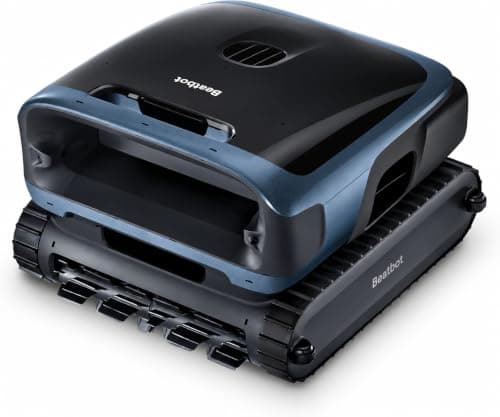
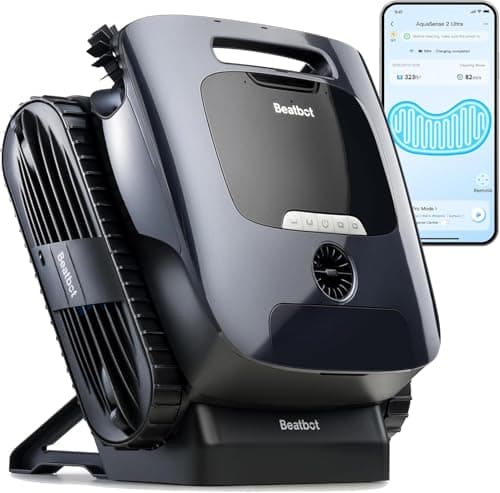
The Ultra is the most capable machine we list and the one whose value depends most completely on your pool’s shape. On the right pool it is worth every dollar. On a rectangle, almost none of what you pay for gets used.
Debris detection is genuinely different from mapping
Most navigation, including camera navigation, answers the question “where have I been?” so the machine can cover the pool systematically. Beatbot’s AI Cruise debris detection answers a different question: “where is the debris?”
The practical difference is how a cycle is spent. A systematic machine gives every square foot equal attention. A detecting machine spends its runtime where the dirt actually is — which on a pool where debris collects in two predictable corners is a substantially better use of a battery.
Nothing else on this site does this. It is the single feature that justifies the Ultra over the Aiper X1 Pro Max at $700 less.
Camera mapping earns its price on shape
Freeform, kidney, L-shaped, multi-level, beach-entry, pools with islands or raised spas: these are the shapes where pattern navigation leaves the same regions uncleaned every single cycle, and where camera mapping is not a luxury.
On a 16 × 32 ft rectangle, a $400 pattern-navigating robot covers the floor just as well. This is the clearest “spend more or spend less” signal in the entire category, and the inground roundup makes shape the second gate for exactly this reason.
Five functions, including the two rare ones
Floor, walls, waterline, surface skimming and water clarification. The first three are common; surface skimming exists on only three machines here; clarification on this one alone.
Surface skimming is the one with real leverage — debris caught floating never sinks, never stains and never loads your filter, which is worth more on a tree-shaded pool than any floor-cleaning improvement. The skimmer roundup explains the economics.
The caddy is included, which is not nothing
A universal caddy is a $99-129 accessory on every other brand, and it is close to mandatory on a machine this heavy. Having it in the box is a genuine $100-plus of value, and it is the sort of thing that only shows up when you compare total cost rather than sticker price. The caddy section has the standalone prices.
The structural risks, stated honestly
Five functions in one chassis is five things that can fail. A camera, a pump, a drive system, a skimming mechanism and a clarification system, all in a sealed unit in chlorinated water.
Consumables are the worst in the category. The Ultra’s genuine dual filter basket is about $100 and fits the Ultra and nothing else. A Dolphin’s equivalent is $26 for four.
No third-party battery ecosystem. On a $2,299 cordless machine, the question of what happens when the pack degrades in year four is a serious one, and Beatbot has not yet answered it. This is the central Beatbot-versus-Dolphin argument, and it bites hardest at this price.
Who should buy it
An owner of a genuinely complex pool — freeform, multi-level, with a beach entry or raised spa — under tree cover, who wants one machine to do everything and is comfortable with the consumable costs and the battery question. For that person, nothing else here competes.
For anyone with a rectangle: the Aiper Obsidian at under $800 publishes 3-micron filtration and ships a dock, and you would spend the $1,500 difference on nothing you would notice.
How we assessed it, and what we did not do
Every figure in the specification table on this page is attributed: to Beatbot’s published specifications, to the Amazon listing for this exact model, or marked as not published where neither source gives a figure. The score is derived from those published numbers by the five-metric rubric, which is published in full.
We have not physically tested this machine. We do not run a test pool, we do not own this unit, and nothing on this site claims otherwise. What we do instead is show where every number comes from, say plainly who the machine is wrong for, and refuse to print a figure we cannot source. Where owner reports inform a point, they are described as owner reports — never as our own experience.
Who should skip it
Skip the Beatbot AquaSense 2 Ultra if your pool is a simple rectangle. Mapping and debris detection earn their price on freeform, multi-level and beach-entry pools and nowhere else.
That is not a throwaway line. The most expensive mistake in this category is buying a capable machine that is wrong for your pool — and a machine rated below your pool’s area or missing the one capability your debris requires cannot be fixed by any setting.
Alternatives worth considering
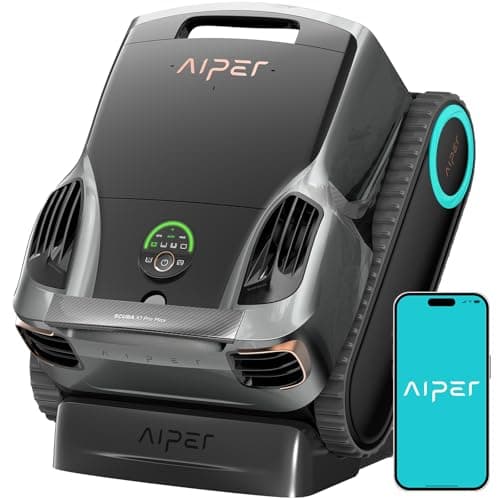
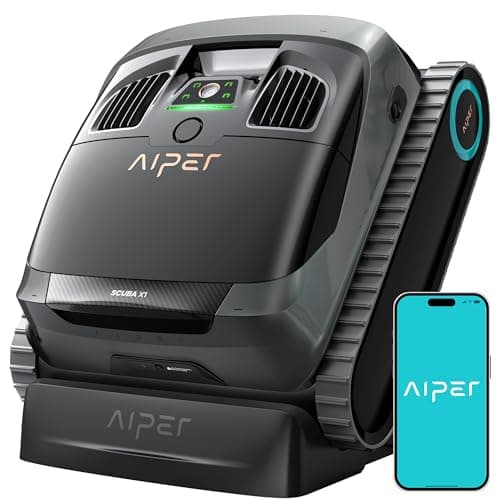
- Aiper Scuba X1 Pro Max — 8,500 GPH, 3-micron filtration and skimming for about $700 less. Read the review
- Beatbot Sora 70 — surface plus submerged cleaning for about $800 less, without mapping. Read the review
- Aiper Obsidian — the sane answer on a rectangular pool, at under a third of the price. Read the review
If you are still narrowing down, the selector tool works from your pool type, size, surface and dominant debris, and the Beatbot brand guide covers the whole range and where it stops.