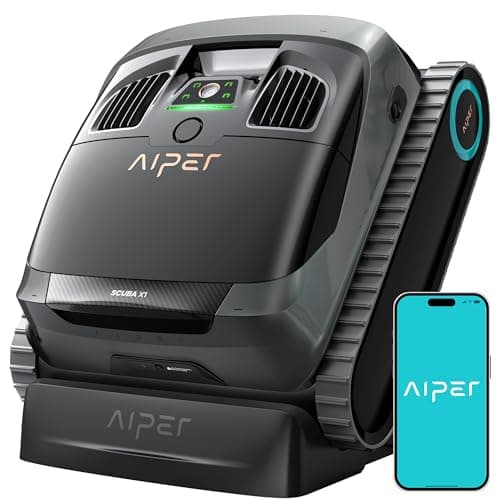
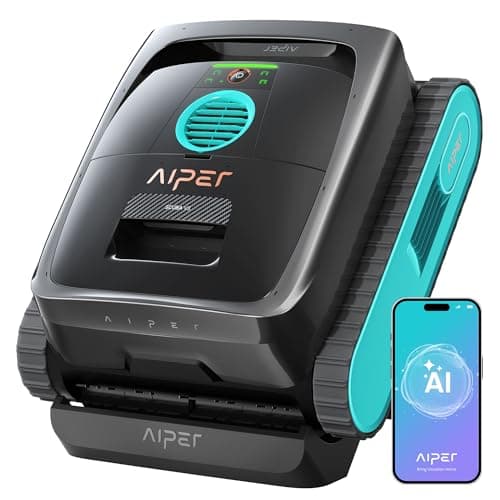
The V3 is the most hands-off machine on this site, and whether that is worth its price depends on how much the lifting bothers you.
The dock plus continuous cycles is a genuinely different product
Most robots are an appliance you deploy. The V3 is closer to an installed system: it lives in the pool, cleans, returns to its dock, recharges, and runs again on a schedule you set once. Aiper publishes this as 24/7 auto cleaning with AI Patrol.
The reason that matters is behavioral rather than technical. The chore that actually stops people running their robot is lifting a wet machine out, carrying it to an outlet, and remembering to carry it back. Remove that and the robot runs three times a week instead of once — and frequency is what removes debris. It is also one of the few machines designed to stay in the pool, which for most robots is a bad idea.
Camera navigation
AI vision handles freeform, kidney-shaped and multi-level pools in a way gyroscope path planning does not. On those shapes, pattern navigation leaves the same regions uncleaned every cycle. On a plain rectangle it adds little — which is the single clearest “spend more or spend less” signal in the whole category.
Smart waterline parking means it finishes at the surface rather than the deep-end floor.
What Aiper does not publish, and it is significant here
No micron figure. The listing says multi-layer filtration, which is a description rather than a specification. Aiper publishes 3 micron for the Obsidian and X1 Pro Max, so the omission on an $850 machine is conspicuous. If fine debris is your problem, the Obsidian publishes a number and costs less.
No rated pool area. The first gate in sizing a robot is matching its rated area to your pool, and you cannot do that here. The inground roundup explains why that gate comes first.
Two ownership considerations
A dock needs somewhere sensible on the pool wall to live, with power. If your pool has no practical spot, the dock’s value evaporates.
And a camera is an extra component in chlorinated water whose lens needs keeping clean — algae and scale build on a sensor window exactly as they do on your walls, and a dirty lens degrades the thing you paid the premium for.
The comparison that matters
Against the Obsidian at roughly $50 less: the Obsidian publishes 6,600 GPH, 3-micron filtration and 180 minutes, and also ships a dock. The V3 adds camera navigation and continuous patrol cycles and withholds both numbers. On a freeform pool the V3’s navigation may justify that. On a rectangle, the Obsidian is clearly the better-documented purchase.
How we assessed it
Every figure in the specification table on this page is attributed: to Aiper’s published specifications, to the Amazon listing for this exact model, or marked as not published where neither source gives a figure. The score is derived from those published numbers by the five-metric rubric, which is published in full.
This assessment is built from Aiper’s published specifications, recognized industry standards and verified owner feedback, scored on our published rubric. Every number shows where it came from, the page says plainly who the machine is wrong for, and no figure appears that we cannot source. Where owner reports inform a point, they are described as owner reports. Where independent laboratory or standards work exists for a figure, it is cited by name.
Who should skip it
Skip the Aiper Scuba V3 if you want a published filtration figure, you have nowhere to site a dock, or you prefer fewer electronics in the water.
That is not a throwaway line. The most expensive mistake in this category is buying a capable machine that is wrong for your pool — and a machine rated below your pool’s area or missing the one capability your debris requires cannot be fixed by any setting.
Alternatives worth considering
- Aiper Obsidian — publishes 3 micron, 6,600 GPH and 180 minutes, and also ships a dock. Read the review
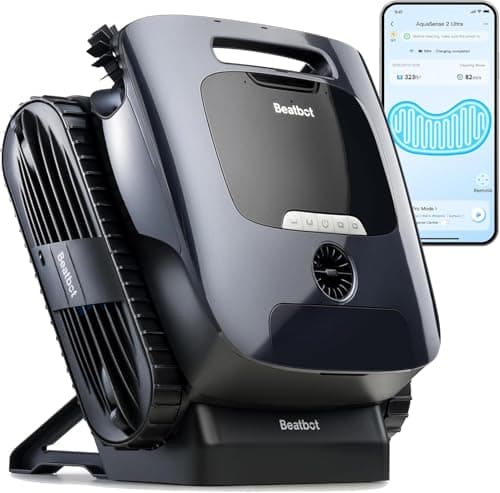
- Beatbot AquaSense 2 Ultra — camera mapping with active debris detection, on a genuinely complex pool. Read the review
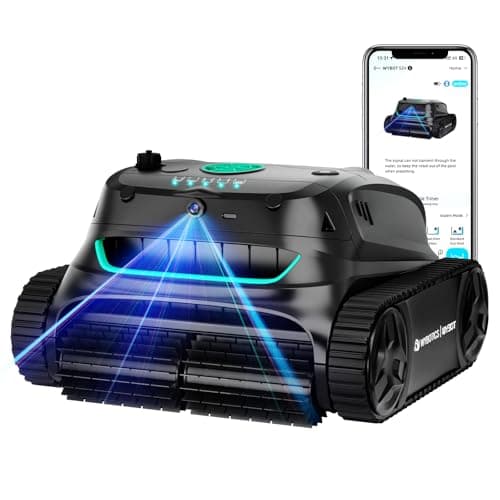
- WYBOT S2 Vision — camera navigation and a brushless motor for about $50 more. Read the review
If you are still narrowing down, the selector tool works from your pool type, size, surface and dominant debris, and the Aiper brand guide covers the whole range and where it stops.