The three answers
Dock-equipped cordless: yes, that is the design
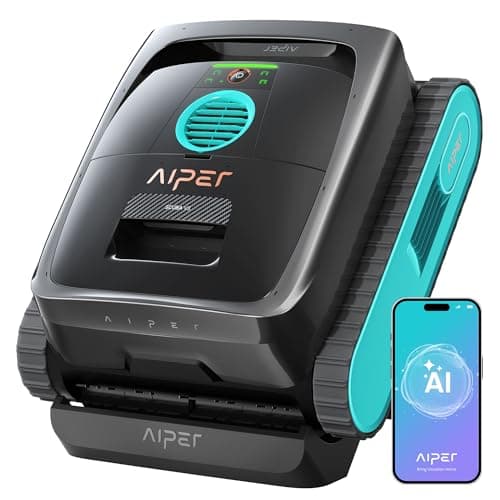
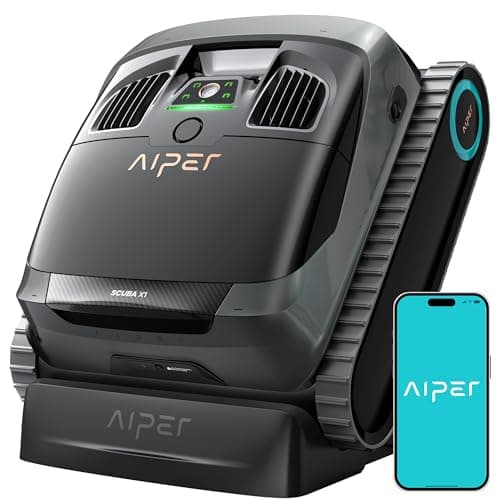
The Aiper Obsidian and Scuba V3 ship with wireless charging docks and run 24/7 cycles — the robot cleans, returns, charges and goes again. The Beatbot AquaSense 2 Ultra has wireless charging on the same principle. For these machines, living in the pool is the intended mode and the engineering accounts for it.
This is also the single biggest quality-of-life feature in the category, because the task that actually stops people running their robot is lifting a wet machine out and remembering to put it back.
Corded: usually fine between runs, not indefinitely
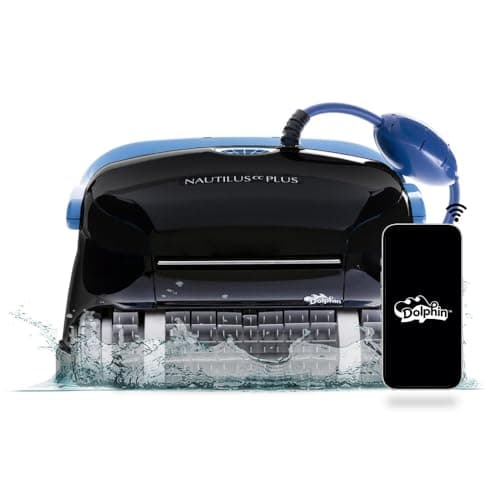
A corded robot has no battery, which removes the main objection. Many owners leave them in between cycles without problems. Two caveats: the cable sits in the water continuously, and the manufacturer’s own guidance is what governs — Maytronics advises removing the unit after cleaning for most of its line. Over a season, water sitting against the seals is the wear mechanism, and these are the machines you are hoping will last ten years.
Cordless without a dock: take it out
Two reasons, and the second is the expensive one.
Seals. A machine designed to be submerged for a two-hour cycle is not the same as a machine designed to be submerged permanently. Pressure cycling and continuous chemical contact age seals, and water ingress is the fault that kills a robot outright rather than degrading it.
The battery. Lithium packs degrade fastest when warm and when held at a high state of charge. A pack sitting in 85°F water all summer is in close to the worst condition you could choose for it. Since the pack is usually what ends a cordless robot’s life, this matters more than it sounds — the lifespan guide covers it.
What about chlorine and salt?
Normal sanitizer levels are what these machines are built for, so routine chlorination is not the issue. Two situations are:
- During and after a shock treatment. Very high free chlorine is hard on seals, brushes and plastics. Take the robot out before shocking and leave it out until levels return toward the ranges the CDC describes.
- Salt pools. Salt is harder on fasteners and bearings than chlorine. Several machines state salt compatibility explicitly — the Beatbot iSkim and Betta SE among them. If yours does not state it, do not assume it, and do not leave it in.
The thing that actually destroys pool robots
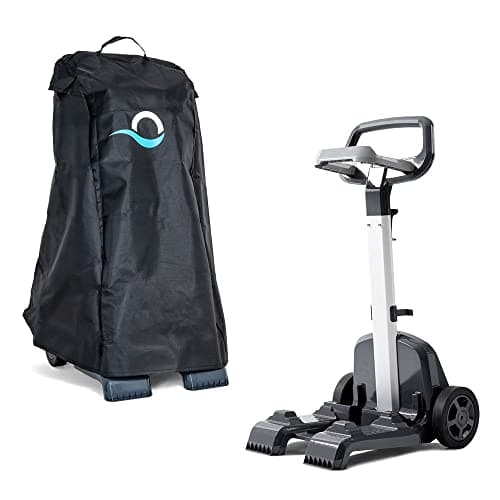
Not the water. The sun. A robot left on hot coping in direct sunlight between cycles is being UV-aged, and UV embrittles the shell, the cable jacket and the seals faster than pool chemistry does. If you take it out, put it in shade or under a cover — which is most of the argument for a caddy with a cover at about $119.
Where to store it between runs
- Shaded, off the ground, draining.
- Filter removed, rinsed, and left to dry separately.
- Cable coiled loosely, not kinked, on a caddy rather than folded.
- Over winter: indoors, above freezing, with a cordless pack at roughly half charge. A pack left flat through a cold winter frequently will not accept a charge in spring — see the charging guide.