Wall climbing is a balance of three forces: suction holding the machine to the surface, brush compliance gripping it, and track tread providing drive. Lose any one and the robot slides back down — which looks like a motor problem and almost never is.
Work through these in order. They are listed cheapest-first on purpose.
Check 1: the front brush (about $23)
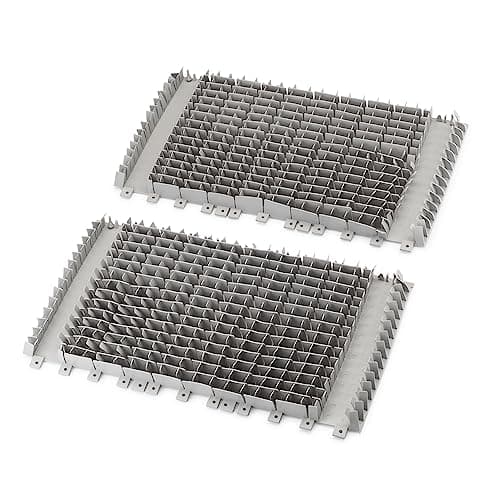
Look at the brush. A healthy brush has defined tread or fins; a worn one is smooth and flat. Once it is flat it cannot grip, and on a slick surface — vinyl liner or fiberglass gelcoat especially — a flat brush will not hold at all.
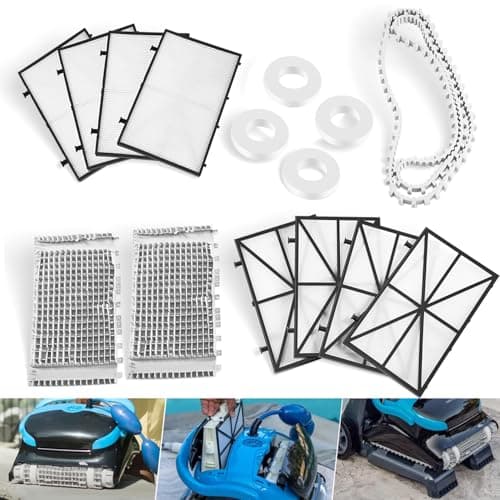
This is the single most common cause. Maytronics publishes part numbers for Dolphin brushes (9983122-R1 front, 6101641-R2 as a pair) and they cost about $23-30. Replace front and rear together: a new front against a worn rear makes the machine track crooked.
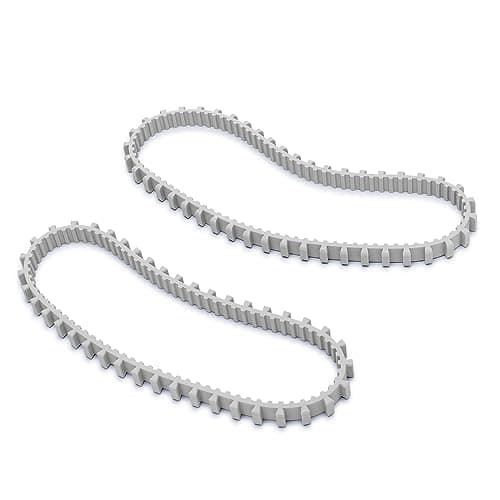
Check 2: the tracks or wheels (about $35)
Tracks lose their tread pattern the same way tires do. On a textured pebble pool this happens fast; on gelcoat the tread matters more because there is nothing for a smooth track to bite. If the ribs on your tracks have rounded off, that is your answer. Dolphin gray track packs are about $35 for a pair and cover five model families.
While the tracks are off, clear grit from the axles and bearings. Aggregate grit in the drivetrain is the second thing that wears tracks.
Check 3: the filter (free)
Suction holds the machine to the wall. A filter blinded with leaf litter, pollen or dead algae collapses that suction, and the robot climbs partway then drops. If you have recently switched to a fine filter and climbing stopped, this is almost certainly it — a 3-micron element in a leafy pool blinds in minutes.
Rinse it properly, both sides, with a hose rather than a pressure washer. The filter-cleaning guide has the method, including why dried-on debris permanently reduces flow.
Check 4: water chemistry and surface condition
Two less obvious causes. First, a biofilm on the wall is slippery — a pool with algae starting is genuinely harder to climb, and the robot cannot fix that; the chemistry has to. The wall-algae guide covers it. Second, a very low water level changes where the robot can reach and can leave it stalling at the top of the climb with nothing to grip.
When it is not any of those
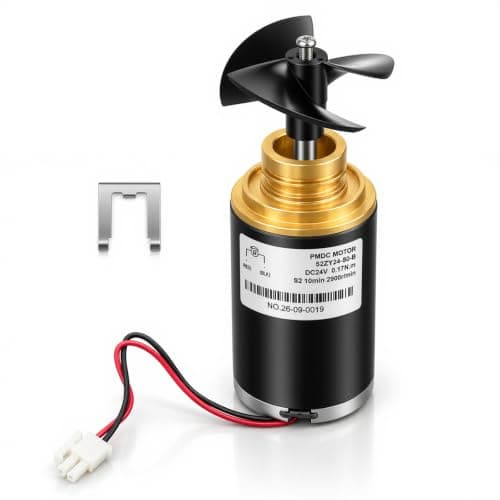
If the brushes and tracks are good, the filter is clean, and the chemistry is balanced, the remaining possibilities are a weak pump motor or impeller (for a corded machine, the motor assembly is a replaceable part around $110) or, on a cordless machine, a degraded battery that no longer delivers full current under the load of climbing. A cordless robot that climbs when freshly charged and stops climbing after forty minutes has a battery problem, not a brush problem — see the charging diagnostic.
Machines that never climbed in the first place
Worth ruling out: a great many robots do not climb at all. The Aiper Scuba SE and Dolphin Nautilus AG are both floor-and-cove machines by design — the AG deliberately so, to protect thin above-ground liners. If yours has never climbed, check the listing before troubleshooting a feature it does not have. The wall-climbing explainer covers which machines do what.