First, the part that matters more than cleaning
A pool with no working pump has no circulation, and circulation is how your sanitizer gets distributed through the volume. Without it, chlorine sits where you added it, dead spots form, and the pool becomes a disinfection problem rather than an aesthetic one. The CDC’s healthy-swimming guidance treats circulation and disinfection as the primary system for exactly this reason.
So: you can keep a pumpless pool looking clean for a while. You should not treat it as a swimmable pool for an extended period. Fix the pump.
What works with no pump
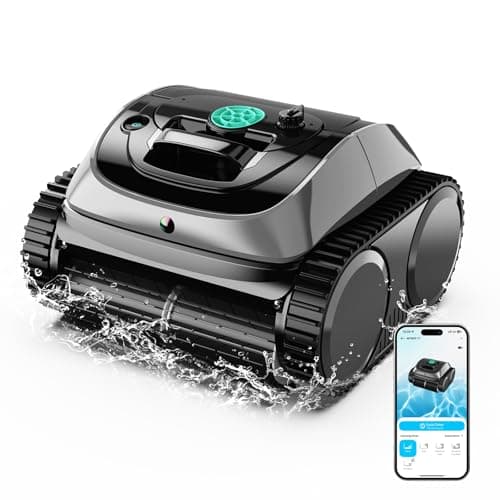
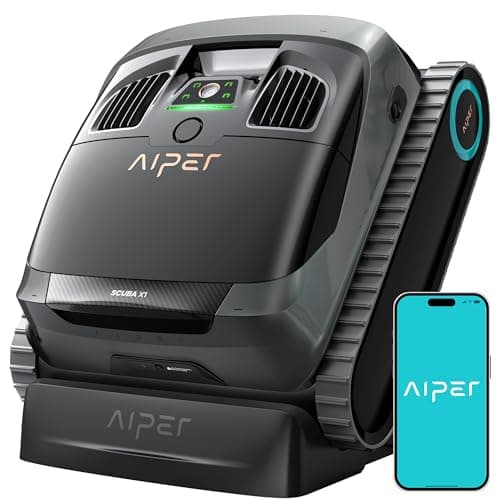
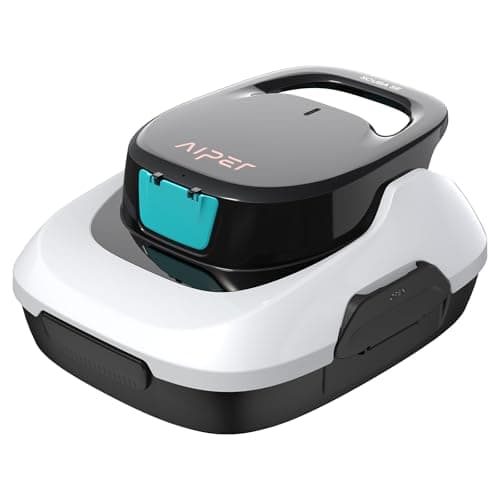
1. A cordless robotic cleaner — the only machine that qualifies
This is the genuinely useful answer. A cordless robot carries its own motor, its own pump and its own filter, and is completely independent of your pool’s plumbing. It does not care whether your pump works. It will clean the floor, and depending on the model the walls and waterline, and it will filter the water it moves through itself.
A corded robot also works — it needs mains power, not pool plumbing — so either architecture is fine. What does not work is a suction cleaner or a pressure-side cleaner, both of which are driven entirely by your pump. The types-of-cleaners guide explains why.
2. Manual skimming, daily
With no skimmer suction, surface collection is entirely on you. A flat leaf rake, daily, is not optional in this situation — anything you miss sinks.
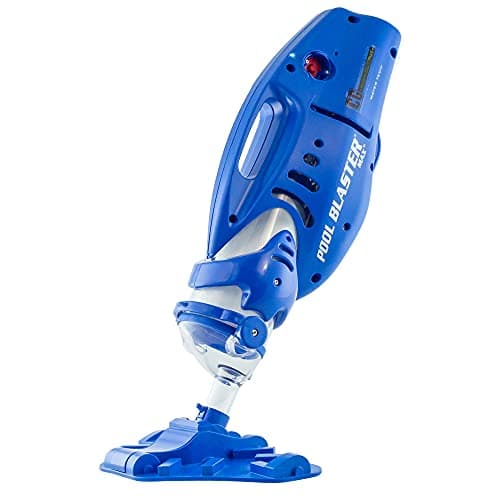
3. A handheld cordless vacuum
Self-contained, catches debris in its own bag, no pump involvement. Good for spot work and for a small pool — see the handheld roundup.
4. Brushing, with an honest caveat
Brushing normally works by lifting debris into suspension so your filter catches it. With no filtration running, suspended debris simply resettles. Brushing is still worth doing to disrupt biofilm, but it is not a collection method here.
5. A cover
Prevention becomes much more valuable when you have no collection system. Keep debris out in the first place.
Above-ground pools are the common case
Many above-ground and soft-sided pools run small cartridge pumps with modest flow, and plenty run with a pump that has failed or been removed. A light cordless robot is exactly the right tool for that situation — it is the reason the Aiper Scuba SE and WYBOT C1 are on this page, and why the above-ground roundup leans cordless.
Stopgap chemistry, with care
If the pump is out for a few days, you can distribute sanitizer manually: pre-dissolve it per the product’s instructions and disperse it around the pool rather than dumping it in one spot, and stir the water with a brush or pole. A floating dispenser moves with the wind and helps a little. This is a stopgap, not a system, and it does not make the pool equivalent to a circulating one.
The limits, plainly
- No real filtration of the whole volume. A robot filters what it moves through itself, which is a fraction of the pool per cycle.
- No chemical distribution. The actual problem.
- No heating and no surface skimming by the pool itself.
- Not a long-term state. Days, not months.
Treat a cordless robot as the thing that keeps the pool from deteriorating while you get the pump sorted — which, given that pool pumps are one of the largest electrical loads in a home per the Department of Energy, is also a good moment to think about pump sizing and run-time rather than simply replacing like for like.