Why brushing comes first
Algae on a pool wall is not dirt sitting on a surface. It is a biofilm anchored to the plaster, grout or liner, and its outer layer physically shields the living cells beneath from your sanitizer. That is why a green patch survives a shock treatment and reappears in exactly the same place a few days later.
Mechanical abrasion is what opens the film so the chlorine can reach the organism. No amount of additional chemical substitutes for it. This is the step almost everyone skips, and skipping it is why the patch keeps coming back.
The sequence
- Test and balance the water. Chlorine cannot do its job outside a sane pH range, so shocking an unbalanced pool wastes the chemical. The CDC’s healthy-swimming guidance is the reference for target ranges.
- Brush the affected walls by hand. Yes, by hand, this once. Get into the corners, behind the ladder, around light niches and the step treads — the places with the worst circulation, which is where algae establishes. Use a nylon brush on vinyl and fiberglass; a nylon-and-stainless combination brush is for plaster and gunite only.
- Shock the pool. Follow the product’s own dosing — this is chemistry, not cleaning, and we are not going to give you a dose figure for a product we cannot see. Take your robot out first: very high free chlorine is hard on seals, brushes and plastics.
- Run the pump for circulation so the shock reaches the whole volume.
- Once chlorine drops back toward normal, run the robot with its FINE filter fitted, repeatedly, as the water clears. This is where the machine earns its place — see the next section.
The part nobody explains: the cloudiness afterwards
After a successful shock your pool goes cloudy, and it often looks worse than before. That cloudiness is dead algae — particles a few microns across, suspended in the water.
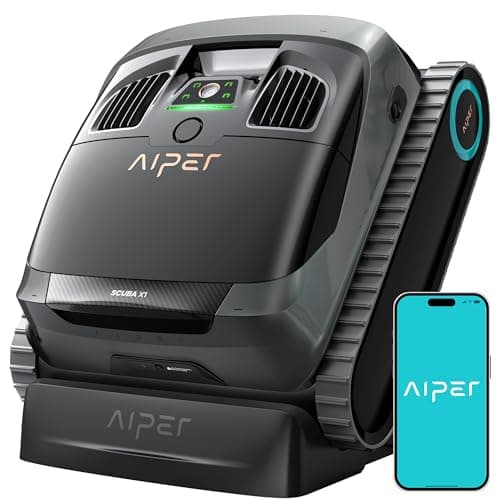
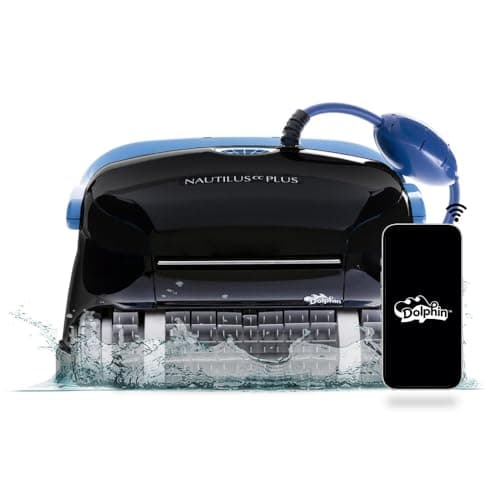
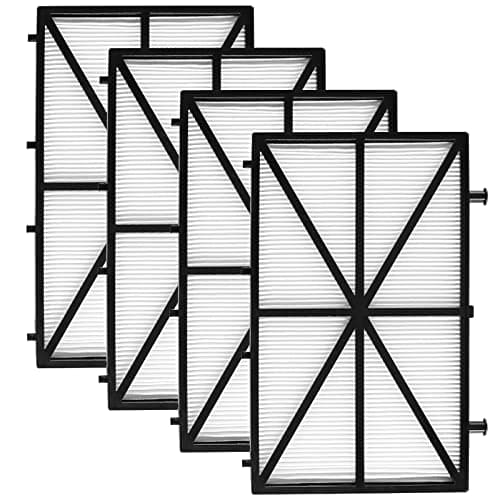
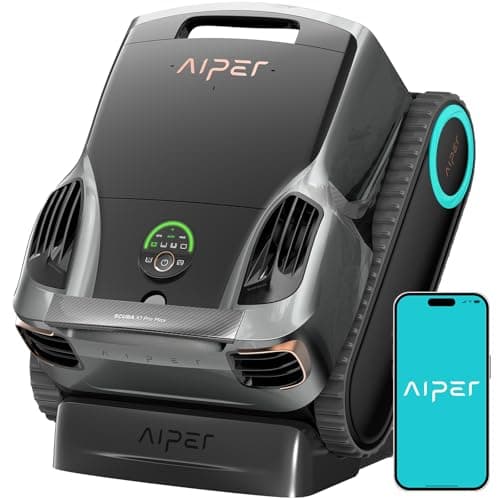
A 180-micron robot basket passes them entirely, which is why a pool can stay milky for days while the sand filter slowly catches up. A fine filter short-circuits that: the Aiper Obsidian and X1 Pro Max publish 3 micron, the WYBOT C2 publishes a 10-micron layer, and a Dolphin with ultra-fine cartridges (about $26 for four) does the job for the least money in the category.
Rinse the fine filter after every single run during this phase. It will blind fast — that is it working. The filter-cleaning method is here.
Why it comes back in the same spot
Always the same five places, and always for the same reason — poor circulation:
- The shaded wall
- Behind and around the ladder
- Light niches
- Deep-end corners
- Step treads and the riser faces
A robot that climbs and scrubs the walls regularly is doing the preventive work in the places it can reach. The places it cannot reach are the places you brush weekly — which is the whole subject of this guide.
Black algae is a different problem
Black algae roots into plaster and gunite and forms a protective cap. It needs aggressive manual brushing with a stainless brush — on plaster or gunite only — plus targeted treatment, and it generally takes several rounds. No robot on the market handles it. Treat it by hand; let the robot handle the aftermath.
Prevention, which is cheaper than any of this
- Keep chemistry in range continuously rather than correcting it in jumps.
- Brush the five problem areas weekly, not monthly.
- Run a climbing robot with wall coverage two to three times a week — frequency beats duration.
- Keep circulation running long enough to turn the volume over.
- Switch to a fine filter during and after any treatment, then back to coarse for leaf season.