What the ring actually is
Not dirt. It is a film of body oil, sunscreen, hair product, cosmetic residue and airborne pollen, deposited at the air-water interface by water movement and then bound into a greasy layer. It sticks to tile, plaster, gelcoat and vinyl alike.
This is why scrubbing harder does not work especially well and why an aggressive brush is the wrong instinct, particularly on vinyl. Grease needs a surfactant, not abrasion.
The manual method
- Drop the water level by an inch or two if you can, so the band is fully exposed and you are not working underwater.
- Use a pool-safe tile and vinyl cleaner on a sponge or a non-abrasive pad. Products intended for pool waterlines contain surfactants that lift oil; general household cleaners can affect pool chemistry and should not go in the water.
- Work in short sections and let the cleaner sit for a moment before wiping. Dwell time does more than pressure.
- On tile with grout, a soft brush helps — grout is porous and holds the film. On vinyl and gelcoat, a sponge only.
- Rinse and bring the level back up. A low level stops your skimmer working, so do not leave it down.
For mineral scale rather than grease — a hard white crust rather than a brown-gray band — that is calcium, and it is a different problem requiring a scale-specific product and attention to your water balance. The CDC’s chemistry guidance is the starting point.
The robot’s role: prevention, not cure
A robot with a genuine waterline pass will not remove an established ring in one cycle, and it will not reach the last inch under the coping. What it does is prevent the film establishing in the first place, which is the whole game given that the film is continuously replenished.
Three things matter here:
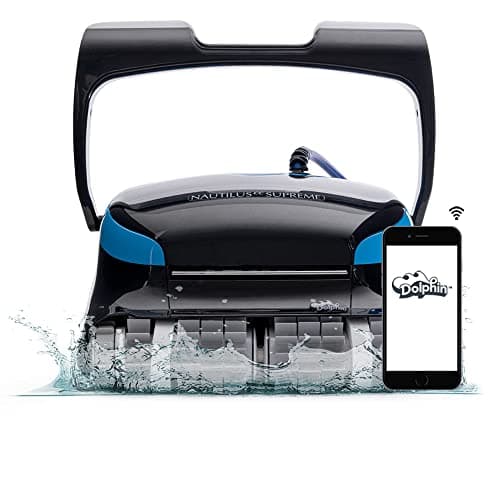
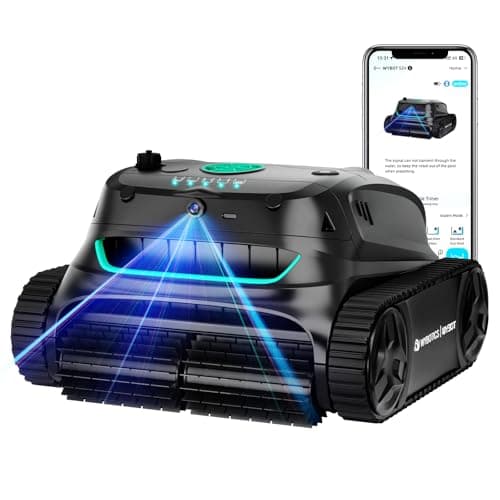
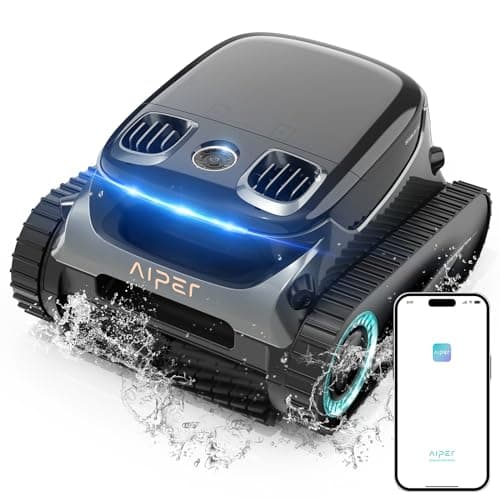
- It must have an actual waterline pass, not just wall climbing. Climbing reaches the line and typically smears it. A pass travels along it. The Beatbot AquaSense 2 does two passes per cycle; the Dolphin CC Supreme has a dedicated brush; the Aiper S1 Pro and WYBOT S2 do a horizontal pass. The waterline roundup has the field.
- Frequency. Every cycle, two to three times a week. Monthly achieves little against something that rebuilds in a week.
- Consistent water level. If your level drops two inches, the robot is now scrubbing a band two inches above the ring while a fresh ring forms lower down. This is the most common reason waterline cleaning appears not to work.
Surface changes what is achievable
- Tile: easiest. Degreaser plus a soft brush gets it genuinely clean, and a robot pass keeps it there.
- Fiberglass gelcoat: non-porous, so the film sits on the surface and lifts cleanly. A waterline pass is unusually effective here — see the fiberglass page.
- Vinyl liner: gentle only. No abrasive pads, no stiff brushes, and inspect the liner at the line each season — this is where UV and chemistry age it first. The liner page covers the risk.
- Rough plaster, pebble and exposed aggregate: the film gets into the texture and will never fully come out. Manage it rather than expecting to eliminate it.
Reducing the source
Less glamorous but effective: a rinse before swimming removes most of the sunscreen and body oil before it reaches the water. The CDC’s Model Aquatic Health Code recommends pre-swim showers for exactly this reason — it reduces the load on both your waterline and your sanitizer.
A floating oil-absorbing sponge in the skimmer helps a little. A cover helps with the pollen half of the problem.