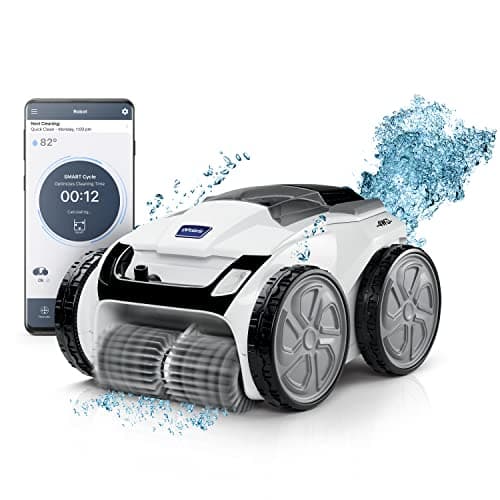
The VRX iQ+ solves a problem that every corded robot has and almost none addresses, and that is its whole case.
Cable twist is the number one complaint about corded robots
A floating cable twists as the machine turns. On a rectangle you barely notice. On a freeform or kidney-shaped pool, or any pool long enough to need 50-70 feet of cable, it becomes a weekly annoyance: the cable knots, physically limits how far the robot can travel, and strands it mid-pool. Owners end up untwisting a cable by hand every few cycles, which is exactly the chore a robot was supposed to eliminate.
Polaris’ answer is a swivel in the cable attachment. It is a mechanical solution to a mechanical problem, it is the only one on the market, and on a long pool it is worth real money. The large-pool roundup explains why.
70 feet reaches corners a 40-foot cable cannot
Maytronics’ longest-reach residential machines are rated to 50 feet of pool length. Polaris gives 70 feet of cable, which on a lap pool or a long freeform shape is the difference between covering the far corners and not. Combined with seven selectable modes and a large debris canister, it is specified for a bigger pool than most robots.
iAquaLink, if you are already in it
The VRX integrates with Jandy’s iAquaLink system. If your pad is already Jandy or Zodiac and you run your heater, lights and salt cell from that app, having the cleaner in the same place is a genuine convenience. If you are not in that ecosystem, it is a proprietary app like any other.
The hard part: the price comparison
At around $1,499 the VRX iQ+ costs the same as a Beatbot Sora 70, which also skims the water’s surface, and about $600 more than a Dolphin Nautilus CC Plus. It publishes no micron figure. And Polaris robot spares are less widely stocked than Maytronics’, which on a machine you hope to own for a decade is a real consideration — the entire Dolphin argument rests on numbered, stocked parts.
So the honest recommendation is narrow: buy the VRX iQ+ if your pool is long or freeform enough that cable management is the binding problem, or if you are already in the iAquaLink ecosystem. Otherwise the Dolphin comparison does not favor it.
How we assessed it, and what we did not do
Every figure in the specification table on this page is attributed: to Polaris’s published specifications, to the Amazon listing for this exact model, or marked as not published where neither source gives a figure. The score is derived from those published numbers by the five-metric rubric, which is published in full.
We have not physically tested this machine. We do not run a test pool, we do not own this unit, and nothing on this site claims otherwise. What we do instead is show where every number comes from, say plainly who the machine is wrong for, and refuse to print a figure we cannot source. Where owner reports inform a point, they are described as owner reports — never as our own experience.
Who should skip it
Skip the Polaris VRX iQ+ if your pool is under 40 ft, or you are not already in the Jandy/iAquaLink ecosystem — a Dolphin costs less and is easier to get parts for.
That is not a throwaway line. The most expensive mistake in this category is buying a capable machine that is wrong for your pool — and a machine rated below your pool’s area or missing the one capability your debris requires cannot be fixed by any setting.
Alternatives worth considering
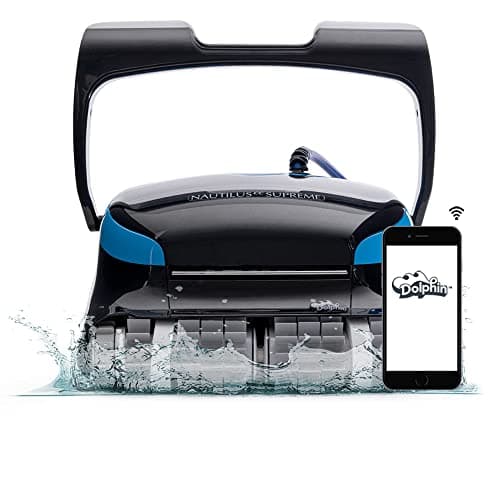
- Dolphin Nautilus CC Supreme — 50 ft rated with a dedicated waterline brush, for about $50 less. Read the review
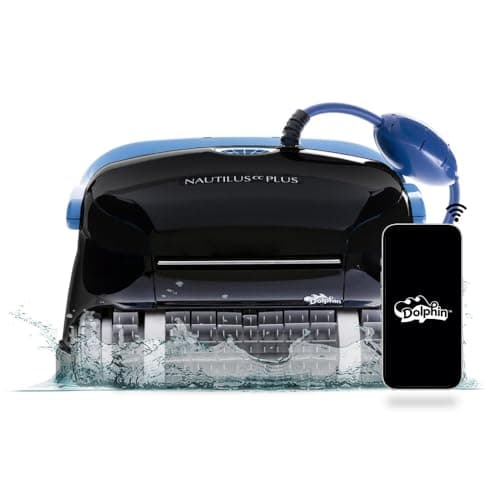
- Dolphin Nautilus CC Plus — 40 ft and $600 less, with the best parts network in the category. Read the review
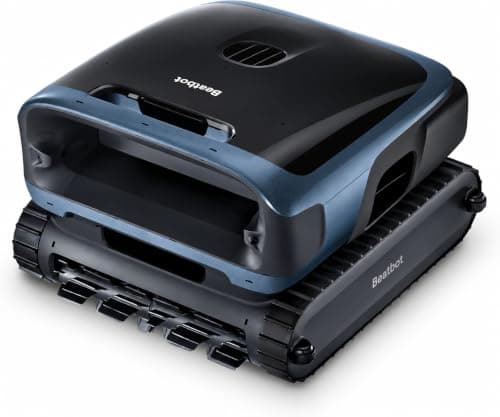
- Beatbot Sora 70 — the same price and it skims the surface, if your pool is under trees. Read the review
If you are still narrowing down, the selector tool works from your pool type, size, surface and dominant debris, and the Polaris brand guide covers the whole range and where it stops.