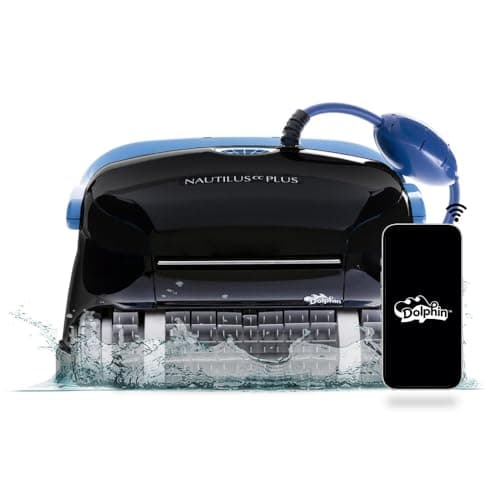
The verdict: Dolphin if you want a robot, Polaris if you want large debris bagged and already have a booster pump. The two brands overlap less than their price ranges suggest.
They are mostly different products
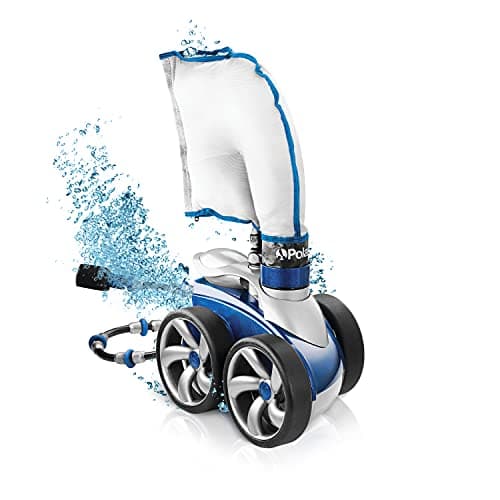
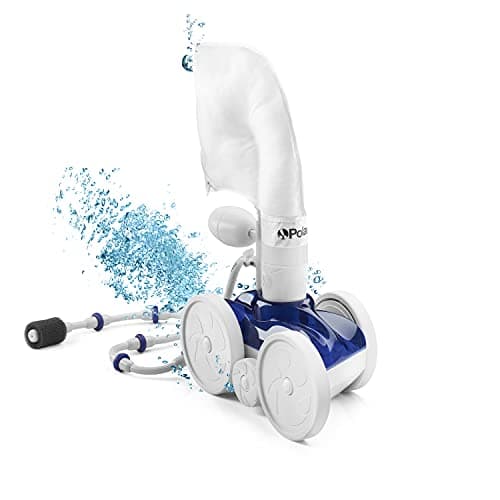
Maytronics makes robots and nothing else. Polaris’ strength historically — and the products people actually mean when they say “a Polaris” — is pressure-side: the Vac-Sweep 280 and 3900 Sport, driven by water pressure, bagging debris, with no electronics in the water. Polaris also makes robots (the VRX iQ+), but that is the newer and less distinctive half of the range.
So the real comparison is robotic versus pressure-side, with these two brands as its best representatives.
Where Polaris wins outright
Large woody debris. A 3900 Sport’s dual-chamber SuperBag will swallow acorns, pine cones, eucalyptus pods and rigid twigs. No Dolphin will — robot intakes are screened and sized for leaf-and-finer, and rigid objects jam them. If you are under an oak that drops acorns, this is not a close call.
Polaris also wins on no electronics in the water. The 280 and 3900 Sport have no circuit board, no motor and no battery. Fifteen-year service lives are normal and a complete rebuild is a bag, a tail sweep and a set of wheels.
Where Dolphin wins outright
No booster pump needed
A 3900 Sport generally needs a dedicated booster pump — plumbed, wired, and running during every cycle. If you do not have one, add its cost and its electricity to the comparison. A Dolphin plugs into a GFCI outlet and cleans with your main pump off.
It filters the water
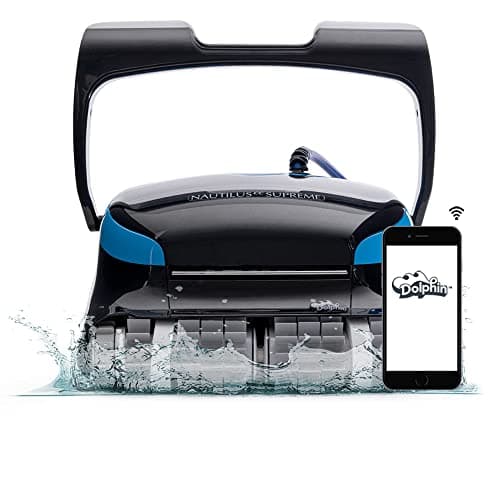
A pressure-side cleaner relocates debris into a bag. A Dolphin pulls water through a cartridge filter, and with ultra-fine cartridges (about $26 for four) it genuinely removes fine particles. For silt, pollen or post-shock cloudiness, Polaris pressure-side has no answer.
Walls and waterline
Dolphins climb, and the CC Supreme has a dedicated waterline brush. Pressure-side cleaners are floor machines.
Parts, even against Polaris
Both brands have good parts support — Polaris bags and tail sweeps are cheap and everywhere. But Maytronics publishes numbered parts for brushes, tracks, filters, power supplies and motor assemblies, which is a deeper ecosystem. The parts section lists both.
Polaris VRX iQ+ versus a Dolphin
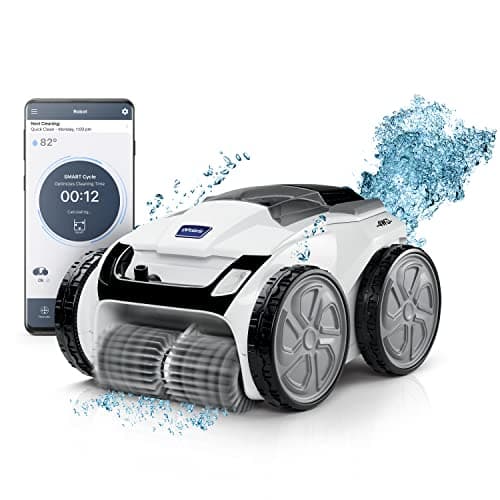
On robots specifically, the honest read is that the VRX iQ+ is competitive on one axis and behind on others. Its 70 ft cable with a tangle-reducing swivel is the best cable-management solution anyone offers, and on a long freeform pool that is worth real money. But it costs about $1,499 against $899 for a Nautilus CC Plus, publishes no micron figure, and Polaris robot spares are less widely stocked than Maytronics’. Unless you are already in the iAquaLink ecosystem or you have a genuinely long pool with a difficult shape, the Dolphin is the better buy.
The setup that uses both
Under heavy tree cover, a pressure-side cleaner taking the coarse load plus a robot handling fines and walls removes more than either alone. It is more equipment than most people want, and it is the correct answer for a pool under a mature oak.