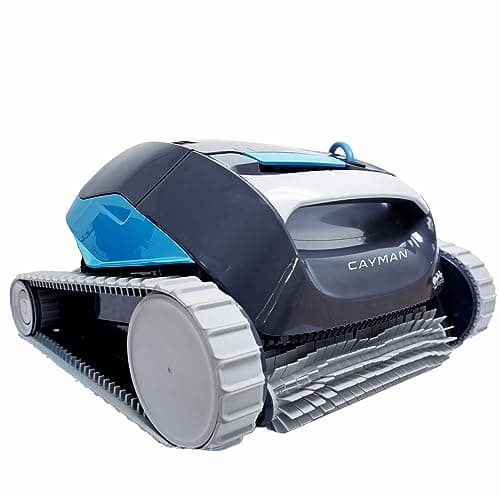
The Cayman is an unusual combination: wall climbing and a large debris bin, which most machines trade against each other, plus scheduling that does not depend on anything outside the machine.
A hardware timer, which keeps working
Almost every scheduling feature in this category runs through a phone app, which means it depends on a Wi-Fi network, a cloud service, an app that still gets updated, and a phone you have in your hand. The Cayman’s weekly timer is programmed on the power supply.
That sounds like a downgrade until you consider the failure modes. A hardware timer works when the Wi-Fi is down, when the manufacturer’s cloud service is having a bad day, when you have changed phones, and in ten years when the app has been abandoned. For a vacation property, a rental or a second home, it is arguably the better design.
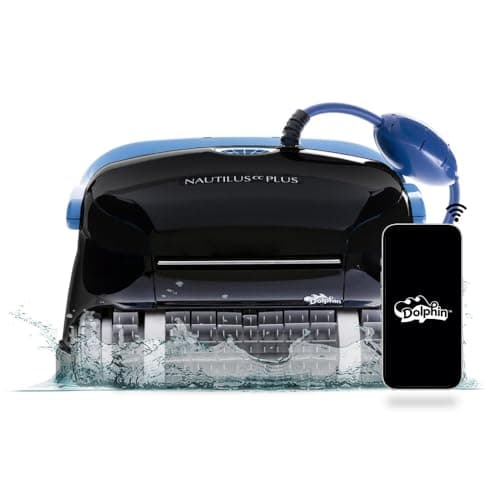
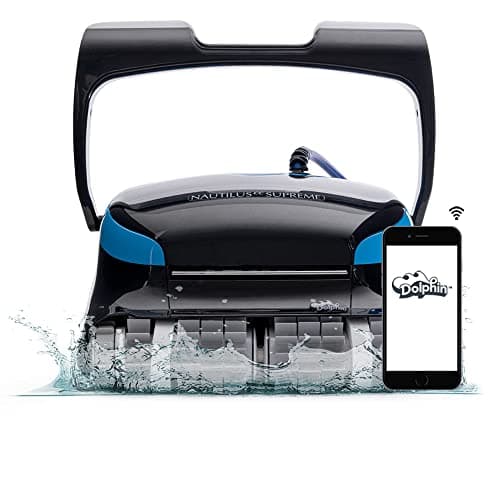
It is less flexible than an app — you cannot change the schedule from your office. If you want app control in a Dolphin, that is the Nautilus CC Plus or CC Supreme.
Climbing plus a big bin is genuinely uncommon
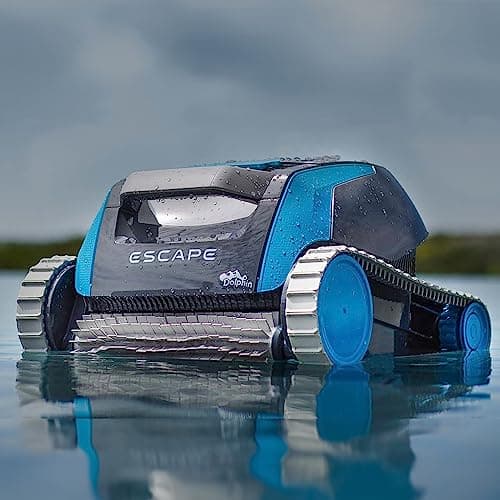
Machines tend to be optimized one way or the other. Maytronics’ cartridge-filter Nautilus line climbs well with modest capacity; the Escape has a massive bin and does not climb. The Cayman does both: wall climbing with HyperBrush, and a large top-load filter bin.
For a pool with both leaf load and algae or waterline concerns, that combination is the reason to look at it — and algae grows on walls, not floors.
Both pool types, 33 feet
Rated for inground and above-ground pools up to 33 feet. The dual rating means it survives a pool change; the 33-foot ceiling means a 40-foot pool needs the Nautilus CC Plus instead.
The price problem, stated plainly
At around $1,129 the Cayman costs about $230 more than the Nautilus CC Plus while covering seven fewer feet of pool length. It also has no waterline pass at that price, where the CC Supreme does.
So the Cayman only makes sense for a specific buyer: someone with a pool under 33 feet who genuinely wants both a large debris bin and wall climbing, and who prefers hardware scheduling to an app. That is a real buyer. For most people the CC Plus is the better value and the Escape is the better leaf machine.
The Maytronics ownership case, as ever
No battery. Brushes $23-30, tracks $35, motor assembly about $110, power supply $130-210, all numbered and stocked. The parts section lists them, and it is the reason a Dolphin at year eight is a maintenance item rather than a write-off — the argument that underpins the whole corded case.
How we assessed it, and what we did not do
Every figure in the specification table on this page is attributed: to Dolphin’s published specifications, to the Amazon listing for this exact model, or marked as not published where neither source gives a figure. The score is derived from those published numbers by the five-metric rubric, which is published in full.
We have not physically tested this machine. We do not run a test pool, we do not own this unit, and nothing on this site claims otherwise. What we do instead is show where every number comes from, say plainly who the machine is wrong for, and refuse to print a figure we cannot source. Where owner reports inform a point, they are described as owner reports — never as our own experience.
Who should skip it
Skip the Dolphin Cayman if your pool is over 33 ft — the Nautilus CC Plus covers 40 ft for less money.
That is not a throwaway line. The most expensive mistake in this category is buying a capable machine that is wrong for your pool — and a machine rated below your pool’s area or missing the one capability your debris requires cannot be fixed by any setting.
Alternatives worth considering
- Dolphin Nautilus CC Plus — 40 ft rated with Wi-Fi scheduling, for about $230 less. Read the review
- Dolphin Escape — the bigger debris bin without wall climbing, for about $430 less. Read the review
- Dolphin Nautilus CC Supreme — 50 ft and a dedicated waterline brush, for about $320 more. Read the review
If you are still narrowing down, the selector tool works from your pool type, size, surface and dominant debris, and the Dolphin brand guide covers the whole range and where it stops.